
Auvergne today

Auvergne merged with the Rhône-Alpes region on January 1, 2016, following the implementation of the territorial reform. The Auvergne-Rhône-Alpes region is thus one of the 13 regions of France.
Nestled in the heart of France, Auvergne is characterised by its central location and is bordered by two major rivers, the Loire and the Allier.
It comprises four departments:
Allier (03 – Moulins), Cantal (15 – Aurillac), Haute-Loire (43 – Le Puy-en-Velay), and Puy-de-Dôme (63 – Clermont-Ferrand).
Auvergne takes its name from the Arverni, a Gallic tribe and one of the most influential peoples of Gaul.
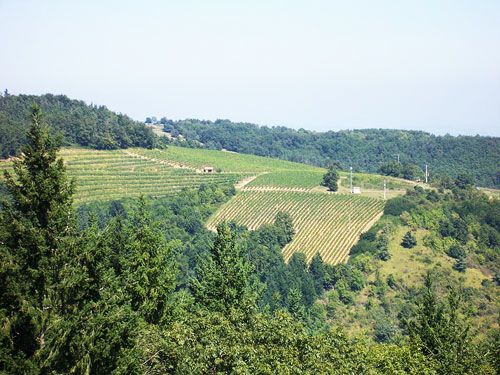
The modern-day region encompasses the historical province of Auvergne as well as portions of former territories such as Bourbonnais, Velay, Gévaudan, Vivarais, and Forez.
Southern Auvergne is characterised by its landscapes of extinct volcanoes, ancient mountain ranges, and deep lakes. The Allier department, located to the north, contrasts sharply with its flat terrain. Vast plains, notably the Limagne and the Bourbonnais, stretch from Moulins to Montluçon and Vichy, gradually narrowing to the Allier gorges further south, near Clermont-Ferrand, where the volcanic region begins.
Clermont-Ferrand, the regional capital, is an important crossroads, serving other major cities such as Montluçon, Vichy, Moulins, Le Puy-en-Velay, and Aurillac.
Auvergne enjoys a continental climate, characterised by short, hot summers and long, harsh winters. However, despite its beauty and historical significance, Auvergne remains one of the least populated regions in Europe.
An untamed land
Auvergne truly stands out as a magnificent region, boasting abundant green nature and breathtaking landscapes.
A land of dormant volcanoes
- Chaîne des Puys and the Puy-de-Dôme, its highest volcano
- Puy Mary, one of France’s leading natural heritage sites
- Plomb du Cantal, Europe’s largest volcano, in the Monts du Cantal
- Vulcania, an educational amusement park developed in the Parc Naturel des Volcans d’Auvergne
A land of water known as the Water Tower of France
- rivers Loire and Allier
- Natural lakes nestled in the deep of the ancient craters
- 109 natural mineral water springs
- Impressive diversity of ponds small and large
- Spectacular waterfalls
A wide range of geological curiosities and historical sites
- Jonas and Monton Caves and the fairy chimneys
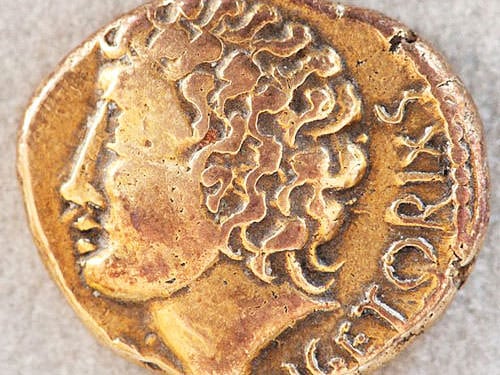
- Gergovie Plateau, site of the Battle of Gergovia, where Julius Caesar defeated the Gallic chieftain Vercingetorix in 52 BC.
- Medieval festivals in the ancient fortress of Murols and the city of Le Puy-en-Velay or street theater in Aurillac.
The land of the Arvernes
Economy
The geographical isolation of Auvergne, nestled in the heart of a mountainous region with limited land transport links, has historically hampered its economic development. However, the construction of major transport routes during the 20th century has profoundly transformed the situation.

The A71 motorway, known as the L’Arverne, now connects Clermont-Ferrand to Orléans in the Loire Valley, facilitating north-south travel. This route intersects the A75 (La Méridienne), which leads to Béziers on the Mediterranean coast. Furthermore, the A89 (La Transeuropénne) links Clermont-Ferrand to Lyon and extends to Libourne, near Bordeaux, thus strengthening east-west connectivity.
While agriculture remains a dominant sector in Auvergne, the region also boasts a diverse industrial landscape. Notable industries include dairy production (which boasts five AOC cheeses), the extraction of natural mineral waters (such as Vichy, St Yorre, and Volvic), livestock farming, tyre manufacturing (including Michelin in Clermont-Ferrand), cutlery making (located in Thiers), metallurgy (in Issoire), and lacemaking (in Le Puy-en-Velay). These industries enjoy international renown, and many of their products are exported.
Finally, tourism continues to thrive in Auvergne, with several towns and villages holding the prestigious Plus Beaux Villages de France (Most Beautiful Villages of France) designation.
Gastronomy
The rich culinary heritage of Auvergne, deeply rooted in tradition, offers a delightful array of regional specialities.

These include dishes such as truffade and aligot, tripoux (tripes), potée auvergnate (pot-au-feu), pompe aux pommes (apple tart), pachade (pancake), râpée (similar to hash browns), petit salé aux lentilles (salted pork and lentils), and a variety of charcuterie, including ham, saucisson, bacon, roulé (roll of meat), and andouille (sausage).
Thanks to its lush pastures flourishing on fertile volcanic soil, Auvergne is renowned for its cattle breeding. This agricultural abundance gives rise to five celebrated cheeses, each benefiting from the prestigious Appellation d’Origine Contrôlée (AOC) and Appellation d’Origine Protégée (AOP) designations: Cantal, Salers, St-Nectaire, Bleu d’Auvergne, and Fourme d’Ambert. Artisanal creations, such as Artisous, goat cheese and Laqueuille, contribute to the diverse and renowned cheese culture of the region.
Holidaying
Auvergne cherishes its rural traditions, celebrating events such as transhumance (the seasonal migration of livestock), pig markets, as well as chestnut, baskets and traditional bread festivals.
In summer, Auvergne offers a picturesque setting for outdoor activities such as hiking, horseback riding, mountain biking, cycling, rail biking, canoeing, and paragliding. Its mid-altitude resorts, like Mont Dore, offer numerous opportunities for winter sports throughout much of the season. Auvergne is a splendid yet often overlooked destination, boasting a magnificent and unspoiled landscape, ideal for relaxation and excellent value for money. Auvergne proves that France is much more than just Paris and the crowded French Riviera.
Area: 26,013 km² (nearly 5% of Metropolitan France)
Population: 1,341.000 (01/01/2014)
Photos via Wikimedia Commons: Côtes du Forez by Wikijoe Public domain – Puy-de-Dôme by Medium69-William Crochot CC BY-SA 4.0 – Vercingetorix strater by Siren-Com CC BY-SA 3.0 – Usine du May by Lethiernois CC BY-SA 4.0 – Header by Thesupermat CC BY-SA 3.0


