
Vimy Ridge
The Vimy Ridge Canadian National Memorial pays tribute to the bravery and sacrifice of the Canadian Armed Forces during the First World War, honouring the memory of those who fought and fell in France, many of whom have no known grave.

Donated by France to Canada for perpetual use, the memorial’s site and park are managed by Veterans Affairs Canada.
Located in a 100-hectare park that preserves the former battlefield in its war state, the memorial overlooks Vimy Ridge. This historic ridge, about 8 km north of Arras, extends for approximately 7 km and reaches a height of 145 m, hence its war code name Hill 145. It is, along with Hill 60, one of the Western Front’s few preserved battlefields.
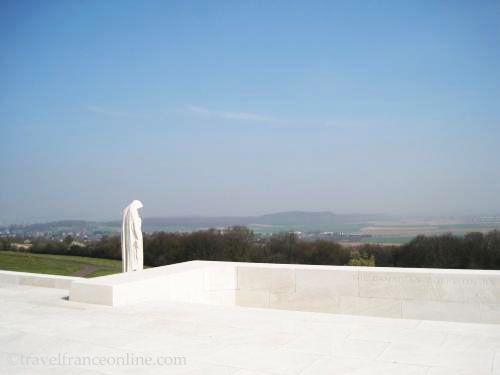
The Memorial was symbolically erected at the top of Hill 145, as it was the last sector of Vimy Ridge to have been re-captured. It offers an unobstructed view of the vast Douai Plain, and is visible for miles around.
Vimy Ridge Canadian Memorial National Monument
The Canadian Battlefields Memorial Commission’s decision to erect monuments in honour of soldiers who fell on European battlefields led to the selection of Canadian sculptor Walter Allward’s project in a 1921 competition.
Although architect Frederick Chapman Clemesha‘s design came in second, he was subsequently commissioned to create another monument, the moving Brooding Soldier Memoria, located at Vancouver Corner, north of Ypres. Clemesha, a World War I veteran who fought and was wounded, drew on his personal experience to design his monuments.
The construction of the monumental Vimy Ridge Canadian National Memorial spanned eleven years.
Inaugurated on July 26, 1936, by King Edward VIII, the monument was unveiled in the presence of the President of the French Republic, Albert Lebrun, and several high-ranking Canadian, British and European officials. This event marked Edward VIII’s only official trip abroad as king.
Vimy Ridge Canadian Memorial’s symbolism
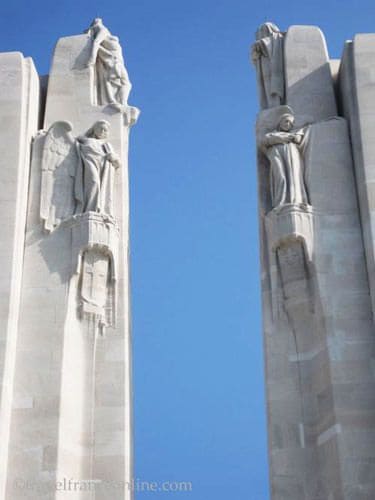
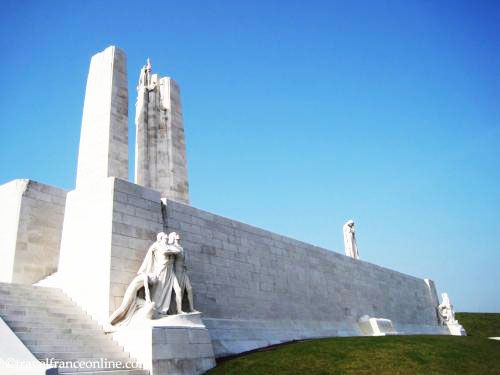
1-The 30-metre-high twin pylons stand on a vast platform accessible by steps.
2-One represents Canada, the other France. Each is adorned with its respective national emblem, the Maple Leaf and the Fleur de Lys, in homage to the sacrifices of the two nations.
3-The top of the pylons are adorned with sculptures known as the Chorus. Justice and Peace overlook Hope, Charity, Honour, and Faith in the east, while Truth and Knowledge adorn the west side.
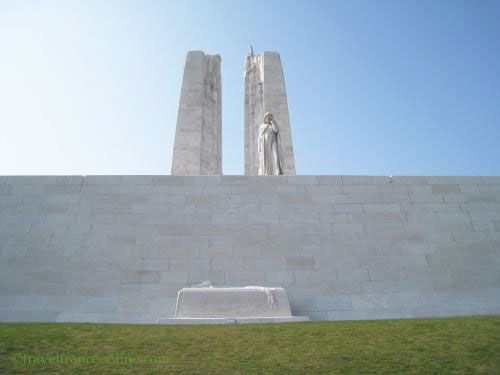
4-At the base, between the two pylons, rests the Spirit of Sacrifice, a poignant reminder of the profound sacrifices made.
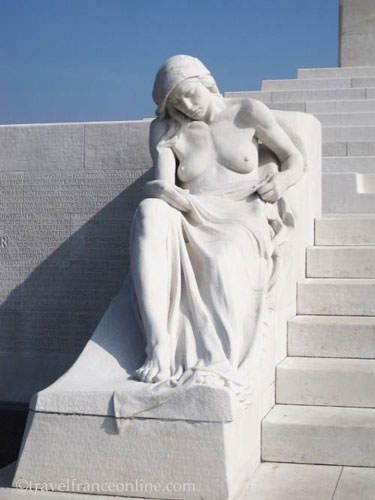
5-Two moving statues, representing Mourning Parents, guard the steps leading to the platform. They embody the families’ ongoing pain and grief.
6-The outer wall of the stone platform bears the solemn inscription of the Names of 11,285 Canadian Soldiers who fell in France and whose graves are unknown, thus ensuring that their memory lives on for eternity.
7-Positioned on a 73-metre-high platform, dominating the vast plain of Douai, the Memorial imposes its presence and is visible for miles around.
8- Each corner of the Memorial is adorned with an allegorical sculptural group, known as The Defenders. The southern corner represents the Breaking of the Sword, while the northern corner illustrates Sympathy of the Canadians for the Helpless. These powerful sculptures embody the noble ideals for which Canadian soldiers bravely sacrificed their lives during the First World War.
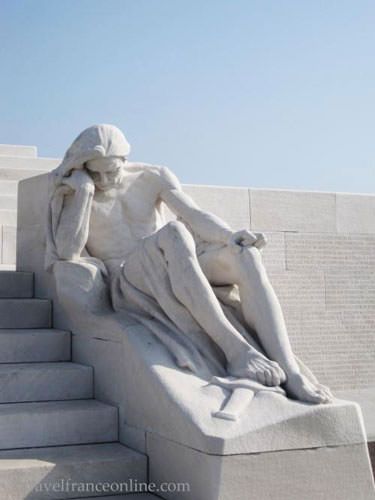
Above each group, intricately carved into the wall, rests a Cannon Barrel adorned with Laurel and Olive Branches, a poignant symbol of Peace, solemnly recalling the ultimate ideal for which these brave soldiers fought and fell.
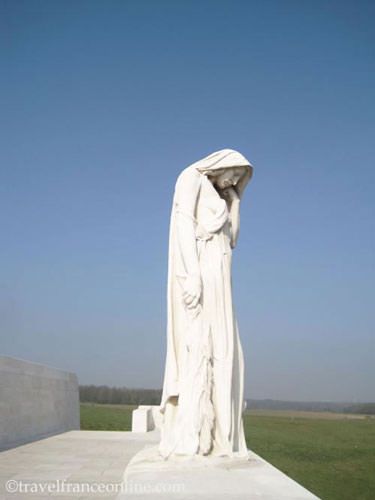
9-At the top of the wall stands a moving life-size statue of Mother Canada, represented as a young woman draped in a coat, her head bowed and her gaze fixed on the ground. She embodies the grief of the young nation, mourning its sons fallen in battle. Carved from a massive 30-ton monolith, this striking statue pays a vibrant tribute to the sacrifices made.
10-Located at ground level, directly beneath Mother Canada, lies a sculpted Sarcophagus with a Brodie Helmet, a Sword, and Laurel Branches.
Facing east, towards the rising sun, Mother Canada symbolises the dawn of a new day… A day marked by Peace and Forgiveness, but forever overshadowed by the memory of those who gave their lives in service to their country.
Vimy Ridge Canadian National Memorial – Restoration
The Canadian Battlefield Memorial Restoration Project began a major restoration program in 2001.
The work, completed for the 90th anniversary of the battle on April 9, 2007, cost 30 million Canadian dollars.
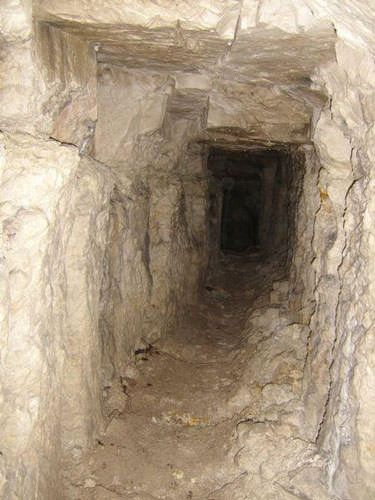
This comprehensive restoration included re-engraving names, replacing stones, improving drainage, and renovating trenches and tunnels.
Queen Elizabeth re-opened the memorial in the presence of Canadian and French ministers. Approximately 50,000 Canadian civilians and military personnel, including veterans and their families, were also present.
This moving commemoration allowed for the reburial of Private Herbert Peterson, killed on April 9, 1917.
His remains, discovered in 2003 at a nearby construction site and identified through DNA testing, were laid to rest with full military honours.
Vimy Ridge – 1914 to 1915
The Battle of Vimy Ridge took place on April 9, 1917, during the trench warfare of the First World War.
It is considered an important victory for the Canadian Corps of the First Army, despite the high human cost. The Germans had taken control of Vimy Ridge in October 1914.
The French launched two offensives to retake the ridge.
The French 1st Moroccan Division managed to seize the position in May 1915, but could not secure it due to a lack of reinforcements. The memorial to the 1st Moroccan Division is located at the entrance to the Vimy Ridge Canadian National Memorial.
The French launched a second offensive in September 1915, which also failed. These two battles resulted in heavy losses, with approximately 150,000 deaths.
Vimy Ridge – 1916 – 1917
British forces relieved the French troops on Vimy Ridge in February 1916 and faced a German attack on May 21.
Despite their efforts, they failed to recapture the ridge but managed to hold their position until the 4th Canadian Division’s arrival in October 1916.
The deployment of such a large number of Canadian soldiers required considerable support. British infantry divisions, supported by artillery, engineering and public works units, provided this essential reinforcement.
An airborne offensive supported the ground assault, but the appalling weather conditions, cold, snow and frost, resulted in heavy losses among the pilots.
From April 4 to 8, the Royal Flying Corps indeed lost 75 aircraft and 105 men, making April 1917 a tragically war-torn month!
A vast network of tunnels was dug before the attack to safely transport Allied troops to the front lines in a shorter time to avoid alarming the Germans.
The offensive was launched at 5:30 AM on Easter Monday, April 9, 1917.
Despite the uneven progress of the various groups, the Canadian divisions managed to maintain a steady advance throughout the day.
They forced the Germans to retreat, and on the morning of April 10, new reinforcements arrived to continue the advance.
By 2:00 PM, the Canadians had recaptured most of the ridge, except for a small elevated position west of the village of Givenchy.
On April 12, the Canadians, supported by the British, launched their final offensive against the entrenched German troops. By the end of the day, they had regained total control of Vimy Ridge.
Aftermath of the Battle of Vimy
Despite snowfall and intermittent showers, the Allies managed to capture Vimy Ridge.
They also succeeded in diverting German reserves from the planned French offensive on the Aisne in the following days.
However, this resounding victory was achieved at the cost of heavy losses: 3,598 Canadians lost their lives and 7,004 were wounded.
The Battle of Vimy has become a powerful symbol for Canadians, representing national unity and success.
Many consider it a tragic awakening that symbolized Canada’s coming of age as a nation.” To commemorate the anniversary of the battle, April 9 was declared a National Day of Remembrance in Canada in 2003.
Department of Pas-de-Calais – Vimy Ridge Canadian Memorial – Hauts de France region
Coordinates: Lat 50.379146 – Long 2.773093
Photo via Wikimedia Commons: Preserved World War 1 fighting tunnel in Vimy sector by Labattblueboy CC BY-SA 3.0


