Your Story of the Great War
Your Story of the Great War is composed of accounts written by our readers, relating the stories of their ancestors who fell on the battlefields of the First World War.
Some enthusiasts embarked on in-depth research, unearthing precious information about their distant parents. Others stumbled upon forgotten documents in their attics, offering poignant glimpses into their lives.
Moved by the depth of emotion expressed in these accounts, we felt compelled to gather them into a collection, as a tribute to the memory of those who fought and died for their country, and to the survivors who had to carry the nightmarish memory of this war with them throughout their lives.
Here are a few examples…
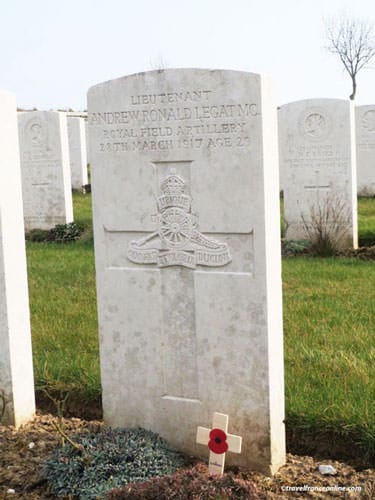
Your Story of the Great War – Andrew Ronald Legat MC – British
Lieutenant Andrew Ronald Legat MC, of Battery A, 317th Brigade, Royal Field Artillery, died on the battlefield on March 28, 1917. He was 29 years old. He is buried in the Cabaret Rouge CWGC Cemetery, in the small village of Souchez, Pas-de-Calais. Although no photograph of him exists, his memory lives on through the accounts of his great-nephews and great-nieces. They are aware that he had a twin brother who survived, but none of them knows whether they were identical or fraternal twins.
Your Story of the Great War – Canadian Unknown Soldier – Cabaret Rouge
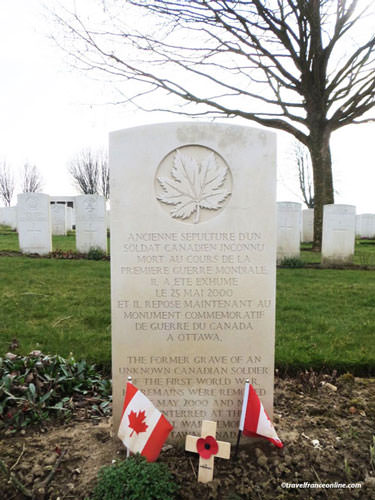
On May 25, 2000, the Commonwealth War Graves Commission (CWGC) officially exhumed the remains of an unidentified Canadian soldier buried in the Cabaret Rouge Military Cemetery in Souchez.
His ashes were solemnly repatriated to Canada and placed at the foot of the National War Memorial in Ottawa, to honour his memory and that of the 116,000 Canadian soldiers who bravely gave their lives for peace and freedom.
A memorial ceremony was also held at the Vimy Ridge Canadian Memorial.
This unknown soldier was originally buried in the Cabaret Rouge Military Cemetery, where his original headstone still stands in plot 8, row E, grave 7.
Your Story of the Great War – Claude-Joseph – French
Brigitte told us the extraordinary story of her grandfather, Claude-Joseph, who was only 22 years old when the First World War broke out.
In the muddy trenches of Verdun, stained with the blood of the wounded and the dead, Claude-Joseph endured appalling condition.
However, unlike so many husbands, brothers, fathers, and sons who never returned, he survived. When legions of orphans and widows were only left with photographs of their beloved husbands, brothers and sons, Brigitte’s had a small black leather notebook to remind them that Claude-Joseph had survived.
But the cover of this small black leather notebook bore a clearly visible hole, and proved to be a soldier’s most formidable armour. Indeed, one morning, before launching his attack, Claude-Joseph took a moment to jot down a few fleeting notes in his journal, perhaps in case he didn’t return.
He then slipped his notebook back into his front jacket pocket, tucked close to his heart, and resumed fighting. However, a German bullet, intended to kill him, lodged itself in the pages of the small notebook, sparing Claude-Joseph from a fatal wound. Although he was injured, three phalanges torn off his left hand and a serious thigh wound, he survived and was evacuated to a military hospital in Nice.
After the war, Claude-Joseph met Anne-Marie, a beautiful, witty young brunette with whom he spent the next 60 years. Together, they had a daughter, a son, and later, Brigitte’s mother.
Your Story of the Great War – James Trott – British
Among the heroes who fell at Passchendaele was James Trott, a courageous soldier of the 9th Battalion, Yorkshire Regiment.
His great-niece, Carol, shared her thoughts and memories with us, which I quote below:
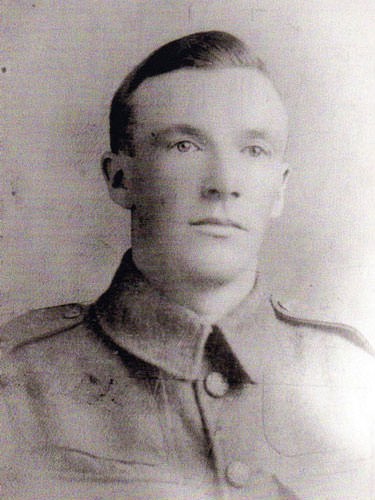
“I am just typing up some memories from my Grandmother that she recorded in the late 80’s. Apparently her brother James died on the 19th September and had just been home on leave and went back on the last day of August – she says they all had their picture taken together in the station but sadly we don’t have a copy of that.
This is what my grandmother says about that time:
“A lot of men had come home on leave, they used to have a farewell party and I was saying to Mum and Dad “Oh we should have a farewell party” and Mother said “Oh no, when he comes back for good, we’ll have a real good welcome home party”. But he never came back, he was killed on the 19th September. He was stretcher bearing and he was bringing in the wounded, and the officer wrote to my mother.
To think that he’d never had chance to sort of live….he was such a nice lad, I’ve got his picture.” James is buried in Tyne Cot Cemetery.
Your Story of the Great War – John Franklin Laraghy – Australian
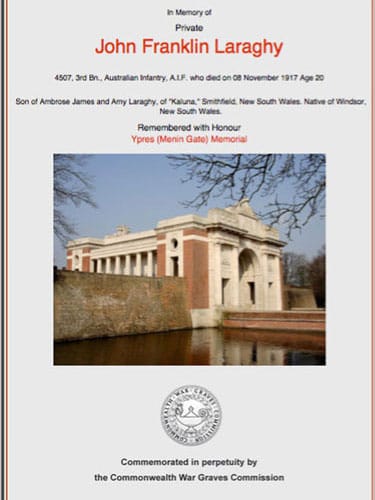
John Franklin Laraghy, an 18-year-old working as a dockworker, answered the call of duty by enlisting in the 14th Infantry Regiment on July 12, 1915.
He embarked in Sydney aboard the RMS Osterley on January 15, 1916, for the Western Front, along with countless other Australians, but his story is intertwined with that of his brothers.
Victor Gordon Laraghy, his eldest brother, had enlisted a few weeks earlier, on June 21, 1915, and is believed to have survived the war.
Another brother followed suit, enlisting on October 27, 1915, but was severely wounded, leading to his repatriation to Australia and his demobilisation on May 4, 1917.
Tragically, John died on the battlefield at Passchendaele. His untimely death was announced in the Sydney Morning Herald of New South Wales on December 20, 1917. John was buried in one of the first graves, near the Canadian aid station in Tyne Cot Cemetery.
Your Story of the Great War – The Blanc Brothers – French
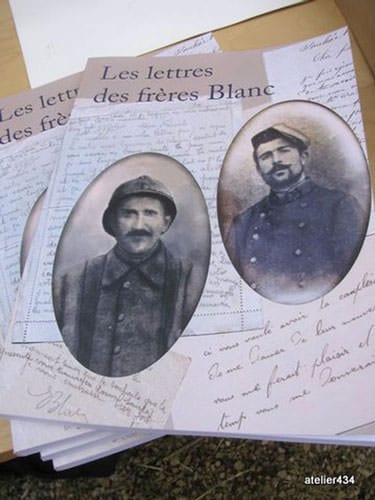
While searching the attic of the old farmhouse he had bought in the Lot countryside, Philip Hoyle made an unexpected discovery: the 250 letters that Émile and Léopold Blanc wrote to their parents during the First World War. In these poignant missives, the brothers painted a vivid picture of the horrors of war and the profound disillusionment they endured. Using simple, everyday language, they recounted the infernal battles they had fought in, as well as the overwhelming boredom and anguish that pervaded the periods of calm.
The two brothers reacted differently: one sank into depression and alcoholism, while the other became politically radicalised, both ultimately considering desertion, driven by despair. Despite their suffering, their homesickness was palpable. They inquired about their parents’ well-being, as well as the weather and the harvests, dreaming of being by their side to cultivate the land they loved so much.
Émile and Léopold perished within weeks of each other at the Battle of Verdun in 1917. Émile left behind a fiancée who had vowed to enter a religious order if he did not return from the front. She kept her promise and entered the convent.
The loss of their sons plunged the Blanc parents into despair and forced them to struggle to maintain their 80-hectare farm on the rocky, arid land of the Causse. Their once-prosperous farm fell into ruin, and they were forced to let parts of it lie fallow, as Monsieur Blanc found it increasingly difficult to manage alone and died a few years after the end of the war. Despite the hardships, Madame Blanc persevered, barely scraping by for three decades by renting out her land to the farm.
Philip Hoyle meticulously compiled the letters and photographs in a book, Les lettres des frères Blanc – “The Blanc Brothers’ Letters: Testimonies from the Front 1914-1917,” which movingly recalls the sacrifices made by countless families during the Great War.
Your Story of the Great War – Angelina
I would like to conclude with the testimony of one of these courageous women who stayed behind while their husbands fought. Paule told us the heartbreaking story of Angelina, a woman who endured unimaginable losses and tragedies.
Angelina was once the epitome of beauty, with her red hair, freckles, and striking green eyes. Yet, despite her beauty, her face later became marked by an intensity that concealed a profound sadness, often frightening those around her, especially the children.
Married before the start of the First World War, Angelina found herself alone in managing the family estate when her husband was called to the front. Tragically, he perished in combat; his body was never recovered. Fate dealt her another cruel blow when, in 1920, she lost her twin daughters to the terrible Spanish flu pandemic. Angelina teetered on the brink of madness, unable to truly grieve for her husband, whose body was never found, and deprived of the joy of raising her daughters.
However, in an act of love and defiance against despair, she fostered two orphaned boys, taking them in during school holidays and evetually adopting them when they reached the age of majority. These boys became her family, giving her the joy of grandchildren and transforming her pain into a purpose. Looking back on Angelina’s story, Paule recognises the immense strength that resides in such women; they are survivors. Paule’s only regret is not having known Angelina’s story when she was alive, because she wouldn’t have been afraid of her.