
Hill 60 in Zillebeke
Hill 60 (named after its altitude) is an artificial mound formed from the spoil from the construction of the nearby railway. It stands on the southern flank of the Ypres Salient.

A must-see when visiting the battlefields of the First World War, Hill 60 can be a little difficult to find due to discreet signage. Even with a GPS, it’s easy to miss it if you’re not paying attention.
It is advisable to plan your route. Located on the outskirts of the small town of Zillebeke, Hill 60 is nestled in a small wood, sheltered from the road by thick vegetation.
A small car park with about ten spaces is located just after the railway bridge. However, parking along the road is also possible, given the area’s quietness.
At first glance, Hill 60 may look like a public garden. However, closer examination reveals deep craters concealed by grass and scattered among trees, planted to prevent wind and water erosion from compromising the site.
Hill 60 preserved in its war state
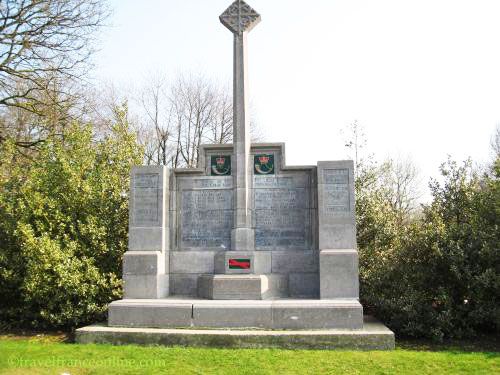
Hill 60 has been meticulously preserved in its wartime state. A path leads to its summit, where commemorative monuments, slabs and stones stand.
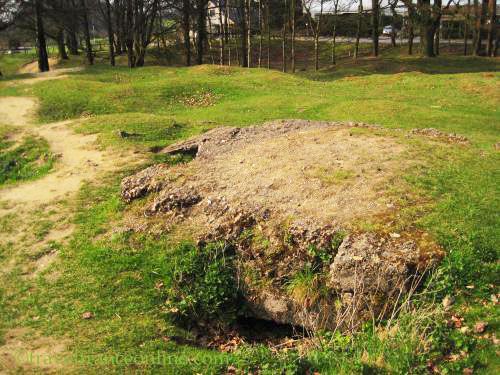
Continuing along your path, you will cross the site, passing the ruins of a German bunker and numerous craters. The impressive depth and extent of these craters bear witness to the devastating explosions that once marked the landscape.
Despite the rugged terrain, the site is well maintained; only a few brambles line the sides, without hindering the visit.
It is strongly advised to wear sturdy footwear, as the terrain follows the craters’ natural contours.
Hill 60, a burial ground
The Battle of Hill 60 took place between 1914 and 1915. This sector was located on the southern flank of the Ypres salient, on the Western Front.
The capture of Hill 60 mobilised British and Australian engineering companies, both of which suffered heavy losses.
Initially under French control, Hill 60 fell into German hands in December 1914, becoming a strategic site in the underground war.
Engineers and miners from both sides painstakingly dug networks of tunnels to undermine and attack enemy positions.
On April 10, 1915, British Royal Engineers, specialists in tunnels, laid six mines containing a total of 4,500 kilograms of explosives. When they detonated in the centre of the hill, the force of the explosion projected debris approximately 100 metres into the air and nearly 300 metres along the ground.
The British initially seized the sector, but the Germans quickly regained control. However, the British won another victory on April 18.
On May 15, a devastating turn of events occurred when the Germans launched a deadly attack and recaptured Hill 60 using gas. Tragically, the majority of the British soldiers, except two officers and 70 men, perished.
In November 1916, the 1st Australian Sapper Company took over the mining operations. The underground fighting continued until 1917, causing numerous casualties in mine explosions.

The final Allied offensive took place on June 7, 1917. Nineteen mines, each containing 450,000 kilograms of explosives, were meticulously placed and detonated beneath the nearby German lines, resulting in the destruction of a large part of Hill 60 and the deaths of approximately 10,000 German soldiers.
This explosion is among the largest in history, with witnesses saying that the noise was heard as far away as London and Dublin. These testimonies leave no doubt as to the devastating impact of the offensive.
Tragically, the bodies of countless British, Australian, and German soldiers were never recovered and still lie buried beneath the earth of Hill 60.
Hill 60 is thus a burial ground and should be visited with the utmost respect.
Hill 60 – Memorials
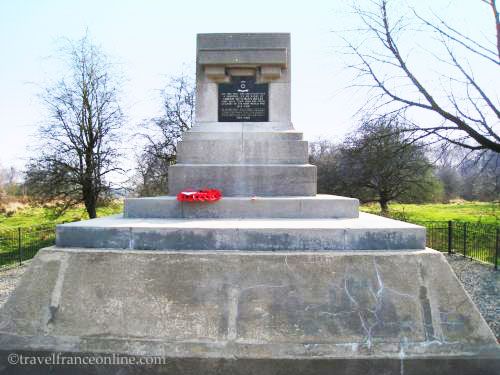
At the entrance to the site, you will discover two commemorative monuments of great historical importance. The first is a War Memorial erected in honour of the soldiers of the 1st Australian Engineer Company who fell on Hill 60.
This monument was built in 1923 to replace the original memorial erected by the survivors in 1919.
The second Monument commemorates the men of the 14th Light Division.
A third Monument, dedicated to all the ranks of Queen Victoria’s Rifles Regiment who died for their country, was also erected at the top of the hill in 1923.
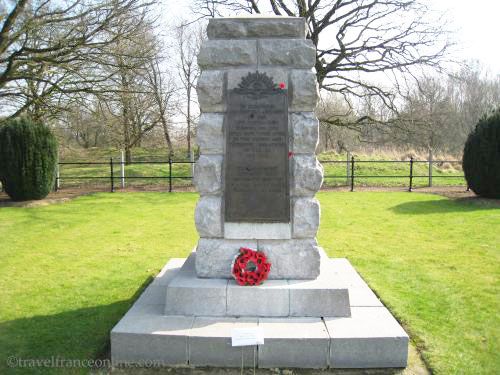
A Commemorative Stelae, placed at the entrance to the site, reminds visitors that Hill 60 has been preserved in its wartime state, and is a burial ground.
A Commemorative Plaque honours the exceptional courage of four British soldiers, Edward Dyer, Handley Geary, George Roupell, and Geoffrey Wooley, who distinguished themselves during the battle of April 1917. They were awarded the Victoria Cross, one of the highest military decorations, for their extraordinary acts of bravery.
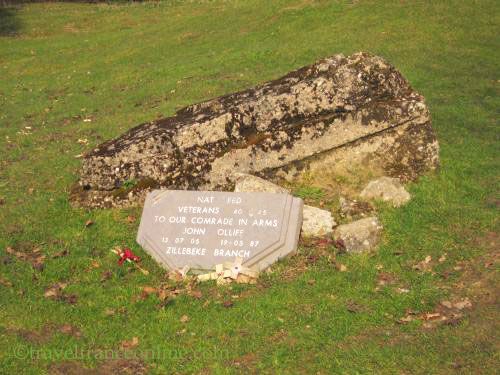
You will also discover several oter commemorative plaques as you explore the site.
Belgium – Zillebeke
Coordinates: Lat 50.824156 – Long 2.929804


