
Artois region
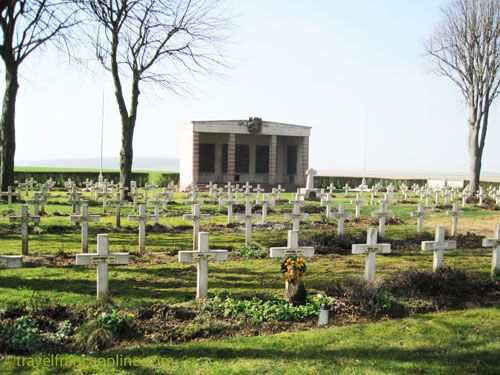
La Targette Czechoslovakian Cemetery is located along the D937 road, which connects La Targette-Neuville-Saint-Vaast and Souchez.
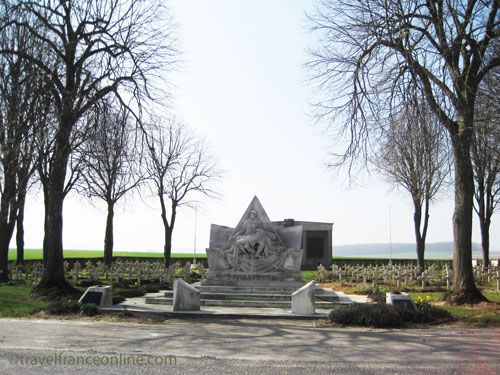
The cemetery contains the remains of Czechoslovak soldiers from the 2nd Infantry Regiment of the 1st Foreign Legion Regiment, who fell during the assault on Hill 140 on May 9, 1915.
Their courageous act took place during the Second Battle of Artois, a decisive engagement in the tumultuous theatre of war. Artois, a historical province in northern France bordering Flanders, includes important cities such as Abbeville, Amiens and Cambrai, which define its southern border.
Key cities in Artois include Arras, Saint-Omer, Lens and Béthune, each bearing witness to the trials and sufferings of war. North of Arras are Souchez, Vimy Ridge and La Targette-Neuville Saint-Vaast.
Second Battle of Artois
The early German occupation of Vimy Ridge at the start of the war gave them a strategic advantage, ensuring them an unassailable view of the surrounding valleys. From the top of this high ground, they dominated the French and allied forces stationed in the plain.
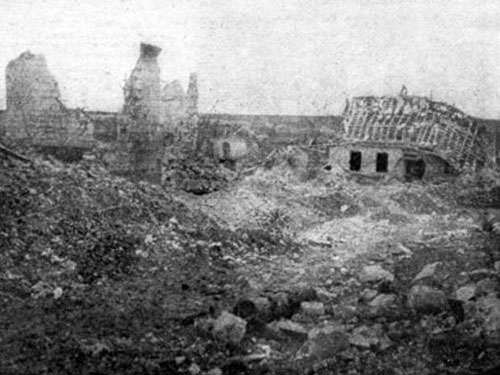
To fortify their position, they built a vast network of defences, including barbed wire, trenches and fortified underground shelters, linked by tunnels and reinforced by machine guns. This formidable line of defence extended from La Targette-Neuville-Saint-Vaast to Souchez, Carency and Ablain-Saint-Nazaire, forming what was called the Labyrinth: a complex and heavily fortified stronghold!
The first French offensive, known as the First Battle of Artois, took place from December 1914 to January 1915. Despite their efforts, this assault failed to break through the entrenched German defences, perpetuating the stalemate on the front.
The Second Battle of Artois began on May 9, 1915, in two separate sectors. British forces launched the Battle of Aubers Ridge, an attack northeast of Béthune, engaging the enemy on an 11-kilometre front stretching from Festubert to Neuve-Chapelle and the Aubers Ridge.
France’s 10th Army, commanded by General Foch, launched a coordinated assault on the Labyrinth from several directions, aiming at breaking through the formidable German defences.
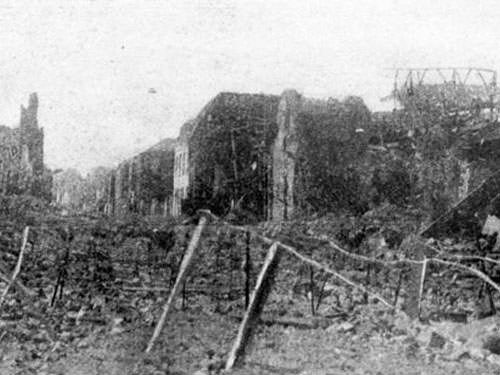
The first part of the attack focused on Ablain-Saint-Nazaire-Notre-Dame de Lorette, also known as Hill 165, located 3 kilometres northwest of Souchez, and Hill 119, on the other side of Souchez.
Simultaneously, the second offensive targeted the complex network of fortified trenches of the Labyrinth, extending from Carency to Neuville-Saint-Vaast, passing through Souchez, La Targette and the summit of Vimy Ridge, also known as Hill 140 (or Hill 145 for the Canadians).
From 6:00 AM to 10:00 AM, the French artillery carried out a preliminary bombardment, preparing the ground for the infantry assault. General Pétain‘s troops made significant progress, advancing rapidly between Souchez and La Targette-Neuville-Saint-Vaast.
Demonstrating bravery and determination, the Moroccan Colonial Regiment achieved a breakthrough, crossing the German lines and establishing itself in the Bois Folie, a vital strategic position. From this vantage point, the General launched the assault on Vimy Ridge, marking a decisive turning point in the battle for control of the Labyrinth.
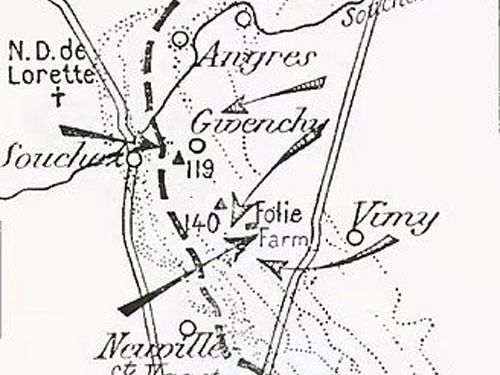
Despite their courageous efforts, the troops of the Moroccan Colonial Regiment faced significant difficulties as they approached the summit of Vimy Ridge. Hampered by the delay of reinforcements, they were forced to retreat, suffering heavy losses. Their sacrifice is commemorated by a memorial located near the entrance to the Canadian National Memorial.
On May 12, General Maistre‘s troops captured Ablain-Saint-Nazaire, also known as Notre-Dame De Lorette, and Hill 165. However, it took another ten days to completely liberate the hill from all German presence.
The Second Battle of Artois officially ended on June 18, 1915, marking the end of intense fighting in the region. Despite the difficulties encountered, the French forces made significant territorial gains, capturing Ablain-Saint-Nazaire, Notre-Dame de Lorette and La Targette-Neuville-Saint-Vaast.
The town of Souchez fell into French hands on September 26, 1915, thus consolidating their control over the region.
Nazdar Company
La Targette Czechoslovakian Cemetery is located on the site of the former hamlet of La Targette, near Neuville-Saint-Vaast. It contains the graves of the Czechoslovak soldiers who volunteered to fight under the French flag during the First World War and died for the freedom of their homeland. These Czechoslovak soldiers, from diverse backgrounds and regions, joined the Czechoslovak section of the French Foreign Legion, driven by a shared determination to liberate their country from the yoke of the Austro-Hungarian Empire.
The formation of the Nazdar company, the first Czechoslovakian unit to fight under the French flag, marked a decisive turning point in their collective struggle for independence.
The name “Nazdar“, derived from the company’s war cry meaning “Hello“, became emblematic of their unity and determination. In the years that followed, the Nazdar Company experienced explosive growth, reaching 150,000 Czech and Slovak volunteers from all over the world.
Among them were the soldiers of the 2nd Infantry Regiment of the 1st Regiment of the French Foreign Legion, who participated in the assault on Hill 140 on May 9, 1915. Tragically, fifty men perished in the fighting, and 150 others were wounded, twenty of whom succumbed to their injuries in the following days.
The survivors remained true to their commitment and continued to serve in the Legion until Czechoslovakia was proclaimed an independent nation in 1918, when they joined their own army. The Association of Czechoslovak Volunteers in France was created after the war to honour them.
La Targette Czechoslovakian Cemetery Memorial
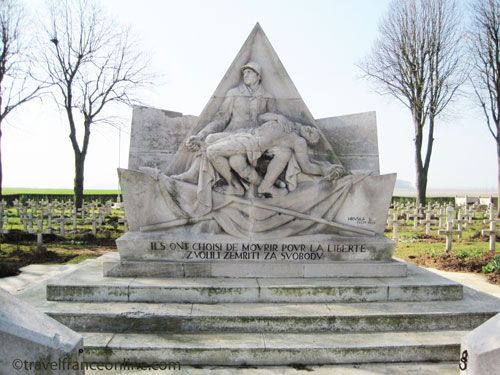
Ten years after the gruelling battle, the Association of Czechoslovak Volunteers in France decided to erect a monument as a lasting tribute to the courage and bravery of all the Czechs and Slovaks who died in combat.
The renowned artist Jaroslav Hruska was commissioned to realise their vision, and on May 31, 1925, the Czechoslovak Memorial at La Targette was inaugurated.
The sale of postcards in Czechoslovakia and many countries around the world contributed to the financing of the construction of the memorial, demonstrating the widespread support and solidarity shown towards the cause.
The Czechoslovak Ministries of Foreign Affairs and the Prague Resistance Memorial also played a crucial role by providing financial assistance, highlighting the project’s national and international importance.
The front of the memorial bears the following epitaph: “Ils ont choisi de mourir pour la Liberté – They chose to die for Liberty”.
On the back: “Ici le 9 Mai 1915 les Volontaires Tchécoslovaques ont combattu pour leur patrie et pour la France – Here on 9 may 1915 Czechoslovakian Volunteers fought for their fatherland and for France.”
The same inscription in Czech appears above the list of names of soldiers with no known grave. A commemorative ceremony takes place every year in early May.
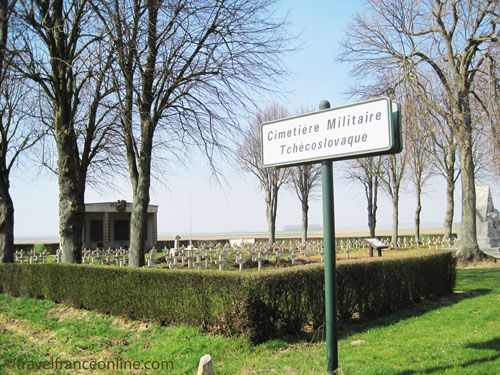
La Targette Czechoslovakian Cemetery
In 1938, the President of the Association proposed the creation of La Targette Czechoslovakian Cemetery, as a symbol of the unbreakable bond uniting Czechoslovakia and France.
The mayor of Neuville-Saint-Vaast, who was also president of the French Federation of Veterans, immediately approved the project, recognising its importance in honouring the memory of soldiers who fell in combat. The head of the French mission in Czechoslovakia gave his full support to this noble initiative.
Twenty-four linden trees were specially imported from Czechoslovakia and planted on the cemetery grounds that same year, symbolising unity and solidarity between the two nations.
However, the outbreak of World War II interrupted the work, delaying the cemetery’s creation until 1958.
Over the years, the cemetery became the final resting place of 206 soldiers, including 70 from World War I and 136 from World War II, among them 19 airmen. These men were repatriated from 73 municipal and military cemeteries spread across 38 departments, and re-buried with dignity and honour.
The official inauguration of La Targette Czechoslovakian Cemetery took place on May 19, 1963, marking a poignant moment in the history of Franco-Czechoslovak relations. The transfer of remains continued until 1970.
In 1968, on the occasion of the fiftieth anniversary of Czechoslovakia’s foundation, the Czech Volunteers Association erected a Memorial, designed by architect Bernard Heger and artist Marta Sumova, dedicated to all the victims of the two world wars.
A Bohemian cross stands at the heart of the cemetery, bearing witness to the historic alliance between France and Bohemia. This symbol indeed originates from the Battle of Crécy in 1346, where John of Luxembourg, King of Bohemia, fought valiantly to the death alongside the King of France.
La Targette Polish Memorial
The Polish Memorial at La Targette is located opposite La Targette Czechoslovakian Cemetery and Memorial , along the D937 road. It pays tribute to the courage and sacrifice of the Polish volunteers who joined the French Foreign Legion, better known as the Légion de Galicie – Galicia Legion, at the beginning of the First World War.

Approximately 2,000 Poles, eager to defend their “new homeland,” France, answered the call to arms and fought under the French flag. Many of these volunteers came from the Artois region and worked in the coal mines around Douai. Their decision to join the Foreign Legion was motivated by a desire to preserve France’s freedom and independence while fighting for the liberation of their homeland.
Historical Galicia, located on the border of present-day Poland and Ukraine, had been under the domination of the Russian and Austro-Hungarian Empire since the 18th century.
This memorial commemorates in particular the Polish volunteers who died on May 9, 1915, during the assault on the Thélus mill, located east of Neuville-Saint-Vaast, along the D49 and at the foot of Vimy Ridge (Hill 140).
Poland gained independence in 1918, at the end of the First World War.
Department of Pas de Calais – La Targette on D937
Coordinates: Lat 50.365814 – Long 2.744729
Photos via Wikimedia Commons: Carency aftermaths 1915 by The War Illustrated, June 1915. Public domain – Carency aftermaths 1915 by The War Illustrated, June 1915. Public domain – Battle of Artois map Public domain


