
Périgord, the Cradle of Western Europe humankind
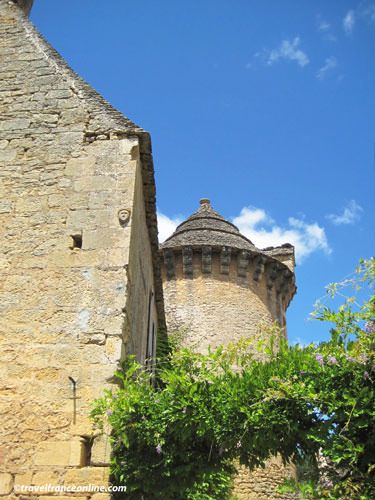
The historic county of Périgord, integrated into the crown domain in the 16th century, as well as the baronies of Beynac, Biron, Bourdeilles and Mareuil, corresponds today to the department of Dordogne.
Located in Nouvelle Aquitaine, in southwestern France, the Dordogne department has Périgueux, as its prefecture and is crossed by the Vézère and Dordogne rivers.
The Dordogne is renowned as the cradle of humanity in Western Europe, having been inhabited continuously since the Lower Palaeolithic.
The natural shelters carved out by the Vézère River provided refuge for Neanderthals, the first inhabitants of the region.
Homo sapiens, the first modern humans anatomically similar to us, arrived about 40,000 years ago, leaving traces of their presence, notably remains discovered in the Cro Magnon rock shelter, near the village of Les Eyzies de Tayac Sireuil.
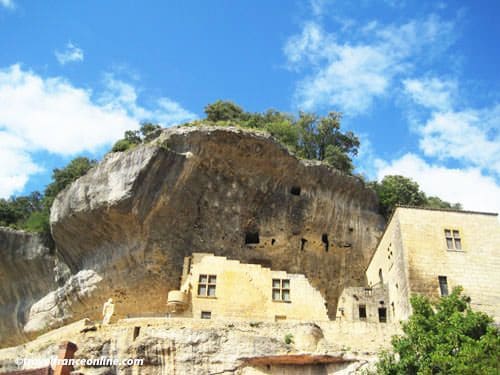
Cro-Magnon Men, renowned for their artistic expression, adorned the rock shelters of the Vézère Valley with engravings, paintings and sculptures of great finesse, testifying to their cultural refinement.
Their art, known as Magdalenian art, following the first discoveries in La Madeleine rock shelter, earned the Vézère Valley a place on UNESCO’s World Heritage List.
The Vallée de l’Homme – Valley of Man, as it is often called, is home to an impressive collection of 147 prehistoric sites and 25 caves adorned with paintings or engravings dating from the Palaeolithic period.
Today, the remarkable archaeological sites of the Dordogne department fuel a thriving tourism sector, attracting thousands of visitors each year.
The Four Périgords
The Dordogne department extends over the northeastern borders of the Aquitaine sedimentary basin, which a great diversity of soils, vegetation and crops. This rich diversity has led the inhabitants to divide their beloved Périgord into four distinct regions.
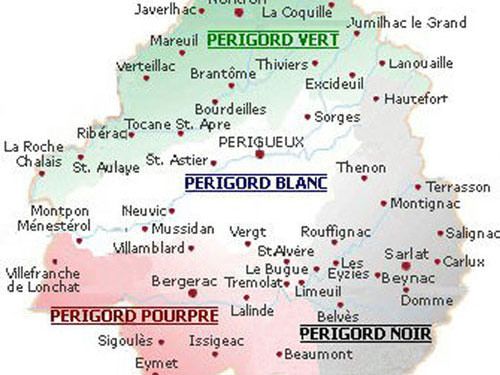
To the north of the department lies the Périgord Vert, a vast mosaic of fields and meadows crisscrossed by hedges and woods.
In the centre of the region, around Périgueux, lies the Périgord Blanc, renowned for its limestone soil, which gives the landscape a light colour.
To the southwest, around Bergerac, lies the Périgord Pourpre, renowned for its vineyards that thrive on the sunny banks of the Dordogne.
Finally, the landscape of the prestigious Périgord Noir, around Sarlat, is dominated by thick oak forests, hence its name due to the deep, dark green hue of their foliage.
The Land of a Thousand Châteaux
The Périgord, nicknamed the Land of a Thousand Châteaux, occupies a prominent place in history, having been the scene of territorial conflicts between the French and English in the Middle Ages.

Faced with these tumultuous times, countless bastides, fortified towns, castles and villages were built on the rocky spurs overlooking the rivers, serving as strategic strongholds of the region.
Stone-cutters fashioned these buildings from the region’s exquisite golden limestone, creating a landscape dotted with architectural wonders.
Many of these buildings still feature traditional limestone slab roofs, locally called lauzes, contributing to the charm and character of the region. Among the characteristic architectural features of Périgord are the charming dovecotes, a prerogative of local lords.
Exceptional villages of Périgord

This region of unparalleled beauty has eight villages ranked among the Most Beautiful Villages in France:
Belvès, Beynac, Domme, Limeuil, Monpazier, La Roque Gageac, St-Jean-de-Cole and St-Léon-sur-Vézère.
Numerous towns and villages have also been awarded the Picturesque Villages in Périgord – Picturesque Villages of Périgord label:
Montagrier and Varaignes in the Green Périgord, Biron, Liorac-sur-Louyre, and Issigeac in the Purple Périgord, and Carlux, Castelnaud-la-Chapelle, Paunat, Saint-Amand-de-Coly, Saint-Geniès, and Salignac-Eyvigues in the Black Périgord.
The region also boasts 18 bastides, or fortified towns, each with its own unique character and heritage:
Beaumont-du-Périgord, Beauregard-et-Bassac, Bénévent, Domme, Eymet, Fonroque, Lalinde, Molières, Monestier, Monpazier, Puyguilhem, Roquepine, Saint-Aulaye, Saint-Barthélémy-de-Bellegarde, Saint-Louis-en-l’Isle, Vergt, Villefranche-de-Lonchat, and Villefranche-du-Périgord.
Products from Périgord
The varied landscapes of the Dordogne, with its dark oak forests, limestone plateaus and vast alluvial plains, offer fertile ground conducive to a wide diversity of agricultural activities.
This diversity of soils and terrain allows the region to specialise in the cultivation of cereals, fruits, vines and tobacco, as well as in livestock farming. From green cereal fields to orchards laden with fruit and vineyards producing renowned wines, the agricultural wealth of the Dordogne testifies to the generosity of nature in this region.
Truffle known as Black diamond
Périgord is France’s leading region of black truffle production (80%) and accounts for 45% of European production, earning it the nickname “Diamonds of Périgord“.
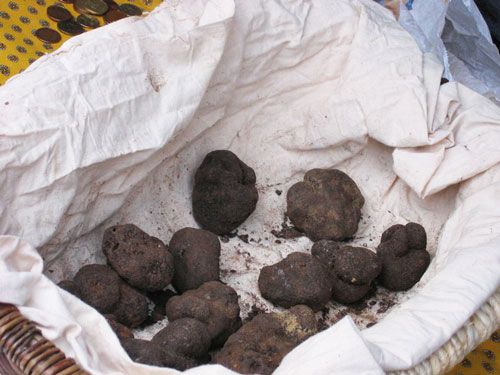
Truffles, underground fungi, develop among the roots of oak and hazel trees, and reach maturity in winter. The dry limestone soil and unique micro-climate of the region offer optimal conditions for cultivating them.
In the past, framers and truffle growers used trained pigs, an animal species endowed with an exceptional sense of smell, to dig up truffles.
Today, dogs specially trained for this purpose are used.
Black truffles hold a prominent place in local gastronomy and are found in many dishes, including the famous foie gras.
Walnuts
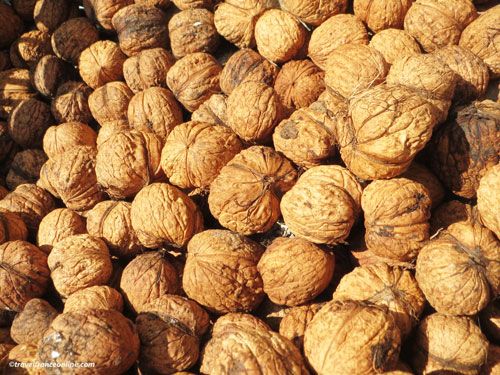
Dordogne is the second largest producer of walnuts in France, with an impressive annual production of 36,000 tonnes.
The Romans introduced walnut cultivation to the region in the 1st century AD. Known for their hardiness, walnut trees can live up to three centuries in temperate climates.
Besides their edible nuts, prized for their rich flavour, walnuts also provide a delicious oil.
Walnut wood, meanwhile, is widely used in the manufacture of high-end furniture, prized for its durability and aesthetics. The distinctive grain of walnut wood, called “burl,” formed by irregularities or knots in the hardwood, gives a unique character to the finished furniture.
Strawberries

Dordogne is also the leading French producer of strawberries, with an impressive annual production of 44,000 tonnes, mainly grown in Dordogne and in the neighbouring department of Lot-et-Garonne.
However, growing strawberries is not without its difficulties, as these delicate fruits are very sensitive to climatic variations.
To protect the harvest and ensure optimal growth, strawberries are often grown under long plastic tarpaulins held in place by curved metal frames to protect them from the elements and allow for regular production throughout the season.
Tobacco and sunflowers
The Bergerac region has a long tradition of tobacco cultivation. Introduced from America in the 16th century, tobacco was initially grown for its medicinal properties before becoming a staple crop, albeit a carefully controlled one.
Besides tobacco fields, the Dordogne landscape is adorned with vast expanses of sunflowers, an emblem of the region’s natural beauty and agricultural wealth. With their golden petals that follow the sun’s path throughout the day, sunflowers are a quintessential sight of Périgord!
Photo via Wikimedia Commons: Four Périgords by User:www.arachnis.asso.fr CC BY-SA 3.0 – Chateau de Losse and gardens by TRSL CC BY-SA 3.0


