
Saint-Sauveur-Le-Vicomte, the fortress of Neel de Nehou
Saint-Sauveur-le-Vicomte is located in the hills overlooking the Douve Valley, amidst the marshes, woods, and pastures of the Cotentin Peninsula.
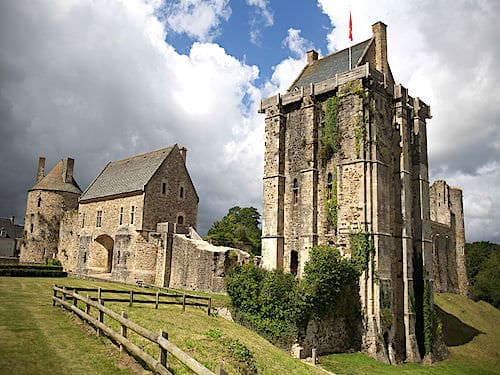
The King of France created the Viscountcy of Saint-Sauveur upon the founding of the Duchy of Normandy in 911 to reward a Norman baron for his allegiance.
His descendant, Néel Nehou of Saint-Sauveur, distinguished himself in 1047 by leading a revolt of the Norman barons against William the Conqueror.
Néel built the fortress of Saint-Sauveur-le-Vicomte on a hill spared from the periodic flooding of the Douve River and at the crossroads of the roads linking Port-Bail and Barfleur to Cherbourg, and Coutances to Mont-Saint-Michel.
His descendant, Geoffroy d’Harcourt, reinforced the fortress, triggering considerable commercial and economic growth in the town that had developed around it. Saint-Sauveur-le-Vicomte was indeed renowned for its weekly markets, its annual fairs and its river port.
Geoffroy d’Harcourt, Viscount of Saint-Sauveur a staunch ally of the English
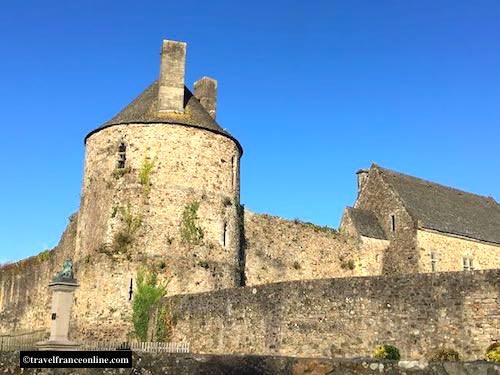
Geoffroy d’Harcourt left a controversial legacy, marked by ambition and betrayal, during the tumultuous Hundred Years War.
He began by proposing marriage to a wealthy heiress, who refused and instead married his rival, the son of Robert Bertran de Bricquebec.
Whether driven by love or ambition, Geoffroy sought to consolidate his influence and power through this union!
However, this rejection fueled a resentment that would shape his future actions.
He thus embarked on a personal vendetta against his rival, even seeking refuge at the English court to escape reprisals from the French monarchy.
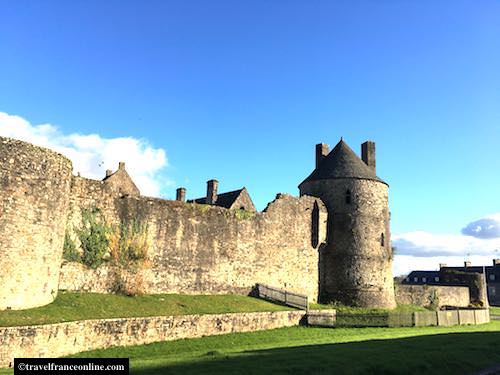
In 1346, he exacted his revenge by allying himself with Edward III and participating in the invasion of the Cotentin Peninsula, which culminated in the tragic defeat of the French forces at the Battle of Crécy. Despite his role in this victory, Geoffroy experienced a moment of remorse when his brother died in the battle, leading him to reconcile with the King of France.
However, his loyalty was short-lived, as he sided with the English again in 1356.
But Geoffroy committed one final act of treason by bequeathing his fortress of Saint-Sauveur-le-Vicomte to King Edward III, thus consolidating English rule in the Cotentin Peninsula.
Although the fortress changed hands several times, it remained a symbol of the tumultuous struggle between English and French forces. The Battle of Formigny in 1450 marked the end of the Hundred Years’ War in Normandy, and Saint-Sauveur-le-Vicomte returned to French control.
Fortress of Saint-Sauveur-le-Vicomte
The fortress of Saint-Sauveur-le-Vicomte has thus endured numerous sieges and upheavals throughout its long history.
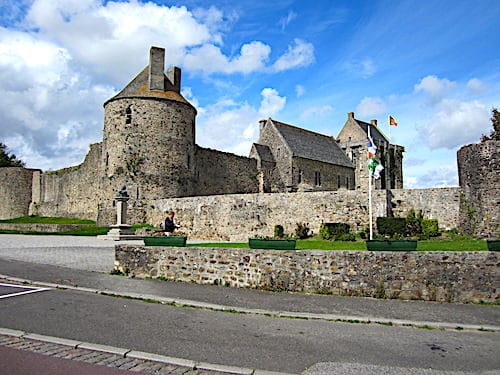
Besieged twice during the tumultuous Hundred Years’ War, it suffered further damage in 1575 when Protestant forces seized the town during the Wars of Religion, and was dismantled in 1598.
Despite the ravages of time and conflict, the fortress owes its survival largely to the construction of a hospital within its walls in 1691. This saved it from total destruction, although the subsequent neglect led to the gradual deterioration of the remaining structures.
Today, you can still admire the imposing polygonal enclosure dating to the 13th century, adorned with sturdy circular towers that stand like silent sentinels of a bygone era. Among the surviving remains is the square keep erected by Geoffroy d’Harcourt in 1346, which retains its original reception hall and chambers, as well as the guardroom providing access to the ramparts. Inside the fortress, you can also admire the two imposing towers flanking the main entrance and the chapel, which now houses the town’s tourist office.
The Château de Saint-Sauveur-le-Vicomte is a listed historical monument and is open to the public.
Abbey of Saint-Sauveur-le-Vicomte
Neel de Nehou founded the Abbey of Saint-Sauveur-le-Vicomte around 1070 for a community of canons who had previously resided within the castle walls. The Romanesque abbey church, though unfinished, was consecrated in 1165.
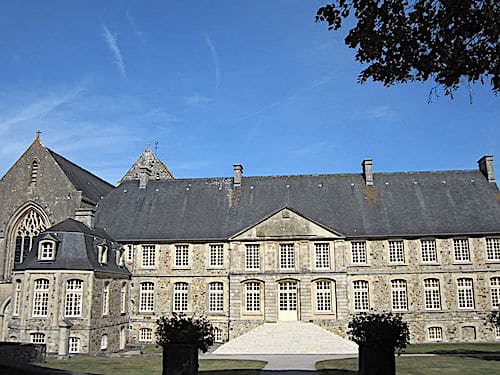
During the Hundred Years’ War, the abbey was transformed into a fortress by the castle’s defenders, and the damage it sustained necessitated the reconstruction of the choir and transept in the Flamboyant Gothic style during the 15th century.
Unfortunately, the abbey fell under the authority of a commendatory abbot, leading to a decline in its spiritual and architectural integrity.
By the time of the French Revolution, only a solitary monk remained. The abbey became national property, and its church was used as a stone quarry.
In 1832, Mother Marie-Madeleine Postel undertook the arduous task of rebuilding it, breathing new life into the dilapidated ruins. Although unfinished, the abbey was reconsecrated in 1856. The ravages of the Second World War caused further devastation, but the abbey was fully restored under the direction of the architects of the Historic Buildings department.
A visit to Saint-Sauveur-le-Vicomte is highly recommended during a stay in the Cotentin Peninsula, particularly due to its proximity to the Normandy Landing Beaches.
Department of Manche
Coordinates: Lat 49.386576 – Long -1.528140
Photos via Wikimedia Commons: Header & Photo4 and Abbey’s facade by Xfigpower CC BY-SA 3.0 – Castle with donjon by Kspingley CC BY-SA 3.0


