Cluny Museum – Latin Quarter
The Cluny Museum (Musée National du Moyen-Age – Thermes de Cluny – National Museum of the Middle Ages – Cluny Baths) was founded in the Hôtel de Cluny.
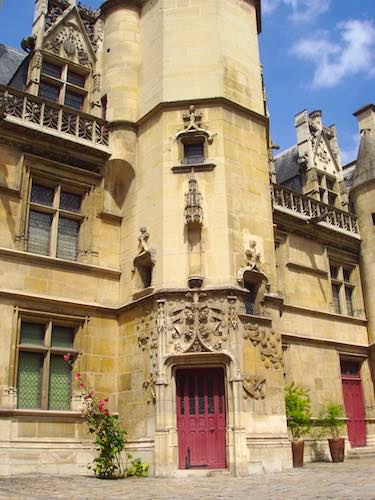
Located north of the Sorbonne University, in the lively Latin Quarter, this splendid private mansion was built on the ancient remains of Roman baths, and is a superb illustration of Flamboyant Gothic architecture.
More than two millennia ago, the flourishing metropolis of Lutetia (Paris) thrived on the left bank of the Seine, stretching from the riverbanks to the present site of the Panthéon. This city housed a forum, administrative buildings, baths, arenas, bustling markets, artisans’ workshops and private residences, scattered across the slopes of Montagne Sainte-Geneviève and its surroundings.
However, the tranquillity of Lutetia was disrupted by the barbarian invasions of 285 AD as they swept through the region.
Faced with these upheavals, the inhabitants hastily dismantled the buildings and reused their stones to construct defensive fortifications around the Île de la Cité, where they took refuge.
Thus, only few vestiges of this ancient Gallo-Roman city remains except for the ruined Roman baths of Cluny and the Arènes de Lutèce (amphitheatre) to the east of the city.
Hôtel de Cluny home to the Cluny Museum
The Left Bank was left abandoned for the following centuries. The few communities that had settled there were once again eradicated by the Normans during their siege in 887-88. The left bank thus remained semi-deserted!
In 1334, King Philip-Augustus sold the remains of the Cluny baths to Pierre de Châlus, Bishop of Cluny in Burgundy, who planned to build a sumptuous residence to accommodate the abbots of his diocese during their stays in Paris.
In 1485, Bishop Jacques d’Amboise initiated the construction of the current Hôtel de Cluny on the solid foundations of the Gallo-Roman baths, incorporating the remaining ruins into the new building, thus creating a harmonious fusion of ancient and medieval elements.
The Hôtel de Cluny stands today as a superb illustration of late Flamboyant Gothic architecture. Its facade is adorned with a wealth of medieval architectural features, including an imposing stair tower, finely crafted mullioned windows and ornate woodwork.

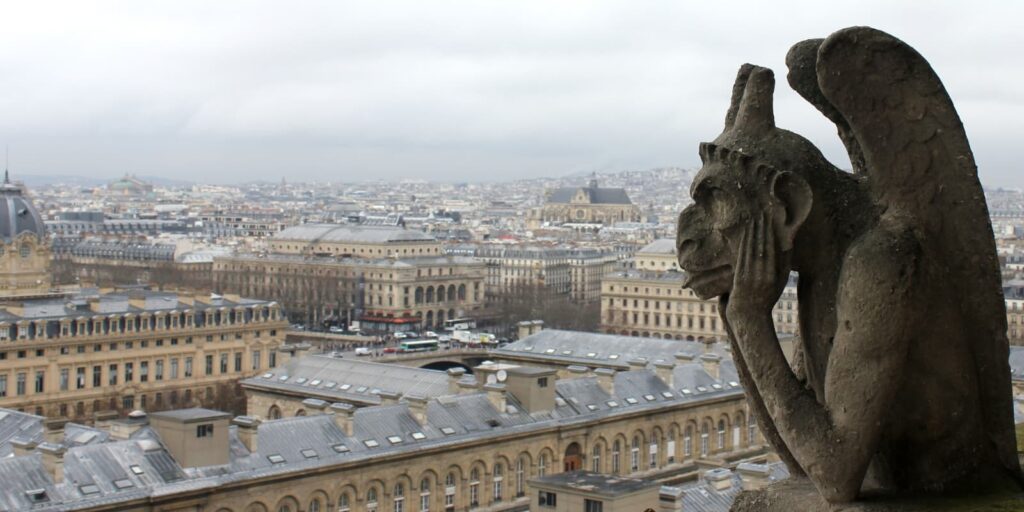
The roof is adorned with finely sculpted friezes and elaborate gargoyles, while each dormer window bears the emblem of the abbots of Cluny.
The exquisite chapel of the Cluny Museum, formerly the abbey chapel, is another masterpiece of Flamboyant architecture, testifying to great finesse and exceptional craftsmanship.
Over the centuries, the Hôtel de Cluny has undergone numerous expansions and embellishments, evolving to meet changing needs and tastes.
The private mansion was declared national property during the French Revolution. Alexandre du Sommerard, an avid antiquities enthusiast, moved into the Hôtel de Cluny in 1833, and set up a small museum to house his personal collections. His museum quickly captured the imagination of Parisians, drawing crowds eager to explore its treasures. Sommerard died in 1842, and the State acquired the Hôtel de Cluny and its important collections and founded the Cluny Museum.
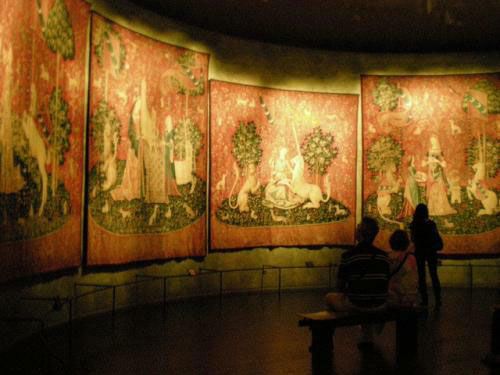
The Lady and the Unicorn tapestry
The Cluny Museum is entirely devoted to medieval art and houses a wealth of exceptional objects.
Among its impressive collections are stained-glass windows from the Sainte-Chapelle, as well as a collection of paintings, sculptures, historical documents and finely woven tapestries.
The museum has two exceptional tapestries: the Tapestry of Seigniorial Life, which vividly depicts the daily life of a nobleman, and The Lady and the Unicorn.
The latter is displayed in a rotunda specially designed for this purpose, where subdued lighting and efficient humidity control systems ensure its preservation and optimise the viewing experience.
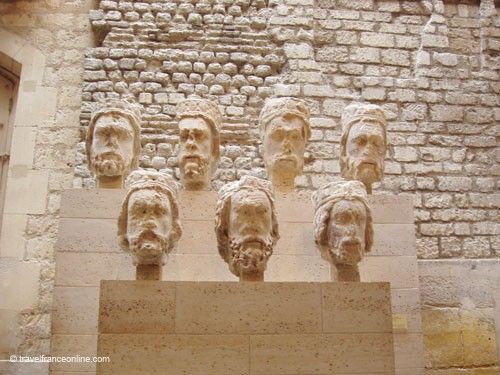
In addition to these masterpieces, the Cluny Museum displays the severed heads of the statues that once adorned the Gallery of the Kings of Judea on the facade of Notre-Dame Cathedral. The Parisians mistook these statues for French monarchs during the Revolution and beheaded them!
Musée des Thermes de Cluny – Roman Baths
The Roman baths were built around 215 AD and only operated for 60 years.
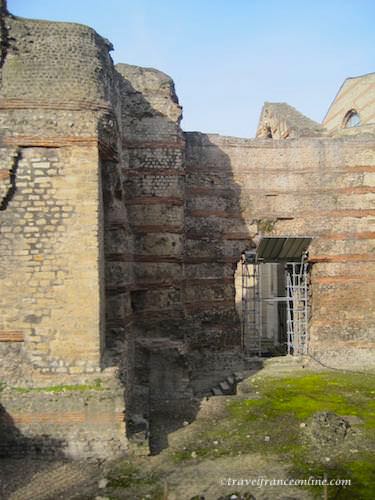
They were indeed partially dismantled during the barbarian invasions of 285 AD, and their sturdy stones were reused to erect a rampart around the Île de la Cité.
The remaining vestiges were further dismantled during the Norman incursions of the 9th century, while the Parisians fortified the ageing rampart.
However, fragments of the original baths remain. The Frigidarium, the Tepidarium and the Caldarium (the cold, warm and hot baths) give us a good glimpse of the building’s past splendour.
Surprisingly, one room, whose original function remains unknown, miraculously escaped destruction and retained its exquisite mosaics, alcoves, and refined ornaments.
In 1711, during the construction of a burial crypt under the choir of Notre-Dame Cathedral, large sculpted stone blocks, originating from the Roman baths, were unearthed. These stones were once part of an altar dedicated to the emperor Tiberius, an inscription attesting to their creation by the Guild of the Watermen of Paris, or Nautes Parisiens, between 37 and 14 AD.
Pilier des Nautes
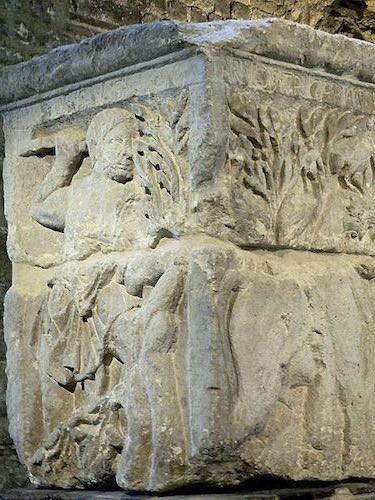
The most iconic of these stone blocks, a sculpted pillar known as the Pilier des Nautes (Pillar of the Nautes), is now on display at the Frigidarium.
This finely sculpted pillar, dedicated to a pantheon of pagan deities including Esus, the Gaulish God of War, and Vulcan, a major Roman deity, testifies to the fusion of Celtic and Roman influences.
These carved stones are the oldest remains discovered in Paris and offer valuable insight into the city’s origins. Their discovery confirms the decisive role played by the influential Parisian Nautes in financing the construction of the baths.
Members of the powerful Paris Boatmen’s Guild, the Nautes, exerted considerable political and economic influence over the centuries, thanks to their monopoly on river trade. Their authority extended beyond the Seine, encompassing nearby waterways such as the Marne, the Oise, and the Yonne, where they regulated trade and collected tolls on transported goods.
With Paris’s rise and expansion, their fortunes also increased. From humble river navigators, they became prosperous merchants, helping to shape the city’s destiny through their ingenuity and entrepreneurial spirit.

In 1246, King Louis IX, known as Saint Louis, granted Parisians the right to elect their aldermen, or échevins, exclusively from among the members of the Guild of Boatmen. This pivotal decision significantly strengthened the guild’s power, elevating its leader to the prestigious position of Provost of the Merchants of Paris (mayor).
Thanks to this appointment, the guild took over the administration of Paris and exerted considerable influence on the city’s affairs. Their emblem, a striking depiction of a silver-white ship cutting through tumultuous waves against a bright red background, has become a powerful symbol of Parisian identity and resilience:
“Fluctuat nec mergitur” – “She is battered by the waves but does not sink”
The Musée des Thermes de Cluny (Cluny Baths Museum) is part of the Cluny Museum.
Directions: 5th District – 6 Place Paul Painlevé
Metro: Cluny-La Sorbonne on Line 10 and RER B
Coordinates: Lat 48.850187 – Long 2.343312
Source Photos: “Lady and the Unicorn and Abbots’ Flamboyant chapel by Karin Bates Snyder aka karinlynn68 © All rights reserved – Photo via Wikimedia Commons: Pilier des Nautes de Jupiter Source Clio20 CC BY-SA 3.0