Roman Theatre or Théâtre Antique
The Arles Roman Theatre, or Théâtre Antique in French, is one of eight remarkable monuments that earned the city its place on the UNESCO World Heritage List in 1981:
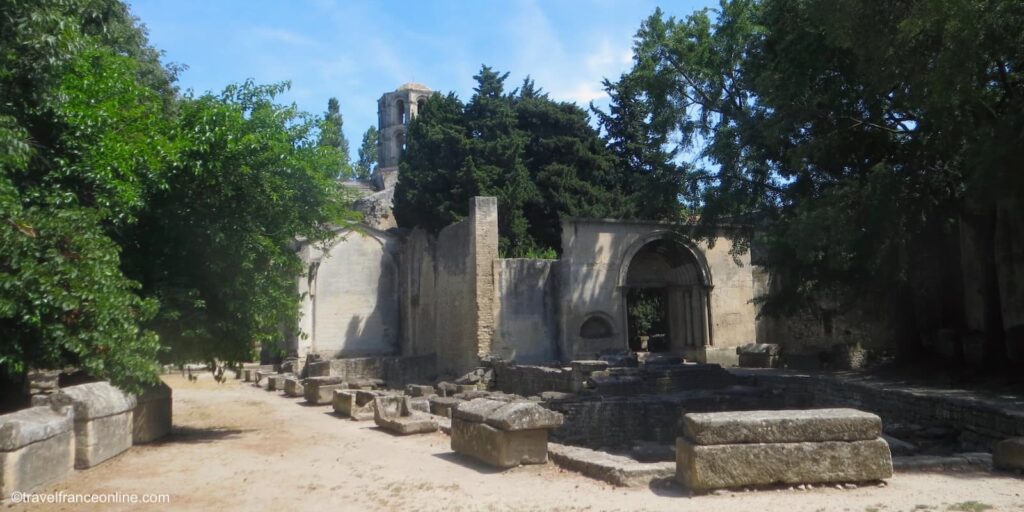
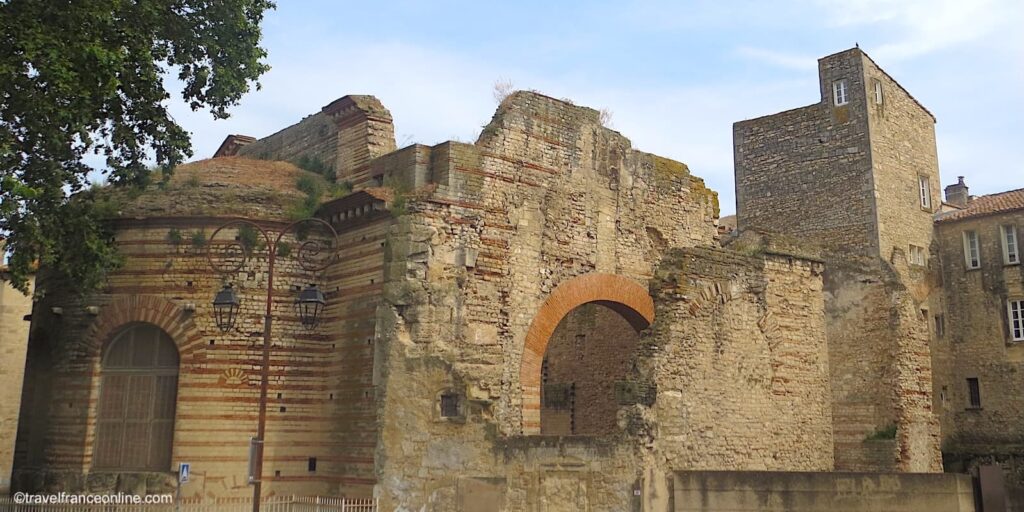
The Cathedral and Cloister of Saint-Trophime, the Alyscamps necropolis and the Church of Saint-Honorat, the Forum Cryptoporticus, the Roman obelisk, the Baths of Constantine, and the Amphiteatre.
In a previous article, I explained how a friend and I set out on our French Camino, a section of the Via Tolosana, one of the four pilgrimage routes to Santiago de Compostelle, starting from Arles. Having never visited this historic city, we had set aside a full day to explore it.
After pacing the tiers of the amphitheatre (our first stop), and exploring its galleries time and again, we found it hard to tear ourselves away from this exceptional monument. Yet we had to press on; our next stop was Arles Roman Theatre. Thanks to the pass we had purchased, granting access to all the ancient monuments as well as several museums, we just had to scan a QR code to enter.
Arles Roman Theatre, one of the largest of the Roman world
Although less well-preserved that the amphitheatre, Arles Roman Theatre remains impressive; it is located just a stone’s throw away, atop the hill known as Colline de l’Hauture. The Romans built it along their decumanus, the east-west road typical of all their cities.
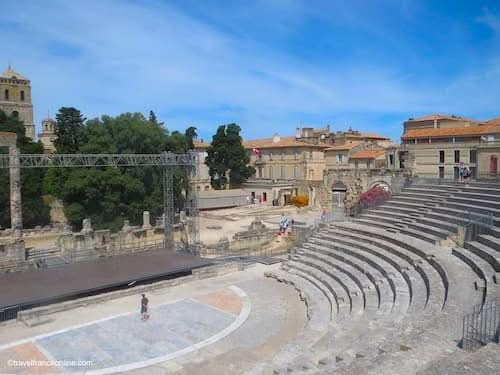
Arles Roman Theatre was completed about a century before the amphitheatre, in the late 1st century BC, during the reign of Emperor Augustus.
It was among the very first stone theatres in the Roman world and was considered one of the most refined and richly decorated. Augustus clearly desired a theatre that reflected the importance he attached to the Roman colony of Arelate, as Arles was then known.
The semicircular tiers faced the stage. A monumental wall rose behind the stage, serving as both a backdrop and a decorative feature. Modern metal structures now help define the space and ensure the safety of the seating areas, as the theatre remains in use.
The stands comprised 33 rows capable of accommodating up to 8,000 spectators. As in other Roman structure, social hierarchy was observed: the plebeians sat on the upper rows, while the patricians occupied the lower tiers and the orchestra area!
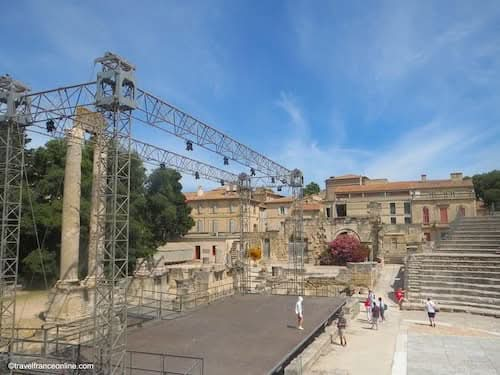
Sitting in these ancient stands, it was easy to picture the inhabitants of Arelate, packed together, captivated by the actors’ performances. I could almost hear their murmurs and the comedians reciting their lines.
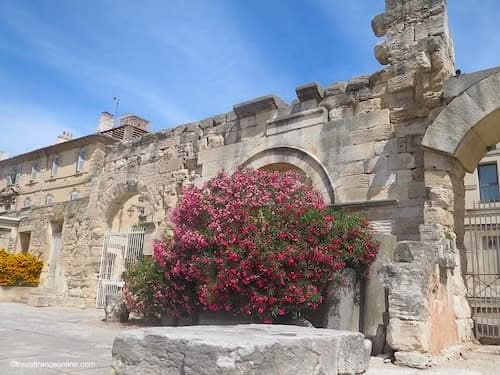
Today, these beautifully restored ruins are enhanced by clusters of oleanders that set off the ancient stonework; late spring, when everything is in bloom, is ideal to visit (if you can!)
Theatrical performances were held until the fall of the Roman Empire in the late 5th century AD. The Church then banned theatrical ‘pagan’ shows and turned the theatre into a quarry. The old stones were used to build the Basilica of Saint-Etienne, which was replaced in the 12th century by the Basilica of Saint-Trophime,. Little thus remains of the stage wall, aside from pillar bases and two columns that have amazingly escaped destruction!
In the following century, part of Arles Roman Theatre’s enclosure was incorporated into the city walls, and a defensive tower known as Tour Roland was erected on its southern flank. Amazingly, this tower now blends harmoniously with the monument, giving the impression that it had always been part of it!
Arles Roman Theatre’s renaissance
Over the centuries, the site of the old theatre was developed with houses and religious buildings; it’s a true miracle that so many remains have survived!
It wasn’t until1728, thanks to an enlightened mayor of Arles, that the first excavations began.

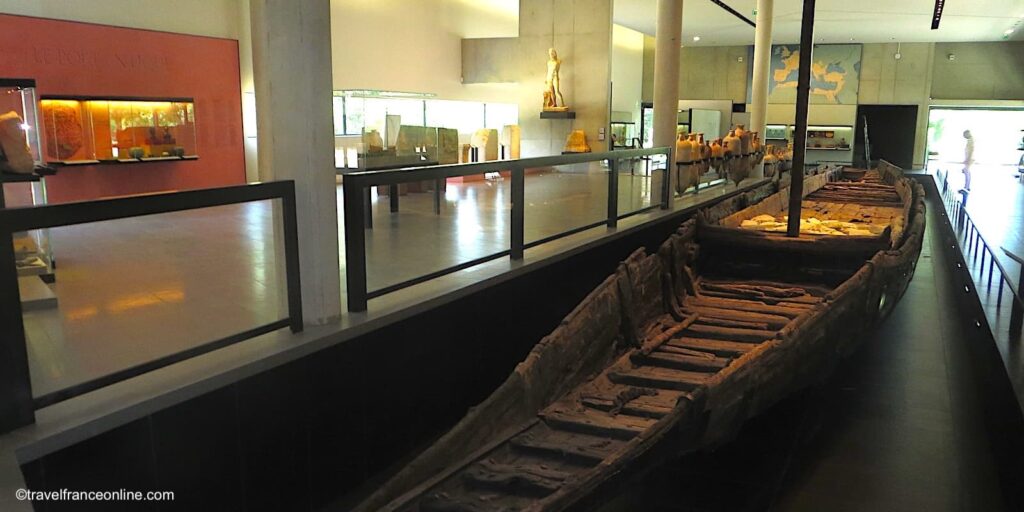
These continued over the following decades. The theatre was eventually fully excavated in the 19th century, unearthing remarkable ancient artefacts: the famous Venus of Arles, which is actually a statue of the goddess Diana and is now in the Louvre Museum; a bust of Apollo, and the Head of Arles (a head of Venus, the body has been lost), which are now on display at the Musée Départemental Arles Antique, a must-see museum.
Fortunately, Arles Roman Theatre was designated a a Historical Monument I 1840 and inscribed on the UNESCO World Heritage List in 1981.
The other good news is that, just like the amphitheatre, the Théâtre Antique has returned to its original purpose and now hosts numerous performances and artistic events throughout the year!
The visit takes about half an hour, and since there are no covered galleries to provide shade, unlike the amphitheatre, don’t forget your hat and sunscreen, as it is always sunny and hot in Arles!
N.B. You can discover the finest sarcophagi (and the exceptional artefacts excavated form the city’s Roman monuments) in the Arles ancient history museum, near the former Roman circus.
N.B. You can discover the exceptional artefacts excavated in the Arles ancient history museum, near the former Roman circus.