
La Pointe du Hoc, a strategic promontory
Pointe du Hoc presented a formidable challenge to any assault attempt.
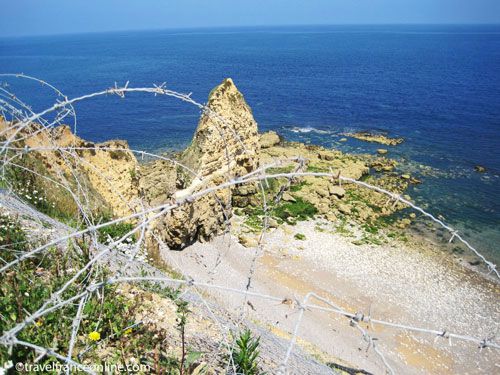
Its strategic location, elevated position, and formidable defences made it a key stronghold in the German coastal defence system. The belief that its cliffs rendered it inaccessible reinforced its image of invulnerability.
Capturing Pointe du Hoc, which overlooked Utah and Omaha Beaches, was clearly crucial to the success of the Allied landings.
The extensive fortifications, including bunkers, tunnels, trenches, and a powerful gun battery, strengthened the German defences, making Pointe du Hoc a formidable target for assault forces. With approximately 200 men and numerous machine gun positions guarding the battery, the Germans were prepared to defend La Pointe du Hoc at all costs.
The US Army Rangers in charge of the assault
The importance of capturing Pointe du Hoc was undeniable, and the task fell to 225 Rangers of the American army, under the command of Colonel James Earl Rudder.
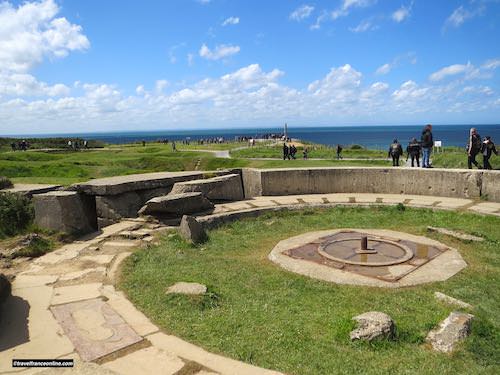
Their mission was clear: to destroy the battery, cut the road linking Grandcamp to Vierville, establish communication with troops on Omaha Beach and advance towards Grandcamp and Maisy to reinforce forces on Utah.
Despite meticulous planning, the Rangers faced a major challenge.
Adverse weather conditions and heavy German fire greeted them as they approached, causing a chaotic and trying landing. Many Rangers were killed, and much of their equipment was lost in the raging sea.
Undeterred, the Rangers continued their advance, arriving at the foot of the cliffs late and with only a few ropes to facilitate their ascent.
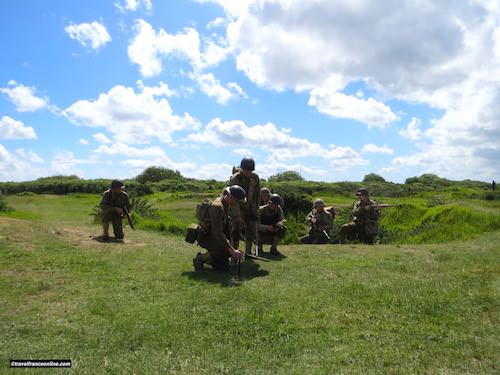
Colonel Rudder and his Rangers faced a formidable challenge when they landed at 7:00 AM. under a hail of German fire and in perilous conditions. The situation seemed hopeless, with the initial assault promising disaster.
Despite the overwhelming numerical superiority, the heroic Rangers began the ascent of the cliffs, braving enemy grenades and attempts to cut their ropes. Thanks to the naval artillery’s support, they reached the summit only five minutes after landing.
However, once they reached the top, the disappointment was great: the cannons they had come to destroy had disappeared. The Germans had moved them to a coastal path south of the battery to protect them from bombing.
Undeterred, the Rangers continued their advance, engaging in combat and destroying the cannons with grenades despite the perilous proximity of the German forces.
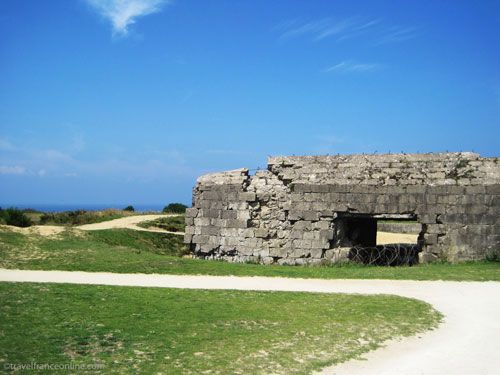
Despite their heroic efforts, the reinforcements encountered significant difficulties in reaching the besieged Rangers.
Lieutenant Colonel James Rudder and his Rangers suffered incessant German counterattacks that forced them to retreat repeatedly into enemy territory.
Despite the difficulties, they valiantly held their position at La Pointe du Hoc for two days, relying only on naval artillery’s support. Tragically, they suffered heavy losses, with 70% of their forces falling in combat.
Meanwhile, the bulk of the Rangers, having landed west of Omaha, finally reached Pointe du Hoc on June 8, relieving Colonel Rudder and his men. Although the operation achieved its objective, it was costly and two days late.
For his exceptional command and bravery, Lieutenant Colonel James Rudder was awarded the Distinguished Service Cross.
La Pointe du Hoc today
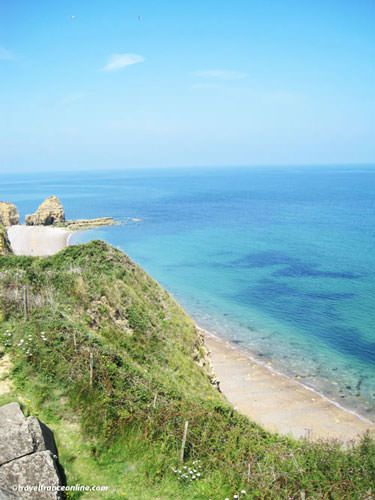
On January 11, 1979, France bequeathed the 13-hectare La Pointe du Hoc battlefield to the United States in gratitude for their support.
The American War Monuments Commission is responsible for its upkeep, ensuring that La Pointe du Hoc retains its battle-scarred appearance.
Wandering among the bomb craters, you can easily imagine the ferocity of the battles that took place there.
It is a testament to the courage, determination, and unwavering dedication of the men who fought valiantly to defend the world against Nazism.
The sacrifice of the 135 Rangers who fell on the cliffs of La Pointe du Hoc remains a reminder of the ultimate price paid to protect their comrades landing on the beaches of Utah and Omaha. Their bravery and selflessness will be forever honoured and commemorated.
2nd Rangers Battalion Monument on La Pointe du Hoc
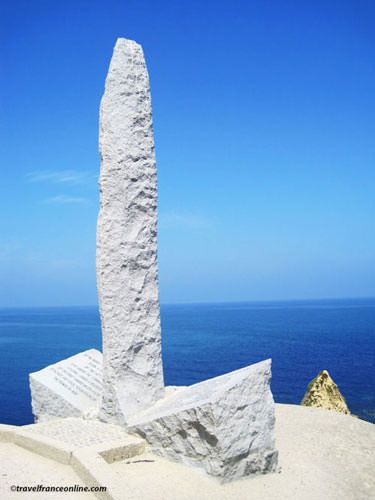
The Monument to to the 2nd Ranger Battalion Monument, erected by France in homage to the American Rangers commanded by Colonel James Rudder, is a symbol of remembrance and gratitude.
This simple granite pylon rises above an old German fire control casemate, a witness to the fierce battles that once raged in these parts.
It is believed that the bodies of German soldiers lie beneath the ruins, a grim testament to the toll paid by the war.
Standing out against the horizon, the monument riseshigh, reaching towards the sky as if to offer to heaven the souls of all those who perished during this assault, transcending the boundaries of nationality and allegiance.
It indeed pays solemn tribute to the courage and sacrifice of those who fought and died on these lands.
Department of Calvados
Coordinates: Lat 49.397461 – Long -0.989439
War Memorials:
Juno Beach: Bernieres-sur-mer – Corseulles-sur-mer – Graye-sur-mer – Douvres-la-Delivrande
Gold Beach: Arromanches – Ver-sur-mer
Sword Beach: Ouistreham-Riva Bella
Landing Beaches:
Sword – Gold – Juno – Utah – Omaha
Rediscover all the landing beaches during the 75th Anniversary Commemorations and Standing with Giants art installation in Ver-sur-mer (2024)


