Paris 2nd District
Paris 2nd district is often referred to as the Quartier de la Bourse, after the old stock exchange that long defined its identity.
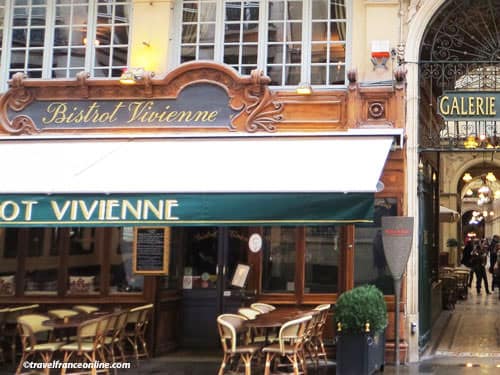
It includes: Quartier Bonne-Nouvelle, Quartier Gaillon, Quartier Vivienne and Quartier du Mail.
Paris 2nd district is the smallest with an area of 0.99 km². It has always been dense, dynamic and vibrant with activity. It developed along the old roads that once radiated from Paris to the northern, eastern, and western provinces. This heritage is reflected in its remarkable architectural heritage, with 163 listed historical monuments and buildings.
The famous Grands Boulevards define its northern boundary. The Boulevards of Capucines, Italiens, Montmartre, Poissonnière, Bonne-Nouvelle and Saint-Denis were opened in the late 17th century on the site of an old rampart. They have always been the mecca of Parisian artistic and social life, lined with cafes, theatres, and cabarets.
La Bourse, Paris’s historic stock exchange of Paris, is near the elegant Place des Victoires, a square created in the 17th century to celebrate the triumphs of Louis XV. The famous Rue de la Paix begins in the west and leads to Place Vendôme in the neighbouring 1st district.
Paris 2nd district has sixteen passages and nine galleries built in the 19th century. These covered arcades, such as the Galerie Vivienne and the Passage des Panoramas, retain an old-world charm, with their bookstores, shops and cafes.
That said, Paris 2nd district has one peculiarity: it lacks large public gardens! Historically, a district dedicated to the clothing industry, finance and insurance, it has indeed left little room for green spaces. Each of its four districts has its own history and atmosphere, shaped by centuries of transformations.
The QUARTIER DE BONNE-NOUVELLE was formed in the Middle Ages, outside the ramparts of King Philip-Augustus. For centuries, it was a working-class neighbourhood, frequented by outcasts and thieves, near the Church of Bonne-Nouvelle. The church was built on the Butte de Bonne-Nouvelle, an artificial mound formed from accumulated debris. The area is dedicated to a flourishing textile industry and renowned for its lively streets Rue du Sentier and Rue Montorgueil.
The aristocratic and commercial QUARTIER GAILLON developed around the Porte Gaillon, a fortified gate in the ramparts built by King Louis XIII in the 17th century. The gate was dismantled in 1700.
The QUARTIER VIVIENNE developed in the 18th century, when the National Library was established in a group of mansions along the Rue Richelieu, Rue Colbert, Rue Vivienne, and Rue des Petits-Champs. This attracted scholars, printers and booksellers who made the area a hub of intellectual and literary life.
Finally, the QUARTIER DU MAIL takes its name from the game of pall-mall, a pastime formerly practised near the ramparts of Louis XIII. Over time, the area transformed from a leisure area into a shopping centre.
Today, Paris 2nd district may lack green spaces, but it remains one of the most picturesque districts in Paris.
Metro stations serving Paris 2nd District
Line 3: Opéra, 4 Septembre, Bourse, Sentier, Réaumur-Sébastopol
Line 4: Strasbourg St-Denis, Reaumur Sébastopol, Etienne Marcel
Line 8: Opéra, Richelieu-Drouot, Rue Montmartre, Bonne-Nouvelle, Strasbourg St-Denis