Provence-Alpes-Côte d’Azur: A vibrant region in southern France
The Provence-Alpes-Côte d’Azur (PACA) region is situated in the south of France, along the sunny Mediterranean coastline. As one of the 13 administrative regions of France, it is the third most populous, representing 7.7% of the population of metropolitan France, and is the third most economically significant region.

The Provence-Alpes-Côte d’Azur region is made up of 6 departments:
- Alpes-de-Haute-Provence (04 – Digne-les-Bains)
- Alpes-Maritimes (06 – Nice)
- Bouches-du-Rhône (13 – Marseille)
- Hautes-Alpes (05 – Gap)
- Var (83 – Toulon)
- Vaucluse (84 – Avignon)
These departments were established during the French Revolution but were originally part of the historical regions of Dauphiné, Provence, Comtat Venaissin, and the County of Nice.
Provence-Alpes-Côte d’Azur enjoys a delightful Mediterranean climate, renowned for its abundant sunshine. The region boasts the highest national average of sunshine in France, with 2,400 to 2,700 hours of sunshine annually. In fact, the Bouches-du-Rhône and Var departments can experience up to 2,900 hours of sunshine each year!
Historical insights into Provence
The terms Provence, Côte d’Azur, and French Riviera can sometimes be confusing, as they refer to different aspects of the same region.
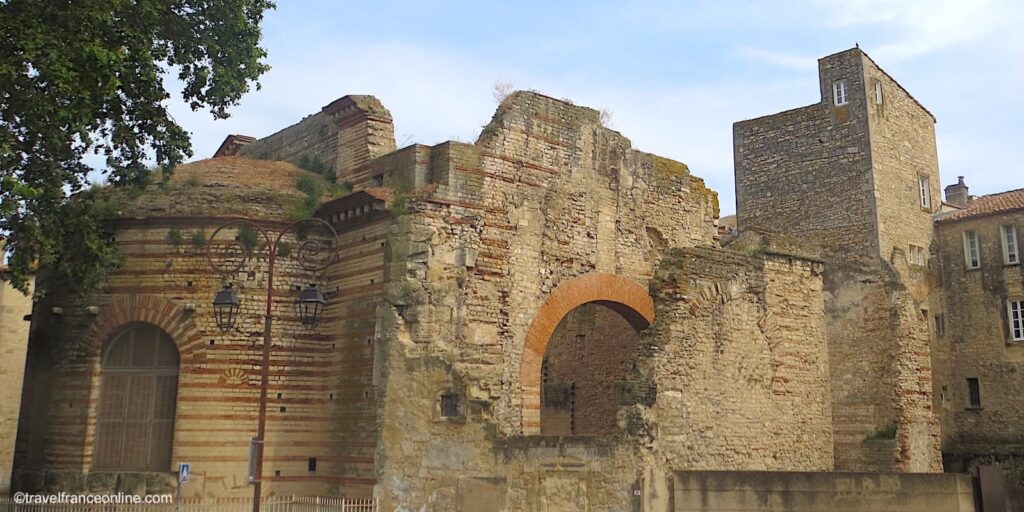
Historically, Provence was governed by the Counts of Provence until the late 15th century. It was then brought under the control of the French Crown, but the region remained deeply connected to its unique cultural and linguistic heritage. Provence was one of the first regions in France to embrace Christianity. However, it later played a significant role in the schism of the Church of Rome when Pope Clement V, born in France, moved the papacy to Avignon.
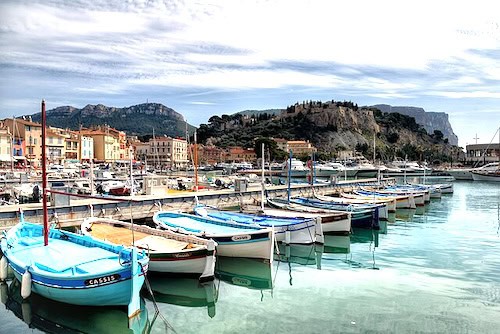
The Côte d’Azur, also known as the French Riviera, stretches from the Italian border to Toulon in the west. This glamorous coastline is home to some of the most famous resorts, including Monaco, Nice, Antibes, Cannes, St-Raphaël, St-Maxime, St-Tropez, Le Lavandou, and Cassis. While the English call it the French Riviera, the French have referred to it as La Côte d’Azur since 1887, a name inspired by the book of the same title by Stéphane Liégeard. He was captivated by the vibrant azure hues of the sea and sky in the region.
Provence-Alpes-Côte d’Azur: A tourist’s paradise
Provence-Alpes-Côte d’Azur not only enjoys one of the most pleasant climates but also offers a remarkable variety of landscapes. The majestic Alpes Mountains, a haven for skiers, separate Provence from Italy, while the Rhône Valley, a vital trade route for centuries, continues to serve as the region’s key north-south corridor (Couloir Rhodanien).
The Rhône River not only flows into the Mediterranean but divides into two arms, forming a stunning delta. Over millennia, the accumulation of sediments has shaped the Camargue, transforming it into a unique island. This expansive wetland is dotted with numerous lagoons (étangs) and surrounded by marshes, serving as a dedicated sanctuary for horse breeding.
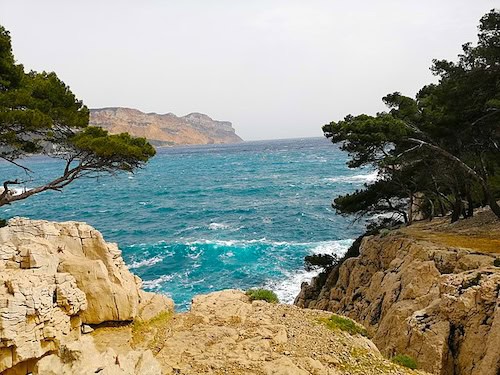
The chic French Riviera – Côte d’Azur is home to stunning golden sand beaches that stretch out to the warm, blue Mediterranean. Between Marseille and Cassis lies the land of the Calanques, a collection of charming, picturesque creeks. Along the coast, you’ll also find bustling fishing ports and lively seaside resorts, where the Mistral and Tramontane winds may make an appearance.
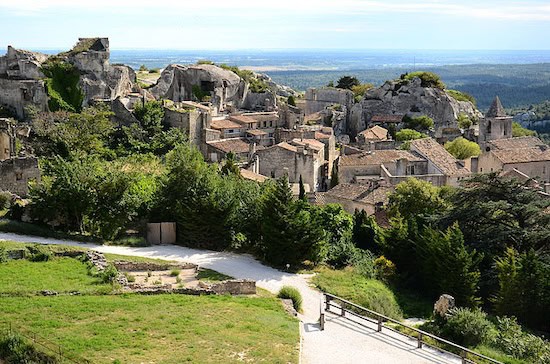
Venture further inland and you’ll be greeted by a sea of purple in June, when the lavender fields are in full bloom. The arrière-pays is a landscape of rugged moors and garrigues, where rosemary, thyme, sage, juniper, and small trees thrive in the limestone soil and under the regular summer drought. As you wander through this region, you’ll hear the soothing song of the cicadas and uncover charming villages, rich in architectural heritage, nestled among fields of lavender and olive groves.
Economy
The economy of the Provence-Alpes-Côte d’Azur region is diverse, dynamic, and one of the most important in France. It is the third-largest economic region in France, contributing significantly to the country’s GDP. Tourism is one of the cornerstones of PACA’s economy, with the region being one of the most popular tourist destinations in France and Europe.
Provence-Alpes-Côte d’Azur is known for its wine, particularly rosé wines from the Côtes de Provence. The region also produces high-quality olive oils, herbs (like lavender), and fruits. The lavender fields, especially in the Vaucluse, contribute to both tourism and the agricultural sector, with lavender products sold worldwide.The region also grows a variety of crops such as grapes, tomatoes, melons, and citrus fruits and supports a large number of vineyards that produce a substantial portion of France’s wine.

The region has a strong presence in aerospace and high-tech industries, particularly around the cities of Toulouse, Marseille, and Sophia-Antipolis (near Nice), which is known as a technology park. Companies in the region specialize in aviation, telecommunications, and defense technology. It has a growing biotechnology sector, with research centers and pharmaceutical companies specializing in health, med-tech, and biotech innovation, while Nice and Marseille have a history of manufacturing textiles. As a result the region has seen a rise in luxury goods production, further boosted by its proximity to Monaco.
These cities are also a hub for banking and finance services, drawing both national and international investments. Provence-Alpes-Côte d’Azur has several universities, research centers, and hospitals that contribute significantly to the service economy, especially in health and education.
Given its abundance of sunshine, PACA is one of France’s leading regions in solar energy production, and is involved in both the production of renewable energy and environmental technologies. It is in fact becoming a leader in green and sustainable industries, with efforts to protect natural resources like the Mediterranean coastline and inland mountain areas.
The coastal areas, especially the French Riviera, has a robust real estate market, driven obviously by tourism, luxury real estate, and second-home buyers.
Provence-Alpes-Côte d’Azur: A well-connected region
Overall, Provence-Alpes-Côte d’Azur is well-linked by a network of highways, rail, airports, and ports, making it easy to access from both domestic and international locations.
- A7 (Autoroute du Soleil) motorway runs from Lyon to Marseille and connects Northern and Southern France.
- A8 (La Provençale) connects Aix-en-Provence to the Italian border
- A51: Connecting Marseille to the Alpes-de-Haute-Provence region
- A9: While the A9 technically runs across the Languedoc-Roussillon region, it connects to the A7 near Nîmes, creating a link to Provence.
- A35 and A40: These roads connect Provence to other parts of France, like Grenoble and the Rhône-Alpes region
- RN7 (Route Nationale 7) runs from Paris .
- RN85 (Route Napoléon) runs from Grenoble through the Alpes and down to the coast.
The Provence-Alpes-Côte d’Azur region has several airports, including Nice Côte d’Azur, Marseille Provence (MRS), Toulon-Hyères (TLN), Avignon-Provence (AVN), Nîmes-Alès-Camargue-Cévennes (FNI), and Cannes-Mandelieu (CEQ).
Finally, it is home to France’s largest commercial port, the Port of Marseille, which connects the region to international shipping routes and is a major hub for cruise ships. The smaller Port of Nice and Cannes serve both commercial and leisure traffic, particularly cruises and yachts, which are central to the region’s tourism sector.
As you can see Provence-Alpes-Côte d’Azur stands as a dynamic region, where its breathtaking landscapes, rich cultural history, and robust transport network combine to offer a unique experience for all who visit.
Provence-Alpes-Côte d’Azur in numbers:
Area: 31,400 km2
Population: 4,951.388 (2010)