Cassis, a picturesque port of the Mediterranean
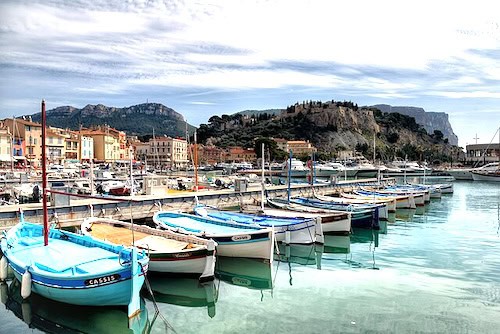
Cassis is a picturesque Mediterranean port founded by the Ligurians in the 3rd century BC. The Ligurians established their fortress, Baou Redoun, on the heights of Couronne de Charlemagne, overlooking the sea and the port below.
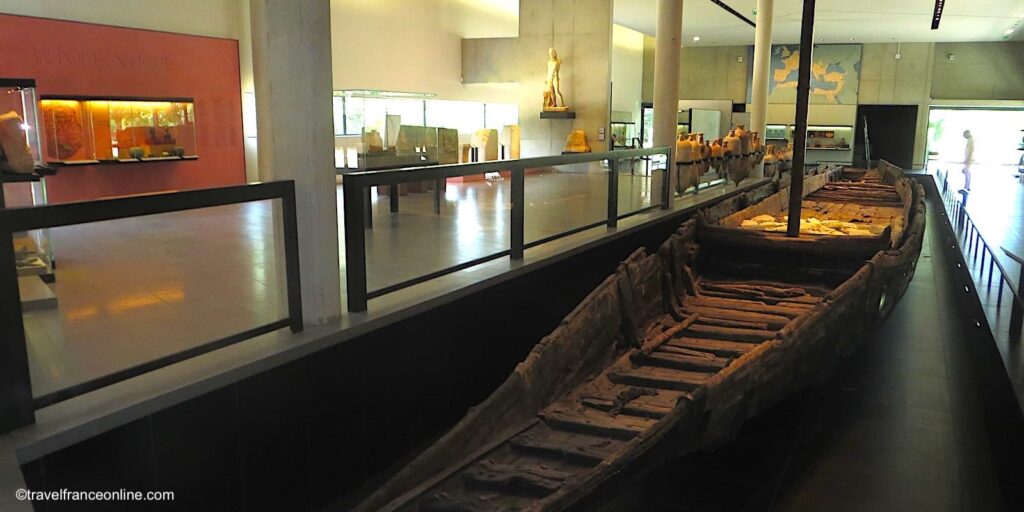
In the 1st century BC, the Romans developed the region, creating Carcisis Portus – the port of Cassis. Numerous archaeological excavations have unearthed artefacts and remains from this ancient period, now on display in the town’s museum.
Fishing and limestone quarrying were the main economic activities of Cassis until the beginning of the barbarian invasions in the 6th century. Quarrying resumed after the invasions and continued for the next four centuries. The Château de Cassis was built in the 8th century on the rocky spur to protect the port from further incursions.
Cassis was initially under the rule of Les Baux de Provence before being annexed to the County of Provence in the 15th century.
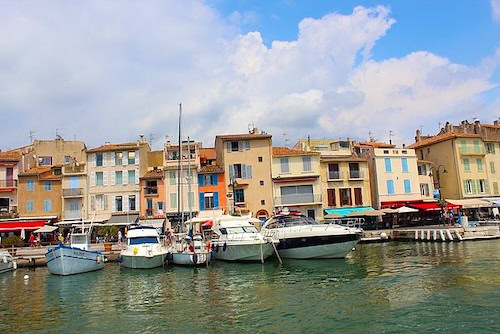
The village then came under the jurisdiction of the Bishopric of Marseille until the French Revolution, a connection reflected in the Cassis coat of arms, which features an episcopal cross.
Cassis experienced a period of expansion in the second half of the 17th century, diversifying its activities to include coral work, olive oil production, and viticulture, in addition to fishing and limestone quarrying. While many of these activities have disappeared, viticulture remains an essential element of Cassis’s identity.
Today, Cassis is renowned for its spectacular calanques (rocky inlets) and the impressive cliffs of Cap Canaille. Nestled among these natural wonders, the village has retained its historic charm, with its colourful houses lining narrow streets.
Cap Canaille
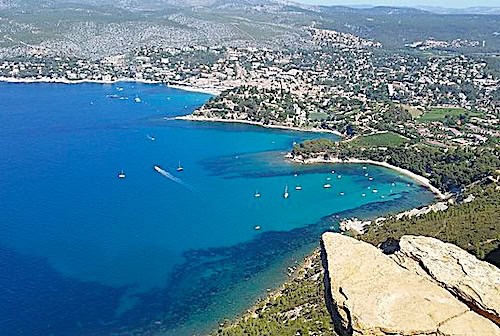
Cap Canaille, whose playful translation is Naughty Cape, has a more serious origin. It indeed derives from the Latin Canalis Mons, meaning Mountain of the Aqueducts or Mountain of the Waters, a name given by the Romans.
Some locals, however, believe it comes from the Provençal term Cap Naïo, meaning The mountain that juts out into the sea, which could be justified by the appearance of the landscape.
Cap Canaille is part of the Falaises Soubeyranes, a remarkable series of cliffs stretching along 11 km of coastline, from Cassis to La Ciotat. These cliffs are the highest sea cliffs in Europe, with Cap Canaille reaching an impressive height of 323 meters.
Considered an iconic site on the Mediterranean coast, Cap Canaille was listed as a historical monument in 1989.
National Park of the Calanques
Cassis is renowned for its calanques, deep, narrow coves nestled between imposing cliffs jutting into the sea, typical of the Mediterranean coastline.
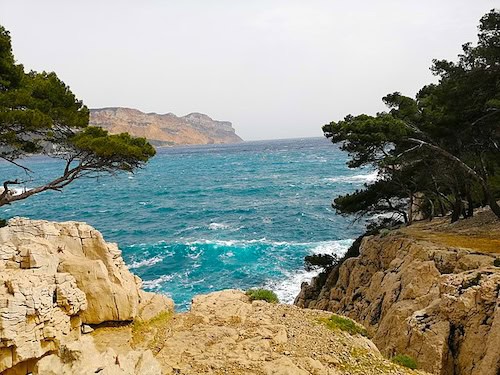
These spectacular geological formations have been sculpted over millennia by the relentless force of the sea, producing a rugged and dramatic coastline. The Soubeyranes cliffs, part of the Massif des Calanques, are emblematic of this natural wonder.
In 2012, the entire area was designated as the Parc National des Calanques, encompassing the municipalities of Marseille, Cassis, and Penne-sur-Huveaune. This protected area covers 8,500 hectares of land and 2,630 hectares of sea, thus preserving its unique ecological and geological heritage.
While many calanques are only accessible by boat, access on foot is strictly regulated, particularly depending on weather conditions. However, exploring these breathtaking landscapes by boat offers a safe way to appreciate their beauty and grandeur.
Vineyard
Cassis is renowned not only for its breathtaking landscapes but also for its small but prestigious vineyard, which covers 210 hectares. Located entirely within the commune, it is sheltered by the iconic Cap Canaille. Despite its modest size, this vineyard belongs to twelve passionate winemakers who collectively produce approximately one million bottles per year.
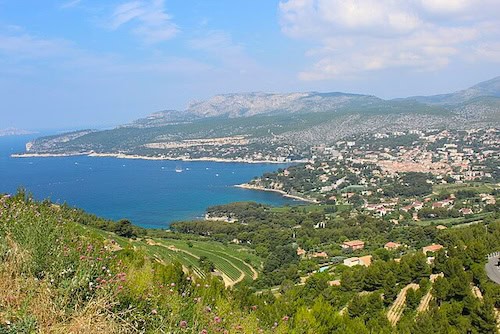
Prioritising quality over quantity, these winemakers are dedicated to crafting exceptional wines, with a particular focus on producing rare and precious dry white wines that are fruity. While red wine production is limited, the region’s white wines are highly prized for their distinctive character and finesse.
Nestled under the protective canopy of Cap Canaille, the vineyard benefits from optimal growing conditions, thanks in particular to the influence of marine humidity and an impressive 3,000 hours of sunshine per year. Sheltered from the mistral wind, the vines of Cassis thrive and produce grapes of exceptional quality. Cassis wine boasts a prominent place in the history of French viticulture, being one of the first wines to have obtained the AOC (Appellation d’Origine Contrôlée) in 1936.
Beaches
Cassis is also a popular seaside resort known for its magnificent beaches.
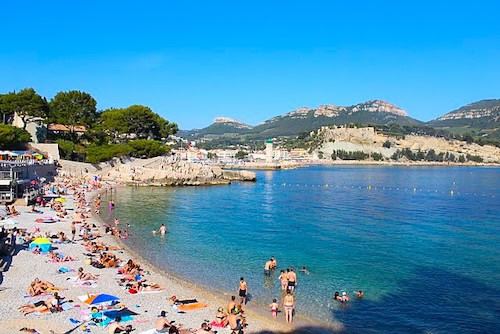
Plage de la Grande Mer, with its mix of sand and pebbles, is the main beach and lies at the foot of the old fortress. It is also the only supervised beach in Cassis. Plage de Bestouan, another pebble beach, has been awarded the Blue Flag for its exceptional water quality and unspoiled environment.
Nestled in the heart of the pine forests, Anse de l’Arène is a small rocky cove offering tranquillity away from the main beaches. For those seeking the wild beauty of the Calanques, Port Pin, named for the majestic aleppo pines that adorn the cliffs, is the ideal spot.
Plage Bleue, Les Roches Plates, and Les Roches Blanches offer breathtaking views of the bustling port and Cap Canaille, and further from the port, the Plage de Corton and Plage Pamplemousse are two other havens of peace, the latter being a naturist beach.
Department of Bouches-du-Rhône
Coordinates: Lat 43.215134 – Long 5.537120
Photos via Wikimedia Commons: Cap Canaille by Patrick S. CC BY 2.0 – Anse Grande Mer by Chabe01 CC BY-SA 4.0 – Harbour and Baie and vineyard and Header by René Hourdry CC BY-SA 4.0 – Parc des Calanques by Leonce Doulat CC BY-SA 4.0 – General view by Davric CC BY-SA 4.0