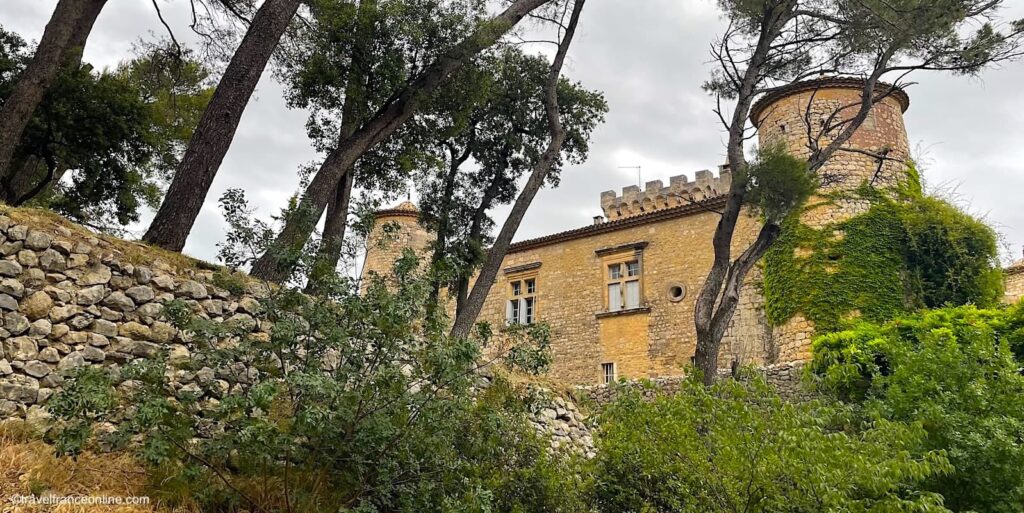
Bastides in Aveyron
Villeneuve d’Aveyron is one of the forty bastides built by Raymont VII at the beginning of the 13th century.
The Count of Toulouse took advantage of the unprecedented demographic boom that marked the beginning of the second millennium to develop the local economy. The word “bastide” (batista in Occitan) derives from “bastir”, which means “to build”.
These new fortified towns, or free towns, were built according to a grid plan. The streets thus intersected at right angles and were laid out around a central square, adjoining the church and the cemetery. Covered arches supported the houses surrounding the square and housed a multitude of shops and stalls on market days.
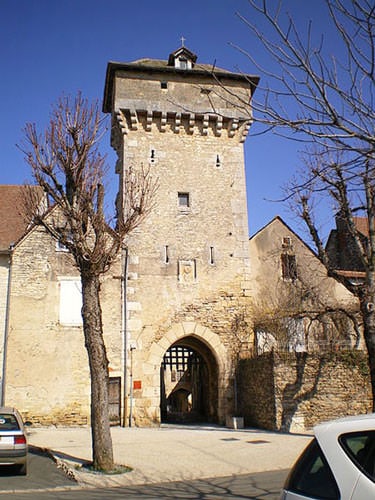
A thick rampart, pierced with several gates and flanked by watchtowers, encompassed the village, protecting it from any intrusion. The bastides were also divided into equal plots that were allocated to newcomers. These settlers benefited from special rights, privileges and franchises recorded in charters (exemptions from military service and obligations, inheritance rights…)
Bastide of Villeneuve d’Aveyron
The bastide of Villeneuve d’Aveyron, however, was originally a sauveté (sanctuary), founded in 1053. In the 11th and 12th centuries, religious communities indeed cleared entire forests to establish their fortified monasteries, known as sauvetés, salvetat or sauveterre. These have left their name to numerous villages and towns of the south of France.
These sauvetés, salvetat, sauveterre were surrounded by high walls and delimited by boundary stones, thus offering refuge and protection to anyone in need.That said, their purpose was also to attract rural populations to revitalise deserted regions and boost the local economy.
In 1231, Raymond VII elevated the sauveté of Villeneuve d’Aveyron to the rank of bastide. Villeneuve d’Aveyron quickly attracted merchants and artisans. The flourishing trade generated wealth for the county, as buyers and sellers of goods had to pay taxes.
Villeneuve d’Aveyron, like all the other bastides, eventually obtained autonomy. Each district, thus, elected a consul. These consuls represented the inhabitants in matters of administration, law, commerce, taxes, security, public health and were also responsible for road maintenance, much like our current governments.
Villeneuve d’Aveyron today
Cars and pedestrians enter the bastide through four fortified tower-gates.
Arcaded galleries (cornières) supporting the houses that frame the Place des Conques (the central square) now boast a wealth of restaurants, florists, art galleries and bookstores.
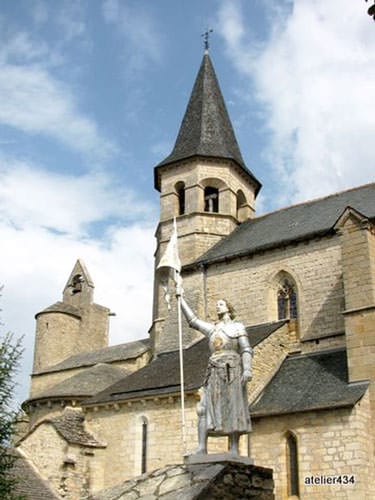
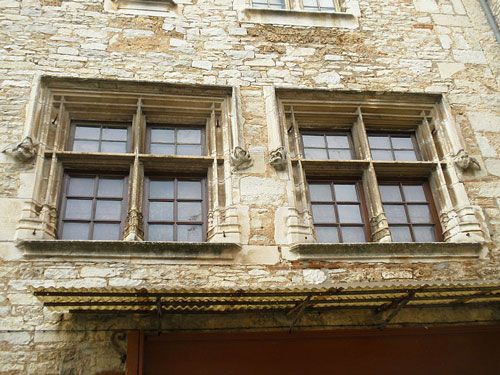
They also offer a beautiful view of the Eglise du Saint-Sépulchre (Church of the Holy Sepulchre) and the Maison du Roi (King’s House), where the king or his emissary stayed during their visits to Villeneuve d’Aveyron. The mansion now houses the town hall.
Department of Aveyron
Coordinates: Lat 44.437081 – Long 2.029552
Credits: Photos atelier434 and Text Melanged Magic by Evelyn Jackson – Edited by and for Travel France Online – Photo via Wikimedia Commons: Medieval gate by Dr Brains Public domain – Renaissance windows by Thérèse Gaigé CC BY-SA 3.0