
Tissu Vichy’s characteristics
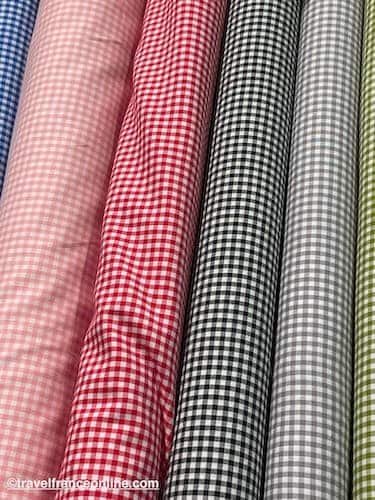
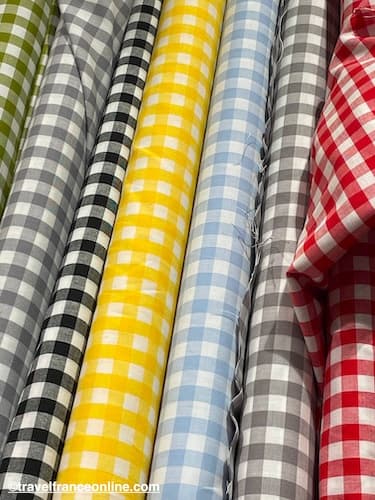
The tissu Vichy is a very popular fabric in France. This checkered cotton is generally available in soft shades, such as pastel pink or blue, but also in bolder hues, such as royal blue, navy blue, red, and green. Its versatility allows it to adapt to seasonal trends thanks to a wide range of colours regularly offered.
The fabric always features a white background enhanced with another colour, such as white and pink or white and blue, for example. The yarns are dyed before weaving, and although the size of the checks can vary, the standard dimensions are generally 8 mm by 15 mm. The tissu Vichy is known for its identical pattern on both sides, making it a favourite among seamstresses for its ease of use.
The tissu Vichy has been woven for centuries in many countries around the world. It was introduced to Europe in the 17th century by the British, who called it “gingham,” derived from the Malay word “genggang,” meaning lined.
Gingham fabric experienced a resurgence in popularity during the Second Empire in the second half of the 19th century. However, over time, its appeal waned, and it became primarily associated with school uniforms and lingerie.
Brigitte Bardot made Tissu Vichy trendy!
The pattern experienced a resurgence in popularity in 1959 when Brigitte Bardot married Jacques Charrier.
The French actress, then considered the most beautiful woman in the world, chose a pastel pink gingham fabric for her wedding dress instead of a traditional white, thus turning gingham an emblem of femininity! Thousands of dresses similar to hers sold in record time, and even gingham school uniforms saw a revival.
However, after a decade, the tissu Vichy fell out of fashion, deemed outdated. Fashion designers tried unsuccessfully to revive their popularity in the late 2000s. It nevertheless remains widely used in home furnishings due to its durability and affordability.
The red and white checkered pattern, reminiscent of the traditional rustic charm associated with picnics, is a popular choice for tablecloths and curtains in country homes and restaurants, as well as for packaging various food products, such as deli meats, cheeses, and jams.
And of course, pastel pink or blue hues remain favourites for decorating children’s rooms.


