Provencal fabrics – From India to Provence
Provençal fabrics evoke the radiant sun and vibrant colours of the South of France, and by extension, the holidays.
But these printed fabrics with their shimmering colours were not initially created in Provence. They were indeed imported from India and Persia (modern-day Iran) at the beginning of the 17th century, arriving through the bustling port of Marseille.
These textiles, unsurprisingly called Indiennes – Indian fabrics, attracted a diverse clientele despite their high price.
They became the latest fashionable fabrics, and quickly became in high demand. Thus, supply soon became insufficient to meet demand.
The beginnings of French production
Colbert, Finance Minister to King Louis XIV, recognised the commercial potential of this flourishing trade and, in 1664, founded the Compagnie Française des Indes Occidentales – French West India Company.
He also brought Armenian dyers and fabric manufacturers to France so they could pass on their expertise to local artisans.
The appeal of printed cottons became so great that they began to eclipse the French silk and wool industries, causing concern among silk manufacturers.
In 1686, they succeeded in persuading the king to ban the import and production of printed cottons. However, this ban unintentionally fueled smuggling, as the demand for the Indienne fabric persisted.
Thus, many printed cotton manufacturers relocated their workshops to Avignon, the “City of Popes,” which fell under the jurisdiction of the Vatican, not France.
To expand their production, the Avignon manufacturers of printed cotton fabrics sought the expertise of Jean Althen, an Armenian dyer renowned for his mastery of madder, a natural red dye.
They also employed textile artisans who shared their expertise in manufacturing techniques, particularly printing fabric with cardboard.
The ban on printed cotton fabrics was finally lifted in 1759, thus reviving the production of Indienne fabrics.
Classical Provencal style
From then on, Provençal weavers began creating their own patterns and colours, drawing inspiration from Indienne cottons. The popularity of Provençal fabrics continued to grow until the Industrial Revolution of the mid-19th century, which severely impacted artisanal production. Production slowed temporarily, but modern manufacturing methods eventually revived the sector.
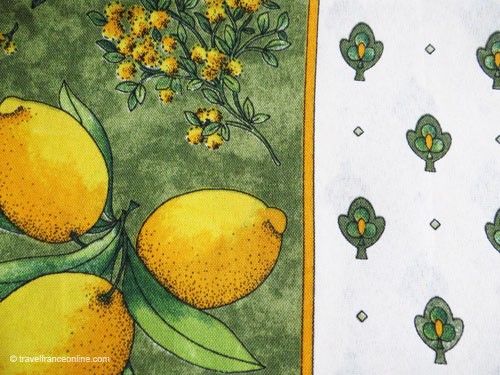
The patterns of Provençal fabrics have evolved over the decades. The original printed cotton motifs gradually gave way to the classic Provençal style, which is now widely recognised.
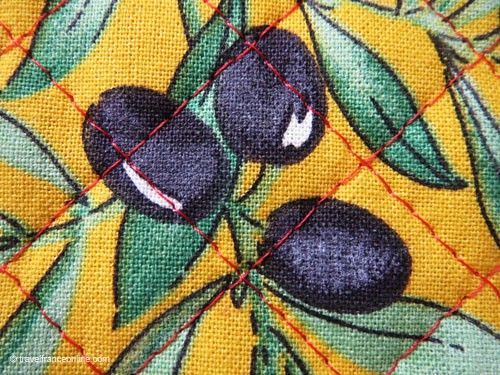
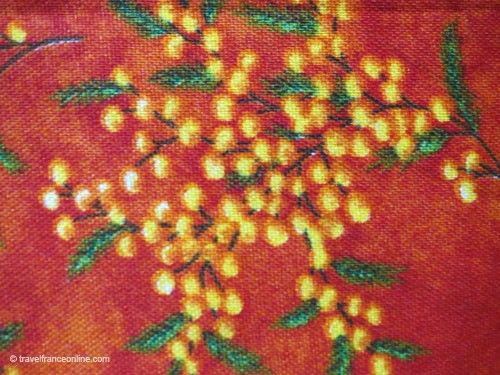
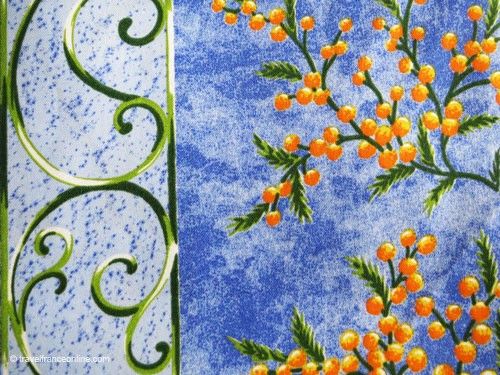
The manufacturers found inspiration for in the vibrant colours of the region’s natural landscapes: the purple lavender fields, the silvery green of the olive groves, the bright yellow of sunflowers, mimosas, and lemon trees, the ochre and purple earth of Roussillon, and the radiant blue skies of Provence.
Roussillon alone produces 17 different shades of ochre, ranging from saffron yellow to orange, including ochre red, rust, and crimson.

These elements combined to create unique patterns that adorn tablecloths, bedspreads, lavender sachets, and clothing. Each region contributed its own unique motifs, flowers, fruits, and insects, with diverse styles stretching from Manosque to Carpentras, from the French Riviera to the Lubéron, and far beyond. Some Provençal fabrics are even named after weavers, such as Marius or Orane.
Today, Provençal fabrics are accessible to all budgets and boast a wide range of patterns and colours to suit all tastes, making them highly popular among French and foreign tourists.