Lacaune Breed characteristics
The milk from Lacaune ewes is exclusively used to produce Roquefort AOC cheese.
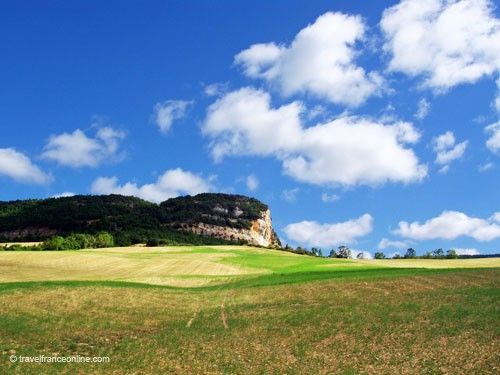
This breed originates from the Lacaune mountains, an arid region in the neighbouring department of Tarn.
Thanks to a long selection process, the breed has been developed to represent a herd of approximately 800,000 heads today.
A ministerial decree of 1902 defined the characteristics of the breed, including the size and weight of females and males, as well as the quality and distribution of their fine white fleece.
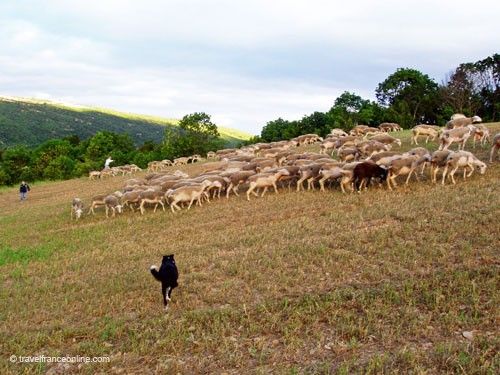
Lacaune ewes are hornless; they have an elongated head and a slightly rounded muzzle, and their legs, neck, head and belly are covered with fine hair rather than wool.
In 1922, dairy producers in the Roquefort region created a Regional Federation of Breeders.
In 1947, the genealogical data for Lacaune ewes were compiled and recorded in a document entitled “Livre d’élevage” (Breeding Book), which served as a starting point for improving the breed’s characteristics.
Over the following decades, further improvements were made, enhancing the breed’s suitability for milk production and the quality of Roquefort cheese.
Lacaune ewe milk and AOC Roquefort cheese
In 1969, a new branch was created for animals raised for meat. This division separated sheep farming activities into two distinct sectors: one focused on dairy ewes and the other on raising lambs for slaughter.

That said, Lacaune ewes are especially renowned for their exceptional milk production. During the lactation period, which extends from December to July, a productive Lacaune ewe can produce between two and three litres of milk per day.
This milk, highly valued for its richness and quality, is primarily used to produce Roquefort cheese.
The Lacaune ewes are milked twice a day. The milk collected from the 2,500 farms in the Roquefort appellation area contributes to the production of approximately 19,000 tonnes of Roquefort AOC cheese per year!
The highland pastures
The Lacaune ewes spend the long winter months sheltered in large sheepfolds in the valleys, where they give birth. As summer approaches, they undertake a seasonal transhumance to the high pastures of the Causses of Aveyron, in search of fresh grass.

This seasonal grazing not only provides food for the sheep but also is beneficial to the environment. It helps to mitigate the risk of fires, which can be triggered by intense summer heat and drought. Grazing also helps to maintain the health of the pastures and the integrity of the drailles, the local transhumance paths.
In the evening, the sheep take refuge in specially designed stone sheepfolds called jasses. However, one of the challenges of grazing on the high plateaus of the Causses is the scarcity of water. To remedy this, the shepherds designed unique structures called lavognes. These rounded water collection points, paved with stones or clay, collect rainwater for the herd.
In these vast landscapes, Lacaune sheep graze freely in large enclosures of several hectares, often equipped only with a sheepfold and a watering trough. They graze there until September or October, before beginning their return migration to the valley.
Transhumance
The transhumance takes place with a sense of tradition and impatience, often extending over several days but always beginning at dawn.

The farmyard echoes with the bleating of sheep and the earthy scent of wool mixed with straw. In the dim daylight, pairs of impatient eyes scan the surroundings, waiting for the call to leave.
As soon as the gates open, a crowd of Lacaune sheep rushes out, each striving to be the first to venture far away. It’s as if they sensed the imminent adventure, knowing that they would soon rediscover the vast wilderness.
Outside, the shepherds and their faithful dogs are making the final preparations, ready to guide the flock. At the signal, the procession sets off, with shepherds and dogs leading the way without interruption. However, within this movement, a natural order is emerging. The sheep gather in small groups, instinctively following their leader, often a black sheep.
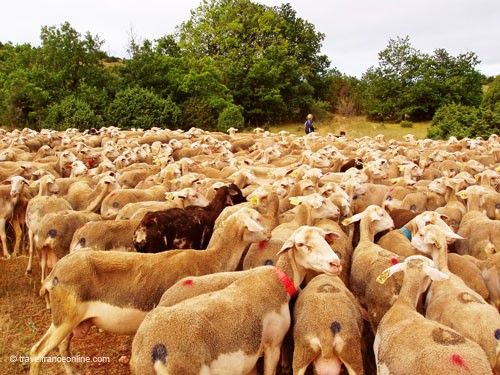
Dogs encircle the flock, ensuring that it stays on the right path without stopping to graze. This unchanging ritual is repeated every year, with a few occasional deviations when some adventurous sheep stray, closely followed by their curious followers.
But the dogs’ watchful gaze always brings them back to the right path. As the transhumance progresses, hundreds of Lacaune sheep travel along the paths, raising clouds of red dust with every strike of their hoof. With a cacophony of bleating, barking and whistling, the herd climbs the plateau.
Once they reach the heights, the sheep disperse into small groups, but they never lose sight of their leader, an unflappable guide the vastness of the plateau.
Cardanelle, the Sheperd’s Barometer
The high-altitude pastures of the Causses constitute a true botanical treasure, sheltering a great diversity of plant species adapted to this rugged terrain.

Amidst this sparse vegetation, aromatic herbs such as rosemary, thyme, and wild lavender thrive alongside hardy blue-purple thistles and robust dwarf oaks. A plant particularly prized by shepherds is the cardine, also called Cardanelle, Cardanella or Shepherd’s Barometer.
This creeping thistle, with its serrated leaves and delicate yellow flowers, has a very distinctive star shape. Its unique sensitivity to humidity makes it a natural weather indicator: its flowers open in the sun and close when the air is heavy with humidity.
The Cardine has become an emblem of the Grands Causses of Aveyron, symbolising the resilience and beauty of this unique ecosystem. As a protected species, it symbolises both the natural heritage and the region’s ancestral pastoral traditions.
Aveyron department