The unusual history of the Château de Valençay
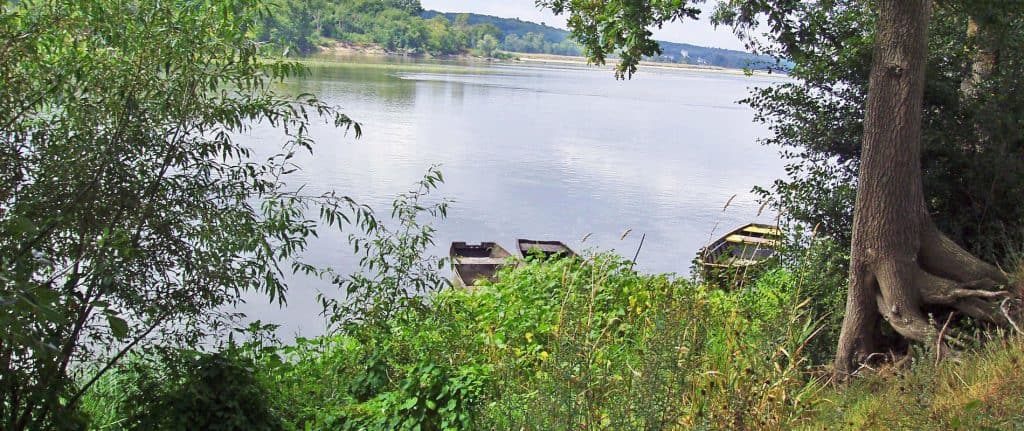
The Château de Valençay stands on the banks of the Cher River, in the Berry department, slightly removed from the heart of the Loire Valley.

Although built on the model of the Château de Chambord, it is of a more modest in size. Yet its striking architecture owes it a place among the most beautiful châteaux of the Loire Valley.
The name “Valençay” evolved from Valenciacus, a vast estate dating back to the Gallo-Roman period, which expanded over time with the addition of several outbuildings, eventually giving rise to a hamlet.
In 1220, Gauthier, Lord of Valençay, replaced a fortified tower, built in the 10th century to command the Cher River, with the first feudal castle. At that time, the Valençay estate covered 20,000 hectares.
The seigneury of Valençay initially belonged to the Count of Blois before being acquired by the d’Estampes family in 1451. In 1540, Jacques d’Estampes began the transformation of the medieval fortress, but upon his death, only the north facade, the entrance pavilion, and the corner towers were completed.

Work resumed between 1640 and 1650, transforming the Château de Valençay into a magnificent Renaissance residence. However, these improvements came at a considerable cost, which ultimately led to the ruin of its owners. The estate was divided up through successive family inheritances, and at the beginning of the 18th century, the d’Estampes family sold the Château de Valençay to the Scottish banker John Law, founder of the French Compagnie des Indes (East India Company).
A century later, Talleyrand, Emperor Napoleon III’s Minister of Foreign Affairs, acquired Valençay and transformed it into a sumptuous residence where he entertained foreign dignitaries. Talleyrand died in 1838 and was buried in the modest Notre-Dame Chapel. Valençay remained in the Talleyrand family until 1952, when the male line died out.
During the Second World War, the Château de Valençay served as a clandestine storage facility for iconic works from the Louvre Museum, such as the Winged Victory of Samothrace and the Venus de Milo, as well as for objects from the Department of Prints and Drawings and the Crown Jewels.
Château de Valençay, a superb example of French Renaissance architecture

The Château de Valençay is undoubtedly considered a masterpiece of Renaissance architecture and is also famous for its grand round tower, topped with a magnificent dome, a defining feature of its design.
The west wing, added in the 17th century, underwent modifications in the 18th century, adding a touch of classical style.
The central body of the château is dedicated to the Talleyrand family. The two salons house an extraordinary collection of Empire furniture, including remarkable pieces such as the famous table from the Congress of Vienna and Talleyrand’s desk.
The majestic Grand Staircase leads to Talleyrand’s bedroom and to the room where King Ferdinand VII of Spain stayed during the tumultuous years of the Peninsular War, from 1808 to 1814.
The spacious kitchen contains wax figures depicting daily life during Talleyrand’s time.
The exterior is as superb and refined as the interior.

The formal French garden, meticulously laid out in the early 20th century, showcases the splendid architecture of the buildings. This garden and the château are situated in the heart of a vast 150-hectare park, surrounded by a 19,000-hectare estate comprising farmland and forests.
The park has been designed to welcome families and offers numerous leisure activities: games and workshops adapted for children, as well as a small animal park where children can admire animals roaming freely.
The park was officially listed as a historical monument on March 25, 1992; the château on March 8, 2012, and the remaining outbuildings in 2013, and in 1979, the Valençay estate was placed under the management of the Association of Historic Châteaux.
Directions: Department of Indre
Photos via Wikimedia Commons: Header by Gerd Eichmann CC BY-SA 4.0 – Exterior chateau by Jean-Christophe BENOIST CC BY 3.0 – Grand staircase and Fontain by Frédéric BISSON CC BY 2.0 – Galerie des Portraits by Zairon CC BY-SA 4.0