
Baie de Somme – One of the most beautiful bays in the world

The Baie de Somme is among the most beautiful bays in the world.
Designated an exceptional Natural Site in 2000, a prestigious title it shares with other exceptional sites, such as Halong Bay in Vietnam and San Francisco Bay.
The Bay of Somme covers 70 square kilometres and opens onto the English Channel. It is formed by the confluence of the tranquil rivers Authie and Canche with the Somme, as well as the confluence of the latter with the Maye.
This unique site is the meeting point of fresh river water and seawater, creating a vast area of brackish water, a true haven for fish.
Natural environment
The shores of the Baie de Somme unfold into two distinct natural worlds: the mudflats, locally known as slikke in Picard language, and the salt marshes, also known as schorre and the prés salants also referred to as mollières in Picard.

Twice a day, the ebb and flow of the tide floods the mudflats on the southern shore, making their surface soft and smooth, devoid of vegetation but teeming with life. A thriving ecosystem flourishes beneath the surface, sheltering a multitude of terrestrial and marine invertebrates, bivalves, gastropods, and fish, as well as large colonies of shorebirds, including sandpipers, common snipe, and herons, along with gulls.
Conversely, the salt marshes, located mainly in the Marquenterre region on the northern shore, are only submerged at high tide. Here, hardy plant species like cord-grass, sea lavender, and mug-wort thrive in the saline soils, contributing to the region’s rich biodiversity. The mollières (salt fields) emerge beyond the foreshore, a coastal strip perpetually shaped by the rhythm of the tides. Here, flocks of sheep graze on the salt grasses, giving their meat a distinctive flavour that has earned them the prestigious Appellation d’Origine Contrôlée (AOC) Présalés de la Baie de Somme. The Baie de Somme is also a major producer of samphire, a flavorful plant that pairs wonderfully with fish and seafood.
Réserve Naturelle de la Baie de Somme
The Maye estuary, a jewel of natural beauty, was first protected in 1968 as a national hunting reserve, marking the beginning of its conservation process.

Over time, this reserve expanded to encompass a large part of the Baie de Somme, becoming a national nature reserve that now includes the renowned bird sanctuary of the Marquenterre Park. In 1986, the Conservatoire du Littoral (Coastal Conservancy), a public institution dedicated to coastal conservation, acquired the Marquenterre Park, entrusting its management to the Association Mixte pour le Développement du Littoral Picardien (Joint Association for the Development of the Picardy Coast).
Together, they work tirelessly to preserve the reserve’s diverse habitats, protecting the delicate balance between shorelines, mudflats, and salt marshes. Spanning a maritime area of nearly 3,500 hectares, the reserve stretches from the Pointe du Hourdel in the south to the Pointe de Saint-Quentin-en-Tourmont in the north, encompassing a rich diversity of coastal ecosystems. This vast expanse of protected land and water was officially designated the Baie de Somme National Nature Reserve (RNN 118) in 1994, cementing its status as a bastion of biodiversity and a sanctuary for countless species of flora and fauna.
Parc Naturel des Estuaires Picards et de la Mer d’Opale
The Baie de Somme Nature Reserve plays a vital role within the Picardie Estuaries and Opal Coast Marine Natural Park, established in 2012, demonstrating a collective commitment to marine conservation.
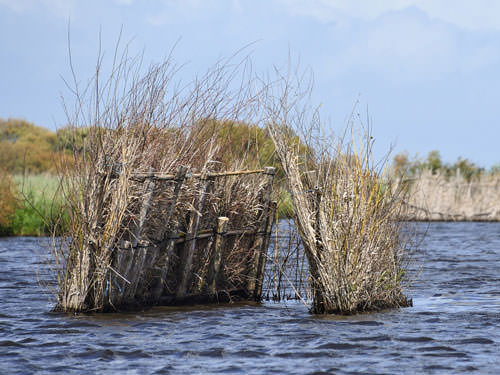
Encompassing the estuaries of the Somme, Authie, Canche, and Slack rivers, this marine nature reserve covers a vast area of 2,300 square kilometres. Its protected area extends along 118 kilometres of coastline, from Le Tréport to Ambleteuse, north of Boulogne-sur-Mer. At the heart of its mission, the park serves as a true beacon of education and conservation, fostering a deeper understanding of the marine environment and promoting the sustainable development of maritime activities.
The Baie de Somme, a true jewel of biodiversity in France, is home to one of the country’s largest wetlands and richly deserves its place within the prestigious Natura 2000 network. In 2011, the bay was awarded the Grand Site de France label by the French Ministry of Ecology, Sustainable Development and Spatial Planning. This label is a guarantee of quality, ensuring the preservation of local traditions and the quality of life for residents, while promoting a harmonious balance between conservation and sustainable tourism.Tourism
Tourism in the Baie de Somme
The Bay of Somme boasts an oceanic climate, making it a great holiday destination. You can explore the bay by bike, along a 44-kilometre cycle path with eight different routes, from the charming hamlet of Le Crotoy on the north shore to the picturesque town of Saint-Valery-sur-Somme on the south shore. You can also explore the bay by following the extensive network of hiking trails or by taking a charming steam train and getting off at each of its four delightful stations to explore in depth.
The ports of Le Crotoy, Saint-Valery-sur-Somme, and Le Hourdel also offer boat trips. Keep your eyes peeled as you cruise: you might spot seals frolicking along the shores of Pointe du Hourdel – a sight not to be missed! Beyond its natural beauty, the Bay of Somme offers a rich historical and architectural heritage, the charming medieval towns of Saint-Valery-sur-Somme and Rue with their cobbled streets, and the Bay of Canche, renowned for its delicious shellfish.
Somme department – Picardie
Coordinates: Lat 50.201389 – Long 1.626944
Photos Wikimedia Commons: Header by Ibex73 CC BY-SA 4.0 – Baie de Canche by Marie-Jo L. CC BY-SA 3.0 – Seal at Le Hourdel by OT Cayeux-sur-Mer CC BY-SA 2.0 – Parc du Marquenterre by Ras Zion Lion CC BY-SA 4.0


