Vaison-la-Romaine, one of the jewels of Vaucluse
Vaison-la-Romaine stands out as one of France’s premier destinations thanks to its remarkable Gallo-Roman heritage.

Nestled in the heart of the Vaucluse department, it is an integral part of the Mont Ventoux Regional Natural Park. Located between the Rhône Valley and Mont Ventoux, the town is surrounded by the Dentelles de Montmirail mountain range and boasts picturesque vineyards, olive groves, and verdant forests.
The town is divided into two distinct parts that developed on either side of a bend in the Ouvèze River.
The medieval Ville Haute – Upper Town is perched on the rocky promontory on the left bank. Conversely, the Ville Basse – Lower Town, which developed from the mid-19th century onward, flourished on the right bank, on the site of the old Roman town.
Vaison, 20 centuries of urban evolution
Vaison-la-Romaine has been continuously inhabited throughout the centuries, experiencing successive waves of construction and expansion spanning more than twenty centuries. Built, rebuilt, and enlarged on the same site, it often incorporated or reused ancient remains.

The rocky spur overlooking the meanders of the Ouvèze River has attracted people since antiquity. Excavations carried out at the beginning of the 20th century indeed unearthed artefacts dating from the Late Neolithic period (7000 to 3000 BC).
Subsequent excavations uncovered remains of dwellings and defensive ramparts from the Iron Age (700 to 500 BC) on the left bank of the Ouvèze, at the foot of the Upper Town.
However, it was the discovery of the vast Roman city on the right bank that made Vaison-la-Romaine one of the region’s must-see sites. The Roman vestiges, which cover some 15 hectares, have been meticulously excavated. They offer not only a glimpse into urban life but also reveal the architectural grandeur of ancient Vaison-la-Romaine.
Vaison, the City of the Voconces
In the 1st century, the town was known as Vasio Vocontiorum, “Vaison of the Vocontii,” and was home to the Gallic tribe of the Voncontii who had established their capital on the rocky spur. Located near a sacred spring dedicated to Vasio, Goddess of Springs, this locality held religious importance for the Vocontii. Over time, Vasio Vocontiorum evolved linguistically to become Vaison, and Veisoun in Provençal. This name persisted until the beginning of the 20th century, when archaeological excavations brought to light the town’s ancient past. The town was then officially renamed Vaison-la-Romaine.
Vaison-la-Romaine, the Gallo-Roman city
In the 2nd century BC, the Romans asserted their dominance over Provence, a conquest that included the territory of the Vocontii. In recognition of their allegiance, the Romans elevated Vasio to the status of a federated city rather than a colony. This status granted Vasio Vocontiorum significant autonomy and considerable privileges.

Vasio thus prospered and became one of the wealthiest cities in the Province Narbonnaise – Narbonensis province, thanks to its strategic location and flourishing agriculture. The Vocontii, now fully integrated into Roman society, expanded their city across the plain, reaching the right bank of the Ouvèze River. This period of growth was marked by the construction of essential infrastructure such as roads, bridges, aqueducts, baths, and a theatre, transforming the surrounding agricultural estates into prosperous hamlets and villages. At the end of the 2nd century AD, Vasio Vocontiorum covered an area of nearly 75 hectares.
However, the barbarian invasions in the 5th century, which precipitated the decline of the Roman Empire, dealt a severe blow to Vasio’s prosperity. The city was reduced to ruins, its once magnificent monuments abandoned and forgotten until the beginning of the 20th century, when excavations carried out at the Puymin and La Villasse sites unearthed the remains of this ancient city.
Vaison, seat of a diocese and part of the County of Toulouse
The decline of the Roman Empire also marked the rise of Christianity, and by the 4th century, Vaison had become the seat of a bishopric. The town developed on the right bank of the river, around the abbey, the Cathedral of Notre-Dame de Nazareth, and the episcopal palace.

At the beginning of the 12th century, Vaison found itself in a unique situation. It was placed under the sovereignty of the Pope but also of the Marquisate of Provence, the latter being under the authority of the Count of Toulouse! This dual sovereignty obviously led to territorial conflicts: the bishops administered the Lower Town, while the Counts of Toulouse oversaw the Upper Town, where they built a wooden defensive tower.
In 1195, Raymond VI reinforced the defences of the Upper Town with a stone fortress. The Lower Town experienced a demographic decline, as its inhabitants migrated to the rapidly expanding Upper Town, which enjoyed a period of prosperity throughout the Middle Ages.
However, from the 17th century to the mid-19th century, the right bank saw the emergence of new dwellings due to a lack of space in the Upper Town. This period marked a new era of prosperity laid the foundations of the modern city.
Ville Haute
The Upper Town of Vaison-la-Romaine developed around the imposing castle of the Counts of Toulouse. Perched on a rocky promontory, it enjoyed a breathtaking view of the lower town and the surrounding countryside.

The medieval town covered more than 3 hectares. It was fortified in the 15th century and was accessed with a drawbridge. The houses, built with stones salvaged from Roman buildings on the right bank of the river, line narrow lanes that wind their way up to the castle courtyard and through charming little squares adorned with delightful fountains.
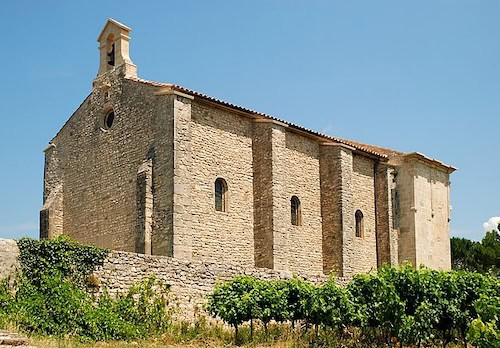
One of the landmarks is the Cathedral of St. Mary of the Assumption, also known as the Cathédrale Haute, which was listed as a historical monument in 1994. Built in the 15th century and undergoing periodic modifications until the 18th century, it replaced a 12th-century church to accommodate the growing population of the 13th century. Remarkably integrated into the cliff-side, its base forms part of the rampart. Although closed in 1897, it was never deconsecrated and was later converted into a parish church. Following extensive restoration work in 2015, the cathedral now serves as a cultural venue and hosts various events celebrating its rich heritage.
The Roman city of the Right Bank
The Villa Basse, on the right bank of the Ouvèze River, corresponds to the district that developed around the Notre-Dame de Nazareth Cathedral, the main church of the diocese.

In the 12th century, this part of the town was frequently pillaged on the orders of the Count of Toulouse, who contested the bishop’s authority over the region. Today, few vestiges remain of this medieval town, which was gradually abandoned in the 13th century in favour of the Upper Town.
The Lower Town also encompasses the Gallo-Roman town, where significant excavations have unearthed two major sites: Puymin and La Villasse. These Gallo-Roman ruins are among the most important in France, with approximately 15 hectares currently so far excavated.
However, much of the ancient city still lies beneath the modern streets and buildings of Vaison-la-Romaine, just waiting to be explored.
Bridge of Vaison-la-Romaine, a marvel of Roman civil engineering

The Roman bridge is an emblem of Vaison. With its 17.20m long and 9m wide single arch, it connects the Ville Haute to the Ville Basse, anchored firmly into the cliff by five semi-circular lateral arches.
A true feat of Roman civil engineering, this bridge played a vital role throughout the centuries, transforming Vaison into a bustling river port during the Roman era and facilitating transport well into the Middle Ages.
Despite numerous trials, including devastating floods, the bridge still stands and was listed as a historical monument in 1840.
Puymin Roman site
Excavations on Colline de Puymin (Hill) have unearthed the ruins of several remarkable buildings, including private mansions, places of worship, and even a theatre.
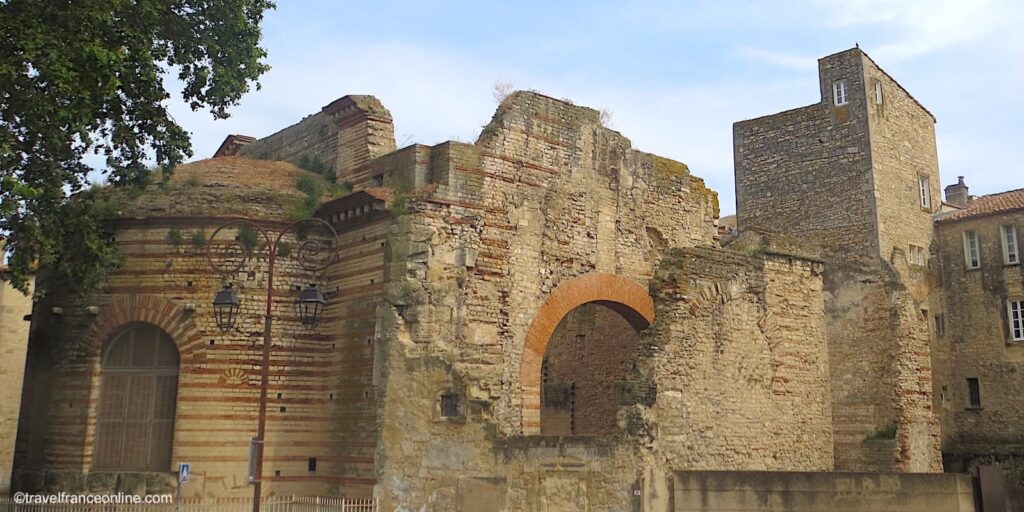
Among the most remarkable discoveries is the Maison de l’Apollon Lauré –House of the Wreathed Apollo, which covers 2,000 square metres. This mansion owes its name to the discovery of a white marble head of Apollo among its remains.
The Maison à la Tonnelle – House with the Arbour, meanwhile, covers an even larger area of 3,000 square metres. Originally a modest farmhouse built in the 1st century AD, it underwent significant renovations in the following century, transforming into a large, multi-story patrician residence. Its summer dining room was located in a vast courtyard, sheltered by an arbour, from which it takes its name.
The excavations also revealed a large sanctuary composed of porticoes surrounding a garden with a pool and a central structure. Opposite this garden were a room and an altar, suggesting that the sanctuary was probably dedicated to a Roman deity, an emperor, or a local dignitary. Among the objects discovered were replicas of busts of Emperor Hadrian and his wife Sabina.
Roman Theatre of Puymin
The theatre, built in the 1st century AD on the slopes of Mount Puymin, could accommodate up to 7,000 spectators. It is believed to have been dismantled after the decline of the Roman Empire and the decline of paganism.

This hypothesis is supported by the discovery of numerous statues of Roman emperors and deities used to fill the pits for the theatre’s machinery, as well as by the reuse of its stones in various constructions.
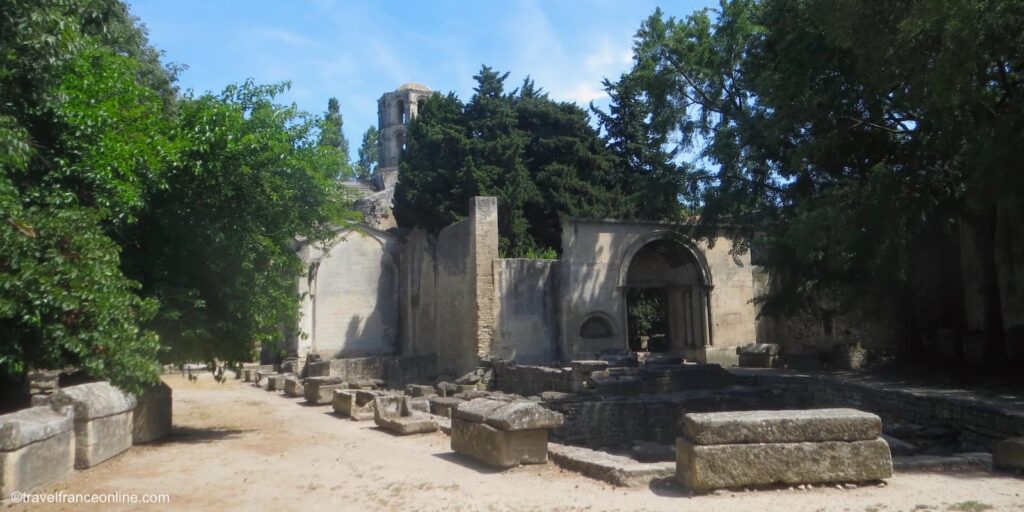
Many stones from the theatre were reused to make sarcophagi discovered in the necropolis unearthed beneath the Saint-Quentin Chapel, and for the construction of houses in the medieval town.
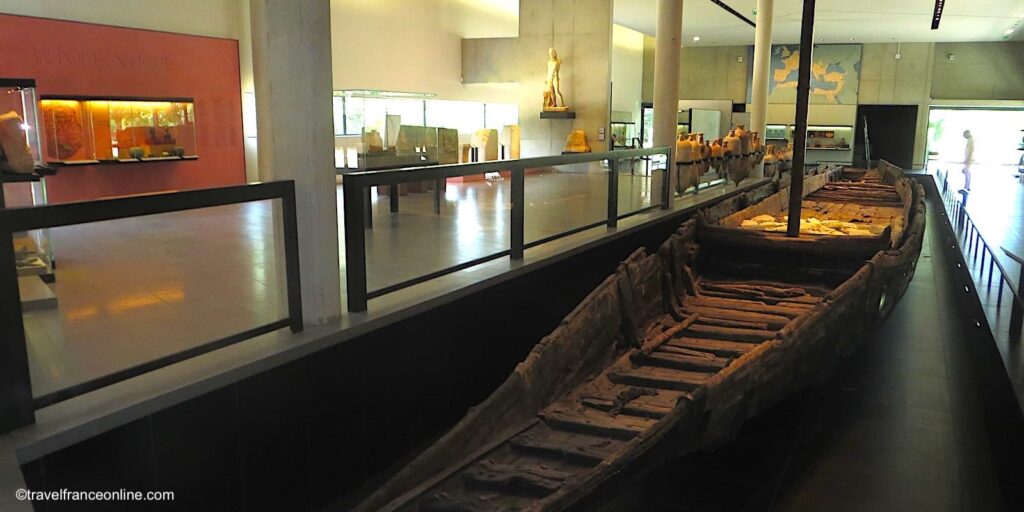
The discovery of artefacts dating from prehistory to the Gallo-Roman period has significantly enriched our understanding of the history of Vaison-la-Romaine. These artefacts are now on display at the Théo Desplan Museum, located in the heart of the site. Classified as a historical monument in 1862, the theatre has undergone restoration work and currently serves as a venue for cultural events.
La Villasse
La Villasse was the affluent patrician quarter of the Roman city, home to grand residences.
A small marble statue of a dolphin was discovered in one of them, since known as the Maison du Dauphin (House of the Dolphin). Originally built as a farmhouse in the 1st century, the Maison du Dauphin underwent significant expansions and transformations in the following century, becoming a prestigious private mansion.

The Maison du Buste d’Argent (House of the Silver Bust), takes its name from a silver bust discovered within its walls. This mansion, with an impressive area of 5,000 square metres, was the largest in ancient Vaison. Its integration with the public baths and gymnasium, built between 10 and 20 AD, highlights its importance within the community.
The Maison du Paon (House of the Peacock), near the northern baths, overlooks the Rue des Boutiques, and takes its name from the superb 200 m2 mosaic that covers the floor of the main room. The Rue des Boutiques, as its name suggests, was lined with numerous luxury boutiques.
Located south of La Villasse archaeological site, the Notre-Dame-de-Nazareth cathedral dates from the 13th century and blends elements of Provençal Romanesque and Gothic architecture. It was built on the site of a Merovingian chapel, probably constructed around the 6th century on Roman foundations.
An impressive, listed avenue of plane trees leads to the château located north of the Maison du Dauphin. Formerly the residence of the Marquis de la Villasse, it was, until the mid-19th century, one of the few buildings on the right bank of the Ouvèze River. At that time, the inhabitants of Vaison-la-Romaine lived primarily in the upper town. The château stood within a vast agricultural estate that extended over the archaeological site. It was renovated to house the numerous remains unearthed during the excavations.
The Saint-Quentin chapel is dedicated to the patron saint of Vaison and a 6th-century bishop. It was built in the 12th century on a necropolis dating from the 5th and 6th centuries, located west of La Villasse. Renowned for its remarkable nave, rebuilt in the 17th century, and its triangular apse, the chapel was listed as a historical monument in 1840.
Vaison-La-Romaine, City of Art
As you can see, much of modern Vaison is built upon the remains of the ancient Roman city! The Tourist Office, ideally situated between Puymin and La Villasse, provides easy access to the vast archaeological site. This open-air museum showcases the rich historical and architectural heritage of Vaison-la-Romaine, while the Théo Desplan Museum, situated at its heart, displays a remarkable collection of artefacts unearthed during the excavations. The fully restored Roman theatre now hosts a rich and varied program, including cultural events, festivals such as the Vaison-la-Romaine Festival and Les Choralies, exhibitions, and lectures. These activities contribute to Vaison-la-Romaine’s reputation as a remarquable City of Art and History.
Department of Vaucluse
Coordinates: Lat 53.2734 – Long -7.778320310000026
Photos via Wikimedia Commons Photos: Header and Bridge by Carole Raddato CC BY-SA 2.0 – Laurelled Apollo House by Axel Brocke CC BY-SA 2.0 – Peacock mosaic and N.D. de Nazareth by Hubert DENIES CC BY-SA 3.0 – Dolphin House and Rue des Boutiques by kmaschke CC BY-SA 2.0 – St. Quentin Chapel by EmDee CC BY-SA 4.0 – Cathedrale Haute by Pr. Mumu CC BY-SA 4.0 – Chateau des Comtes de Toulouse by BlueBreezeWiki CC BY-SA 3.0 – Theatre and Sanctuary by Allie_Caulfield CC BY 2.0