Vabres L’Abbaye – Benedictine Abbey
Nestled along the tranquil banks of the Dourdou River, 3 km west of St-Affrique, Vabres l’Abbaye boasts a rich history dating back to its founding by the Benedictine order in 932.
Initially established as a monastery, the village saw its monks diligently cultivate the surrounding lands, transforming them over the centuries into a flourishing agricultural estate. Vabres‘ prosperity prompted the Pope to create the Diocese of Vabres and commission the construction of the cathedral and chapter house, with Vabres Abbey becoming its seat.
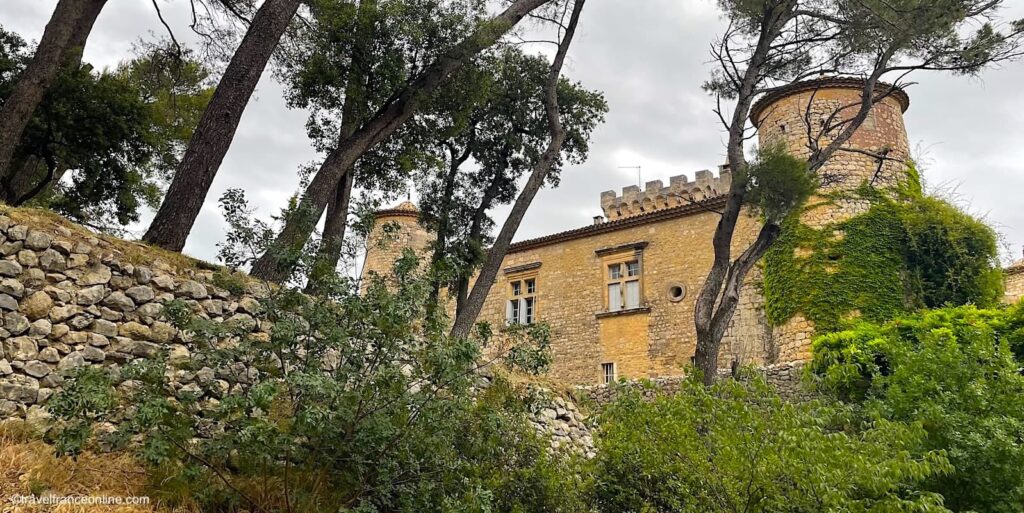
The bishops of Vabres l’Abbaye wielded considerable influence, even adopting the title of Count and building the imposing Château de Saint-Izaire to fortify the village during the tumultuous Hundred Years’ War. Saint-Izaire, located near Vabres-l’Abbaye, was their summer residence for centuries; its former episcopal castle still bears witness to this prestigious past.
However, the French Revolution marked a turning point for the village: the diocese was suppressed, the monks expelled, and the church desecrated. The lands were then returned to the diocese of Rodez, signaling the end of an era for Vabres-l’Abbaye.
Vabres l’Abbaye has retained its historic charm, and was officially listed as a Historic Monument in 1955. This picturesque fortified village boasts a rich heritage, from the remains of its medieval fortifications to the serene beauty of its natural surroundings along the Dourdou River.
Vabres L’Abbaye – Cathedral Church

The Church of Saint-Pierre in Vabres, the former cathedral of the Diocese of Vabres, is a perfect example of Southern Gothic architecture. Its construction began in 1330 and was completed in the early 16th century.
It nearly disappeared a few years later during the Wars of Religion. The troops of the Calvinist Duke of Uzès pillaged it (as well as the episcopal palace), burned the archives, and stole the precious ornaments.
The church was, however, restored in the 17th and 18th centuries, and the episcopal palace was rebuilt a century later. The coat of arms of the penultimate Bishop of Vabres-l’Abbaye, Monseigneur Le Filleul de la Chapelle, adorns the portal.
The 18th-century high altar is listed as a Historical Monument due to the exceptional quality of its sculptures and marble marquetry. The renowned organ builder Micot constructed this organ in 1761. This instrument was listed as a historical monument in 1948 due to its exceptional state of preservation. Finally, the bell tower dates from the late 19th century.
Vabres L’Abbaye – Medieval walled village

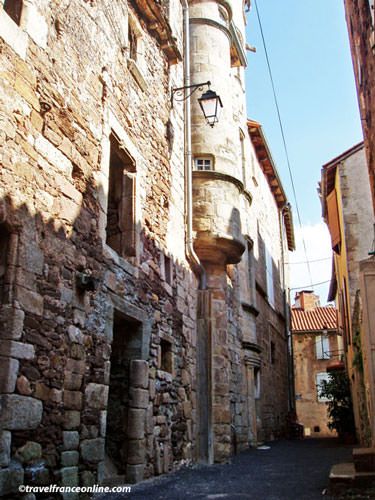
The village fortifications were demolished after the Wars of Religion, but the village has changed little since! It boasts a rich heritage of 15th, 16th, and 17th-century houses, such as the Maison du Commandeur – Commander’s House and the Maison des Echevins – Aldermen’s House. One of the houses overlooking the church square features a 17th-century sundial depicting the god Jupiter.
The Pesquié farm, located on the outskirts of the village on a hillside, preserves a remarkably well-preserved old dovecote. Before the French Revolution, only the nobility and high clergy were permitted to own such a building. Pigeon droppings were indeed a very rich natural fertilizer, used for cereal crops.
Vabres l’Abbaye also has the last remaining watermills in the region! They stand near the Pont-Neuf (New Bridge) and the dam that channels the Dourdou, a capricious river that regularly flooded the village.
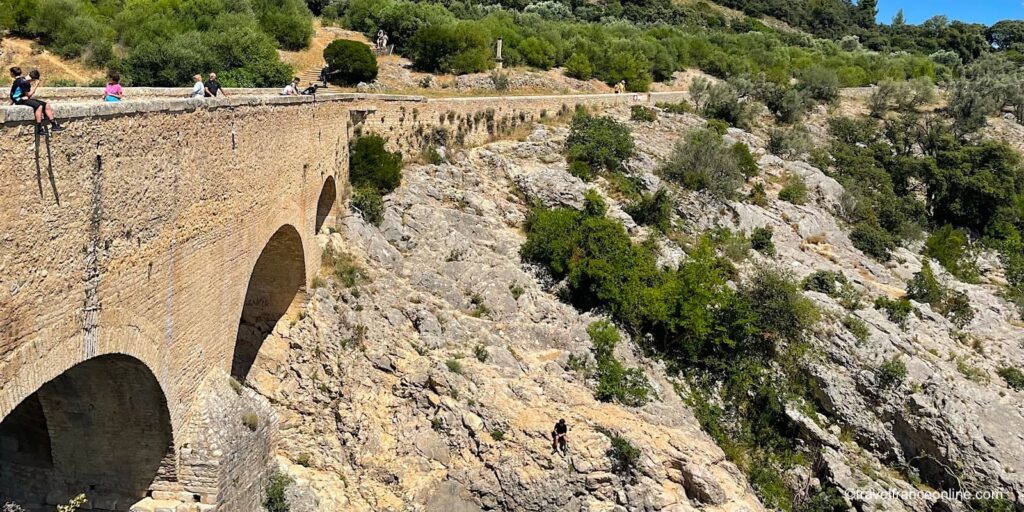
The Avenue du Pont Vieux is the old road that led to the cities of Nîmes and Montauban. It runs alongside the Notre-Dame de Bethléem chapel, also known as the Hermitage chapel, dating from the late 15th century. This small chapel stands next to the Pont Vieux, a magnificent Romanesque stone bridge, built in 1270 and still in use.
Vabres L’Abbaye – Visigoth tombs
Vabres was already inhabited in the early Middle Ages.
Remains of dwellings dating from the 5th century have been unearthed on the hillside near Saint-Apoly, the spring that supplied the abbey and its village.
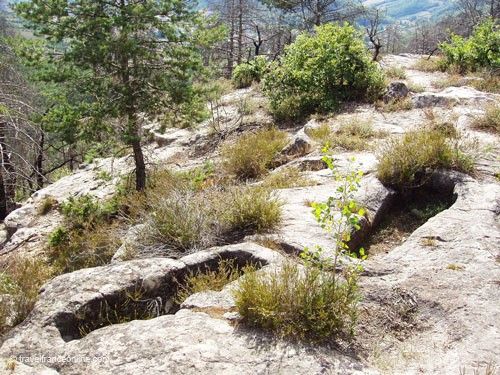
Visigothic tombs, dating from the 5th, 6th, and 7th centuries, have also been discovered on the crest of the hill, along the Chemin de Joncas (path). Carved directly into the rock, they overlook the Dourdou valley. The Joncas path joins the Chemin des Crêtes, the old paved Roman road that starts in Sainte-Affrique and runs along the ridge.
Peyralbe viewpoint
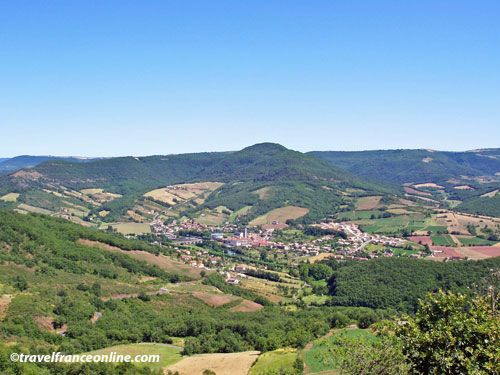
Finally, if you want to fully appreciate the beauty of this fortified village, climb to the Peyralbe viewpoint, which offers a spectacular 360-degree panorama of the Dourdou Valley, Vabres-l’Abbaye, and its surroundings.
The northern observation table-map details the different landscapes, their geology, and the influence of erosion. The southern map was created from the survey undertaken under Napoleon I at the beginning of the 19th century. It presents a detailed overview of the history of the Diocese of Vabres.
Vabres l’Abbaye is today a charming medieval village that is well worth a visit, if only for its ancient and unique history.
Département of Aveyron