
Château de Cénevières, from a stronghold to a French Renaissance gem
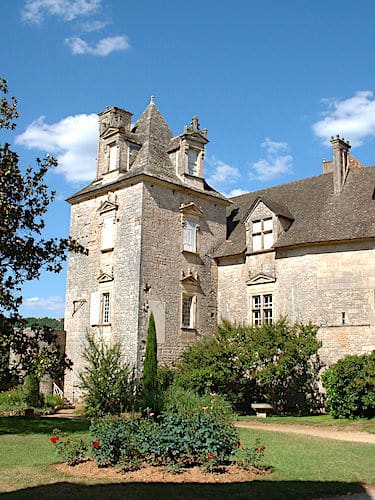
The Château de Cénevières is a perfect illustration of the evolution of French architecture.
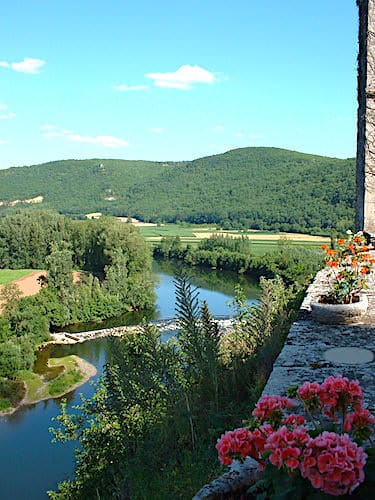
The medieval fortress, perched on a cliff overlooking the river Lot and its valley, gave way to a magnificent Renaissance château, while retaining its medieval roots.
Legend traces the origins of Cénevières back to Waiffe, Duke of Aquitaine, who built the first fortress in a natural cave as a refuge during territorial conflicts with Pepin the Short, father of the future Emperor Charlemagne.
In 767, Pepin the Short succeeded in capturing the fortress!
In the 11th century, the lords of La Popie, then owners, fortified the castle before ceding it to the lords of Gourdon a century later.
The Gourdon family made significant modifications and improvements to the Château de Cénevières in the 14th and 15th centuries.
In 1524, Flottard de Gourdon fell under the spell of the refined Italian Renaissance architecture he discovered while accompanying King Francis I on his Italian military campaigns.
Upon his return, and with the help of his wife, Marguerite de Cardaillac, Baroness of Saint-Cirq, he transformed the austere fortress of Cenevières into a spectacular French Renaissance residence, incorporating the 13th-century keep.
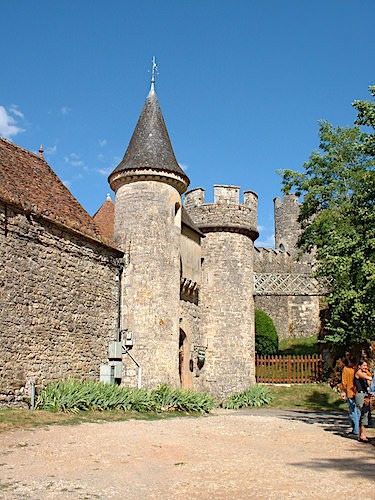
Today, the Château de Cénevières offers a most harmonious architectural ensemble, combining round towers, dungeons, and medieval ramparts with elegant Renaissance ornamental features.
The Braquilanges family, which has owned The Château de Cénevières since 1793, opens the château to the public.
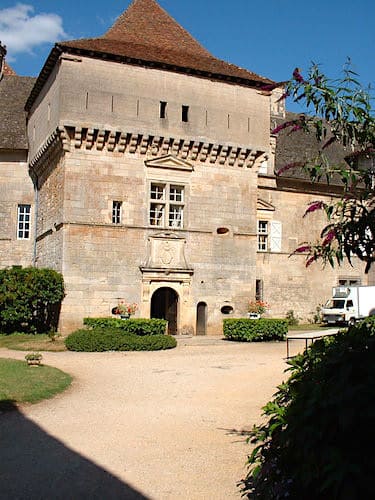
The main entrance is through the Poterne, also known as Tour des Gardes (Guards’ Tower), a square pavilion dating from the 16th century.
The Renaissance Château de Cénevières
This impressive entrance gate leads directly to the elegant inner courtyard, which provides access to the lord’s chapel, the dungeons, the guardroom, the old kitchens, and the grim oubliettes.
The Château de Cénevières is considered a rare gem among the Renaissance châteaux of the Quercy, region and is recognised as the finest in the region.
The medieval fortress indeed underwent a remarkable transformation under the Gourdon family. They enlarged the narrow, small Gothic openings and opened the ramparts with elegant dormer windows.
The elegant Tuscan-style gallery on the facade and the finely sculpted mullioned windows are enhanced by the simplicity of the traditional lauze (stone slab) roof.
The beauty and refinement of the castle’s interior are comparable to those of its exterior.
No detail was indeed overlooked in creating elegant interiors enhanced by magnificent decoration.
The Grand Salon, the Salon d’Alchimie (Alchemy Room), and the bedrooms boast remarkable murals, frescoes, and painted ceilings.
But perhaps one of the most impressive features is the vast terrace, which offers a breathtaking view of the beautiful Lot River and the valley below.
The Château de Cénevières was listed as a historical monument in 1957.
It is open to the public from April to early November. It appears that these tours are conducted by the Marquis de Braquilanges, who takes pleasure in graciously sharing the secrets and splendours of his ancestral home.
Department of Lot
Coordinates: Lat 44.462882 – Long 1.752968
Credits Photos Flickr album – © Lot-46 – Photo via Wikimedia Commons: Header by Dr Brains Public Domain


