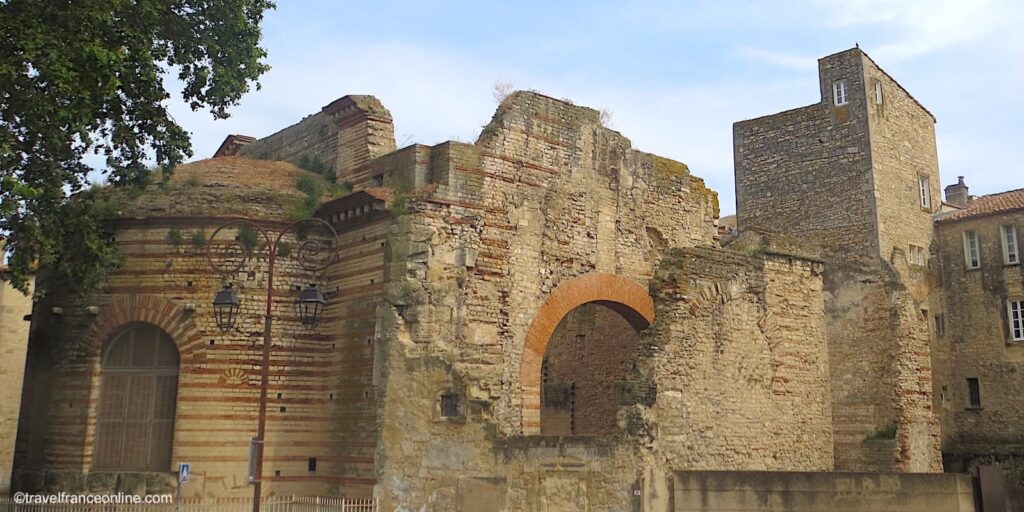
Saint Paul de Vence – The enclosed citadel

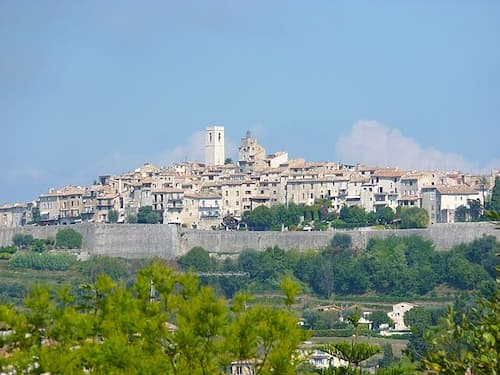
Saint Paul de Vence is a charming fortified village, perched on a rocky promontory that boasts spectacular views of the town of Cagnes-sur-Mer.
Called Saint-Paul until 2011, the village became known Saint Paul de Vence to distinguish it from the nine other French villages of the same name.
A small community settled around the Church of Saint-Michel-du-Puy, located at the foot of the ramparts, as early as the 10th century.
However, this church was replaced in the 16th century by the current church.
Why was Saint Paul de Vence fortified in the late 14th century?
In the 13th century, Saint Paul de Vence received several privileges from the Counts of Provence, notably the establishment of a weekly market, which greatly contributed to its prosperity.
In 1388, the County of Nice, which encompassed the present-day Alpes Maritimes department, was annexed by the Duchy of Savoy, which extended over the present-day regions of Savoie and Haute-Savoie. Due to its strategic location on the border between the Kingdom of France and the Duchy of Savoy, Saint Paul de Vence was thus fortified.
The Porte de Vence and the Porte de l’Éperon (gates) were part of these fortifications, but the Donjon is all that remains of the medieval fortress, which was dismantled in the 16th and 17th centuries.
Its bell, cast in 1443, bears the Latin inscription “hora is jam somno,” – “The hours invite us to dream.” The Donjon has housed the town hall of Saint Paul de Vence since the French Revolution. As a border town, Saint Paul de Vence has often been embroiled in territorial conflicts, notably during the clashes between Francis I and Emperor Charles V, and again in 1860 during the annexation of Savoy by France.
The fortifications of Francois I
Charles V indeed captured the fortress in 1524 and besieged it again in 1536. Faced with these threats, Francis I made a strategic visit to Saint Paul de Vence in 1538 and took up residence in the Donjon to oversee the fortification work.
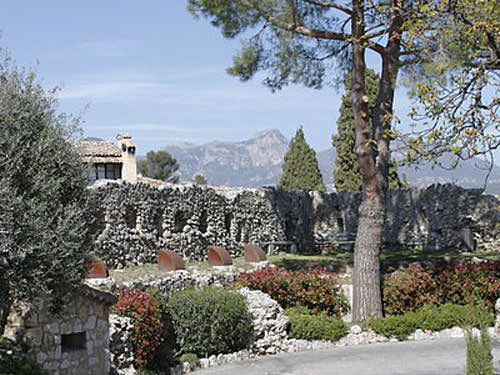
He commissioned the military engineer Jean de Renaud de Saint-Rémy to design and build new fortifications, complete with bastions, to transform he city into an impregnable stronghold. Extending for over a kilometre and following the contours of the rocky spur, these fortifications boasted impressive bastions and curtain walls. The Bastion du Dauphin guarded the northern gate, facing the Bastion Royal.
The crossfire from these two bastions formed a formidable defence, rendering the fortress virtually invulnerable. A local story claims that the cannon that protruded from one of the embrasures acquired a certain notoriety under the name “Lacan”, in homage to one of the gunners of Francis I
Saint Paul de Vence’s remarkable heritage
In 1666, the Bishop of Vence elevated the Church of the Conversion of Saint-Paul de Vence to the rank of collegiate church. Despite expansions and embellishments, the building retained its magnificent Romanesque architectural elements, such as the pillars, buttresses, and nave. The Saint-Clément Chapel, built in 1680 and adorned with finely crafted stucco and frescoes, is considered a masterpiece of Baroque art.
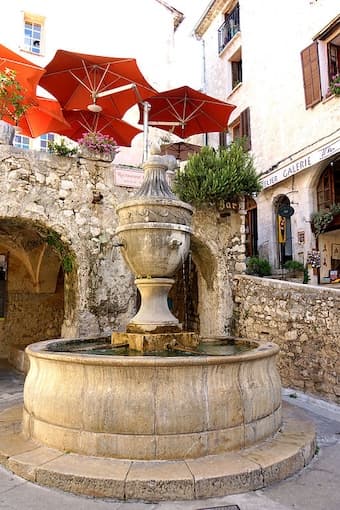
The growing influence of Saint-Paul de Vence attracted the nobility, leading to the construction of numerous private mansions within the old citadel: the 16th-century mansion, with its medieval windows at No.71 Rue Grande, and the Hôtel d’Alziari de Roquefort, at No.92. The Place de la Grande Fontaine, renovated in the 17th and 19th centuries, was the central square of the citadel and served as the location for the weekly market.
To preserve the town’s heritage, the municipality of Saint Paul de-Vence acquired the fortifications in 1872, thus preventing their demolition. These fortifications were listed as historical monuments in 1945.
Saint Paul de Vence, a haven for the great artists of the 20th century
Saint Paul de Vence is renowned not only for its remarkable architecture, but also for the irresistible attraction it held for many famous 20th-century artists. It all began in 1920 when Paul Roux, the son of a local farmer, opened a café in the village. In 1932, Paul and his wife, Titine, transformed Le Robinson into a modest three-room inn, affectionately named La Colombe d’Or (The Golden Dove).
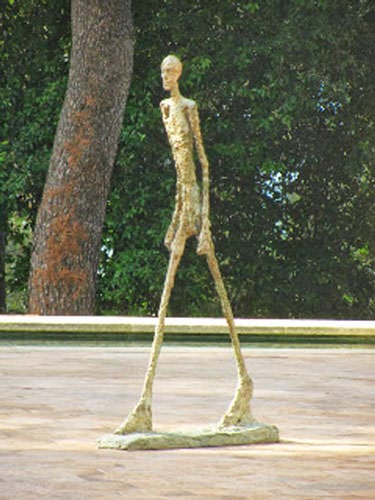
They were far from imagining that this unassuming establishment would become the epicentre of an exceptional cultural and artistic movement. In 1940, the renowned filmmaker Jacques Prévert, captivated by the peaceful charm of Saint Paul de Vence, indeed sought refuge there from the hustle and bustle of the Nice film industry, where he worked at the Victorine Studios. Initially staying at La Résidence, now the Café de la Place, Prévert quickly found comfort and inspiration at La Colombe d’Or, where he forged a deep friendship with Paul Roux.
Soon, La Colombe d’Or became a haven for Prévert’s fellow filmmakers, including Georges Clouzot, Marcel Carné, and André Cayatte, as well as for renowned painters who left their mark, with numerous works adorning the walls.
Known for his generosity and love of the arts, Paul often welcomed his artist friends, many of whom were still promising young talents, offering them room and board in exchange for their creations. Thus began an extraordinary collection of drawings and paintings by artists such as Picasso, Matisse, Miró, and Léger, transforming La Colombe d’Or into a veritable art museum.
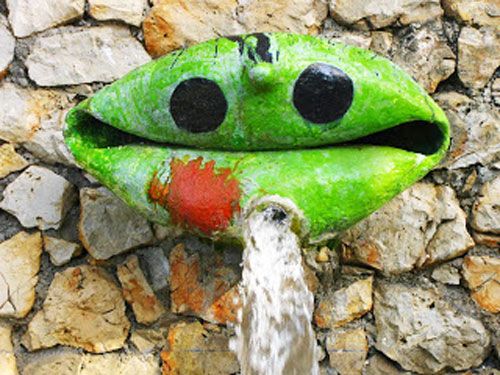
La Colombe d’Or is now a luxury hotel with 13 rooms and 12 apartments, but it has retained its unique charm, attracting personalities from the worlds of art and film.
Throughout the 20th century, Saint Paul de Vence remained a magnet for artists from around the world who lived or stayed there.
In 1949, the famous actors Yves Montand and Simone Signoret met at La Colombe d’Or and married the following year at the town hall of Saint Paul de Vence, with Jacques Prévert and Paul Roux as witnesses.
In 1950, Aimé and Marguerite Maeght, renowned art dealers and gallery owners, and fervent patrons of the arts, settled in Saint Paul de Vence. Famous for exhibiting the works of prestigious artists in their galleries in Cannes and Paris, the couple established the Fondation Maeght in 1964 at No.623 Chemin des Gardettes.
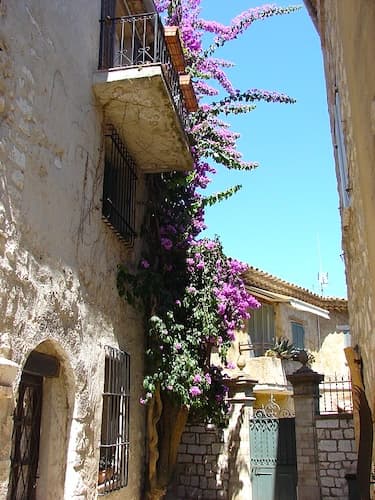
In 1966, the village also welcomed the iconic artist Marc Chagall and his wife, Vava, who built their large villa, La Colline, next to the Maeght residence (Mas Bernard).
In 1970, the celebrated American writer and humorist James Baldwin moved to Saint Paul de Vence, where he spent the last seventeen years of his life in a farmhouse on Chemin du Pilon. During this period, he received a host of illustrious guests, including Beauford Delaney, Harry Belafonte, Sidney Poitier, and his friend Bill Crosby.
The Belgian artist Jean-Michel Folon also settled in the village in 1970, restored the Chapelle des Pénitents Blancs, and painted the iconic street sign above the entrance to La Colombe d’Or.
The renowned architect Auguste Perret designed the Chapelle du Rosaire, also known as the Chapelle Matisse , as Matisse created the colourful stained-glass windows.
Finally, we must not forget mentioning the St. Paul de Mausole Asylum, where Vincent van Gogh voluntarily committed himself.
Department of Alpes Maritimes
Coordinates: Lat 43.696973 – Long 7.122138
Wikimedia Commons: Nestled behind its walls and Header by G CHP CC BY-SA 2.5 – Place de la Grande Fontaine by Dennis Jarvis CC BY-SA 2.0 – Fortifications by Jan474344 CC0 – Perched village by Frantogian CC BY-SA 3.0 – House by M.Strīķis CC BY-SA 3.0 – Other photos © Melangedmagic