
What are the Rotheneuf Carved Rocks?
The Rotheneuf Carved Rocks (Rochers Sculptés de Rotheneuf) are located a few kilometres east of the fortress of St-Malo, along the Côte d’Emeraude.
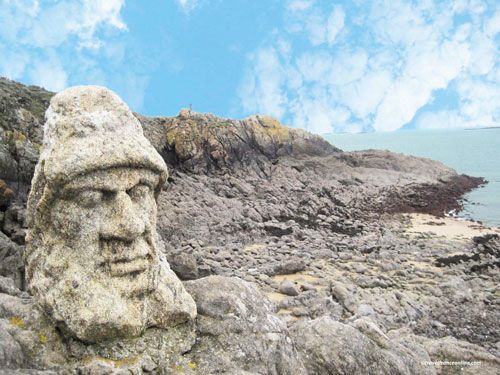
Abbé Fouré, nicknamed “The Hermit,” dedicated the last 25 years of his life, from 1894 to 1907, to sculpting the rocks bordering the sea at Rotheneuf, between the Gouffre de l’Enfer (also known as “Leap of Death”) and the Anse du Paradis (Paradise Cove).
These monumental sculptures, considered perfect examples of outsider art (art brut), are visible only at low tide.
They immortalise the legend of the Rotheneuf, a family of fishermen who settled in the area around the 16th or 17th centuries.
The Rotheneuf became famous when they abandoned fishing to become smugglers, establishing a notorious monopoly on contraband along the Emerald Coast!
Story and Legend of the Rotheneuf
The Rotheneuf family held considerable influence over their territory and even held sway over the lords of Dinan and Saint-Malo, as well as their descendants.
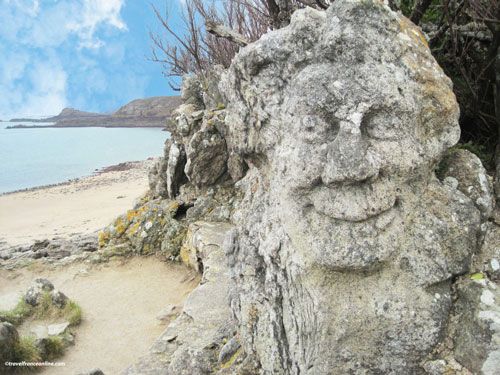
The Rotheneuf clan was composed of a motley band of outlaws and brigands, drawn by the promise of riches. United, they formed a formidable force, roaming the waters of the English Channel and attacking passing ships, seizing vessels and their valuable cargo.
Their headquarters were the infamous Paradise Chasm and Death’s Leap, secret coves nestled in the cliffs overlooking the sea.
For generations, the Rotheneufs remained wealthy, powerful, and feared. However, with the outbreak of the French Revolution, the resentments, grudges, and rivalries that had accumulated over the years began to erupt. Rotheneuf and some of his men, including La Haie, La Bigne, Grand Chevreuil, Petit Chevreuil, and Rocheforts, joined the royalist Chouans.

Others, however, saw the revolution as an opportunity for personal enrichment, refusing to ally with any faction and instead seeking to exploit the chaos for their own gain.
This marked the beginning of the Rotheneuf clan’s decline. Internal power struggles indeed erupted on land and sea. Any attempt at escape or betrayal was brutally suppressed, sparing neither women nor children.
In a final, desperate battle, the leader of the Rotheneuf clan fought valiantly to the bitter end, confronting his adversaries near Benetin Island and inflicting heavy losses upon them.
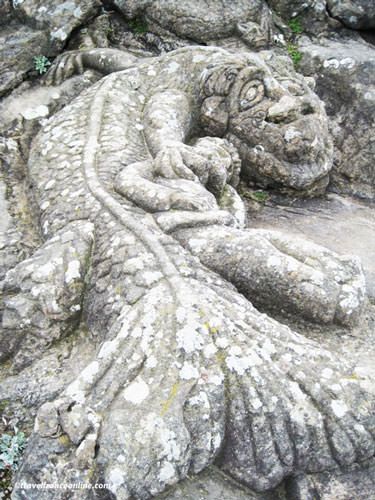
Legend has it that a storm of unprecedented violence coincided with the battle, the waves carrying the dead to the shores at the foot of the La Haie rocks. Rumours circulate of hideous sea monsters rising from the depths, their sharp teeth devouring the corpses of the vanished. Thus, the last Rotheneuf disappeared.
Meet the Rotheneuf Clan
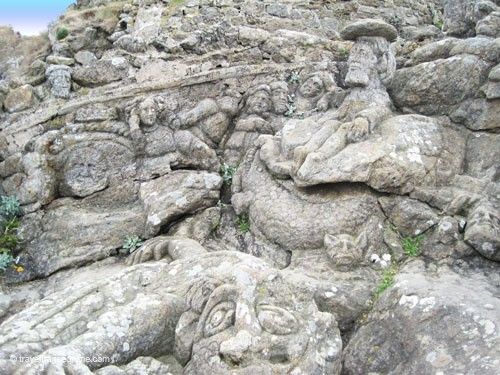
Among the illustrious figures of the Rotheneuf clan, Durand, known as Gargantua, the legendary commander of their formidable fleet, and his lieutenants, La Bigne, La Haie, Benetin, Grand Chevreuil, Petit Chevreuil, and Rochefort.
La Goule, Bas-Plat, Trois Pierres, Grand Pointu, and Haut Plat played a vital role in the construction and maintenance of the galleys, as well as in managing the secret caches and warehouses where their plunder was stored.
Renowned for their ingenuity in shipbuilding, the Rotheneuf craftsmen indeed built, at the beginning of the 17th century, the impressive fleet known as the Flèches des Eaux (Sparrows of the Waters).
Their galleys surpassed all others in speed and manoeuvrability, making the Rotheneufs the undisputed masters of the seas.
Another prominent member of the clan was Job, known as Vive la Joie (Long Live Joy), who served as the Rotheneufs’ trusted advisor and confidant, further enhancing their reputation.
Among the colourful characters of the Rotheneuf clan were also Arthur, Eugène, Auguste, Bernard, and Jean, affectionately nicknamed the Cinq Clowns (Five Clowns) because of their jovial nature, agility, and skill at plundering ships. However, despite this playful nickname, they were also shrewd negotiators, using their talents to further the Rotheneufs’ interests.
Yves du Minhic, the cook, earned the nickname Guerrier Romain (Roman Warrior) because of his robust build and the helmet he proudly wore, a trophy taken during one of their daring raids, evoking the image of an ancient Roman soldier in the eyes of his comrades.
Jean de Caulnes, known as the L’Egytien (Egyptian), once resided in Alexandria. Fluent in several languages and possessing remarkable eloquence, he was a trusted advisor to Madame de Rotheneuf, much to her husband’s chagrin.
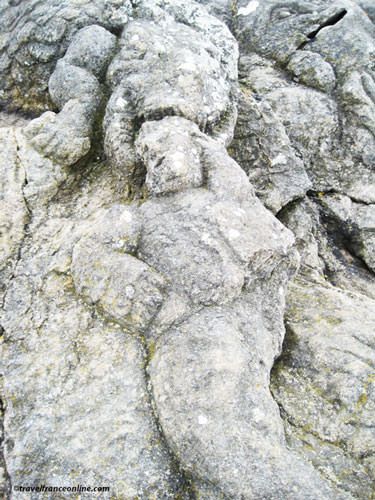
Lucifer, a seasoned and cunning smuggler, made the audacious decision to leave the Saint-Malo’s privateers of the King to join the Rotheneuf clan and become a pirate. His defection brought invaluable naval expertise to the clan’s high-seas ventures.
Jacques le Limeou, known as the Le Solitaire (Solitary), lived in seclusion with his dog Rip on Benetin Island and the peninsulas of Grand Chevreuil and Besnard. Renowned for his exceptional talent in tracking down arms dealers and confiscating their contraband for the Rotheneuf clan, he was truly a man apart.
This large band of smugglers and outlaws maintained constant vigilance, requiring the presence of devoted guards: L’Ours, Le Petit Pointu, Le Haut Queue, and L’Oeuf (The Bear, The Little Pointy One, The High Tail, and The Egg).
The Guémereux, nicknamed Le Fakir, was the eccentric outsider of the group, a man everyone regarded with suspicion.
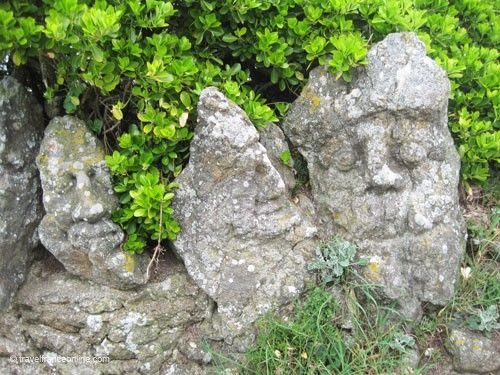
Croesus, the treasurer, was of course in charge of the clan’s finances. This once-wealthy nobleman had squandered his fortune and now lived with Marie-Jeanne de la Mare, an equally disreputable woman.
Finally, there was La Buse, nicknamed Le Financier. This sordid and cunning merchant kept his distance from the Rotheneuf clan, while still supplying them with a variety of goods, from kitchen utensils to clothing.
Abbot Fouré sculpted a magnificent chapel overlooking the Paradise Chasm on the north face of the cliff. It was indeed at this spot that the Rotheneuf clan came to seek the protection of Saint-Budoc before embarking on their maritime expeditions. Surprisingly, these brigands, who seemed to fear neither God nor men, were in reality very superstitious!
Rotheneuf Carved Rocks – Preservation challenges
The Rotheneuf Carved Rocks cover 550 square metres and comprise approximately 300 sculptures. They are located on the promontory between Val and Havre beaches, near the Le Benetin restaurant.
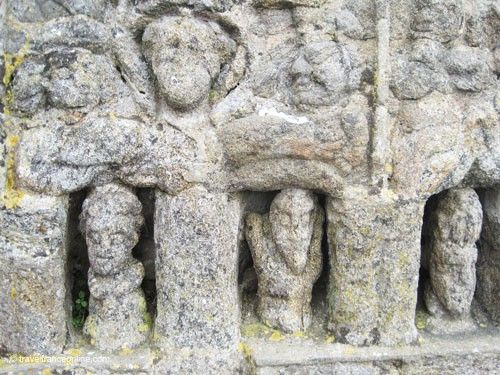
These remarkable sculptures are one of the Emerald Coast’s best-kept secrets, and for good reason! The municipality of Rotheneuf has indeed chosen not to promote the Rotheneuf Carved Rocks, as they fear that an influx of tourists could seriously damage these already fragile sculptures.
While visiting the site is welcome, you must exercise great caution when moving around, as natural erosion (the action of salt, wind, water via sea spray and runoff, mosses, and lichens) already poses a constant threat to the sculptures’ preservation.
To protect and preserve the Rotheneuf Carved Rocks, it will soon be necessary to limit uncontrolled access and create marked trails. The Association of Friends of Abbé Fouré’s Work was created in 2010 to promote the work of Abbé Fouré, and organises exhibitions, guided walks, and other events to raise awareness of the site and outsider art. In 2020, virtual tours of the site were launched.
Department of Ille-et-Vilaine – Rotheneuf Carved Rocks
Coordinates: Lat 48.686057 – Long -1.968023


