Glanum, a tribute to the Celtic God Glanis
The ancient city of Glanum is located on the outskirts of Saint-Rémy-de-Provence.
The Celto-Ligurian Salyens founded Glanum between the 4th and 3rd centuries BC near a spring they dedicated to Glanis, a water deity associated with healing properties.
The Romans colonised and integrated southern France into the Roman Empire in 49 BC. They transformed Glanum into a vast religious complex, building numerous temples dedicated to their gods, as well as sacred wells and fountains renowned for their therapeutic properties.
Glanum was abandoned after the 5th century and remained buried for seventeen centuries. It was eventually rediscovered, and the first excavations began in 1921.
Ghosts of Glanum, echoes from an ancient Celtic-Roman city
The city was abandoned and buried over the centuries. Its ruins were rediscovered 17 centuries later, and the first excavations started in 1921.

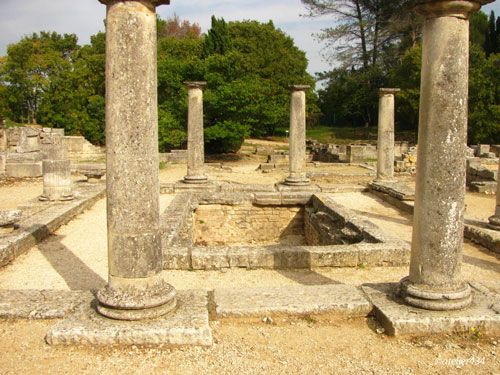
The twin pillars, the only remains of the smaller of the two temples, were restored.
The temple dedicated to the emperor and his family was located in the heart of a peribolos (a vast enclosure bordered on three sides by porticoes). Stone walls were strategically placed at both ends of the peristyle to prevent the public from accessing it.
Various temples and healing wells dedicated to deities such as Glanis, Hercules, and Valetudo, the Roman goddess of health were built near the sacred spring, the spiritual core of Glanum.
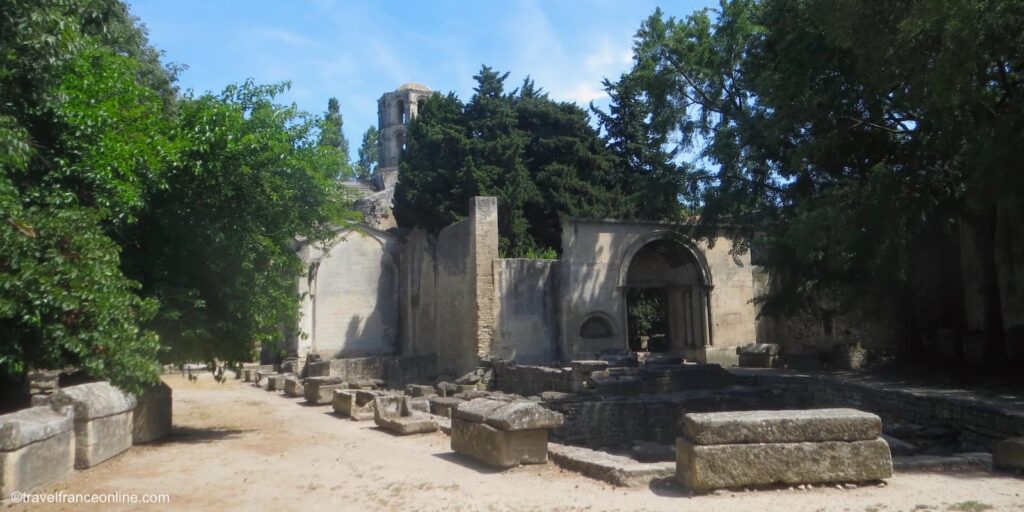
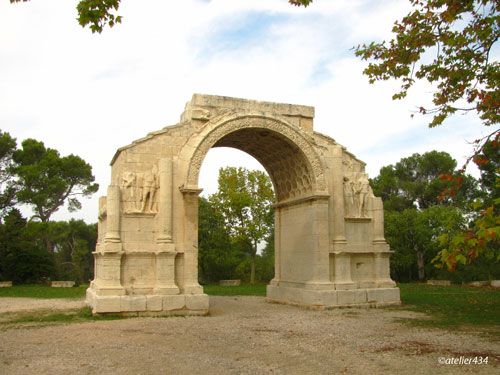
The northern entrance to the ancient city has remarkable monuments; the mausoleum served as the gateway to the necropolis, traditionally located outside the city limits. The entrance arch marked the boundary between the city and the surrounding countryside.
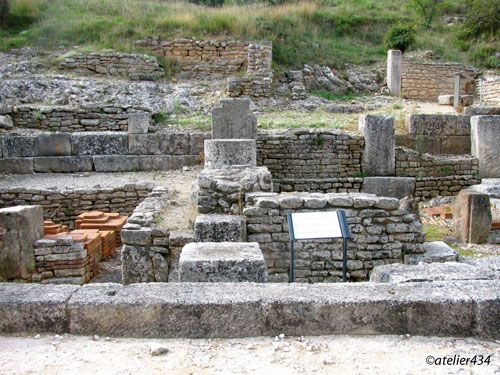
The excavations revealed the remains of numerous houses and workshops.
These structures were organised around a central courtyard adorned with a basin and surrounded by rooms and porticoes.
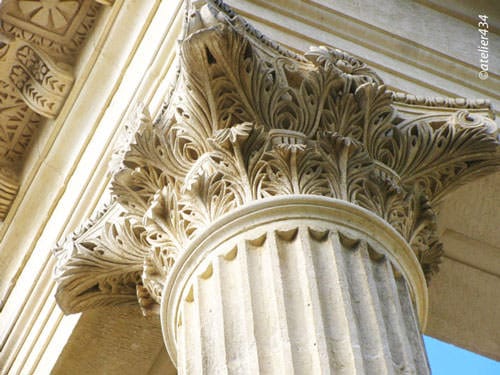
These basins were tiled to retain rainwater, essential for domestic needs. Excess water was channelled to a cistern, thus ensuring a sustainable water supply for the inhabitants.The wealthiest residents adorned their homes with antae, pilasters topped with Corinthian capitals.
The main street of Glanum was paved with cobblestones. It was also equipped with an underground stone conduit that carried away rainwater and wastewater from the surrounding buildings.
Glanum’s wine smoking rooms, ancient techniques for preserving wine
The inhabitants of Glanum were deeply religious, as evidenced by the numerous temples and sacred places they erected.
However, they also appreciated life’s simple pleasures and indulged in various forms of leisure and entertainment.
And wine was part of it!
Among the archaeological discoveries, researchers have indeed unearthed the remains of “wine smoking rooms”.
These rooms were originally part of a healing sanctuary built between the late 2nd and early 1st century BC, which was later converted for agricultural purposes. The presence of numerous amphorae suggests that these pieces were used for smoking wine. Each vaulted chamber contained a hearth, allowing smoke to circulate and infuse the wine with aromas.
In ancient times, wine was susceptible to bacterial contamination, which rendered it unfit for consumption. To remedy this, various substances, such as boiled salt, spices, marble dust, tar or resin were added to preserve the wine.
However, these methods were not foolproof, and buyers often had three days to taste and approve the wine. If the wine still tasted good after three days, the buyer was obliged to keep it, even if it deteriorated shortly afterwards.
If the wine turned sour or took on an unpleasant taste, other methods could be used to try to save it. A common practice was to heat a tile, coat it with resin and lower it into the amphorae containing the spoiled wine using a string.
However, smoking wine was the most widespread method of preservation. It was believed that artificially smoking wine in sealed amphorae allowed it to age and inhibit bacteria from developing, thus prolonging its shelf life.
Department of Bouches-du-Rhône
Coordinates: Lat 43.774230 – Long 4.832538
Credits: Photos ©atelier434 Melanged Magic – Evelyn Jackson – Photo via Wikimedia Commons: Header by Marc Ryckaert (MJJR) CC BY 3.0