Oppède-le-Vieux in the Lubéron mountains
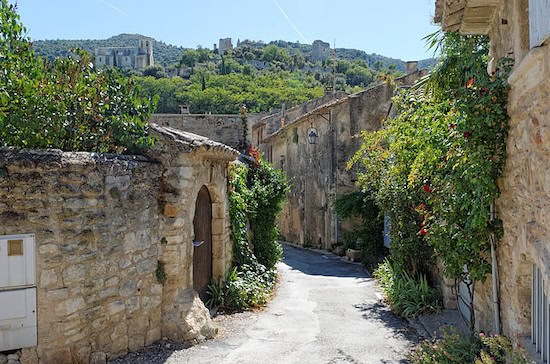
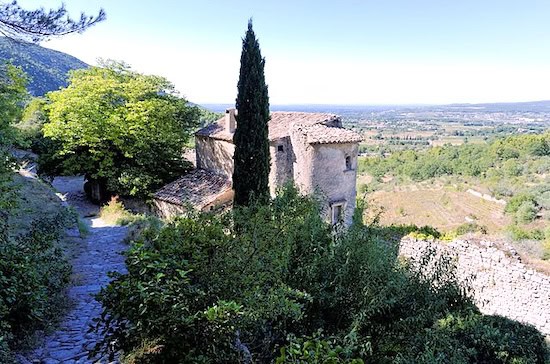
Perched on a rocky promontory on the northern slopes of the Lubéron Mountain, Oppède-le-Vieux commands attention with its striking presence, its three sides plunging into a deep precipice.
Its name, derived from oppidum, the Celtic term meaning fortress, suits it perfectly.
Reputed to be impregnable, Oppède-le-Vieux is indeed difficult to access. Its streets are closed to cars; visitors must therefore take a path from a small parking area located at the foot of the village.
Nestled amidst lush vegetation, Oppède-le-Vieux exudes an enchanting charm. Its cobbled lanes wind through semi-deserted streets, reminding us of a bygone era and tales of olden times.
A ghost-village
Oppède-le-Vieux has a rather tumultuous history. It all began in the 16th century when the devout catholic Jean Maynier, Baron of Oppède, and President of the Parliament of Aix-en-Provence , based himself in the fortress of Oppède to lead a fierce crusade against the Protestant inhabitants of the Luberon, the Waldensians, followers of Pierre Valdo.
This religious conflict reached its tragic climax during the Massacre of Mérindol in 1545, which claimed 3,000 lives and led to the destruction of 24 villages. The survivors, fleeing persecution, sought refuge elsewhere, and many found solace in Calvin’s Reformed Church.
After years of turmoil, when peace finally returned, the inhabitants of Oppède-le-Vieux faced a practical problem: their high-altitude location hindered agricultural activities in the valley below. Thus, gradually, they abandoned their old citadel and migrated down into the valley, dismantling their ancestral homes and the castle to build new farms on the plain.
By the end of the 19th century, the once-flourishing village had become a ghost town, officially renamed Oppède-le-Vieux to distinguish it from the burgeoning village below, now known as Oppède-les-Poulidets.
A village that comes back to life
Oppède-le-Vieux experienced a renaissance during the Second World War.
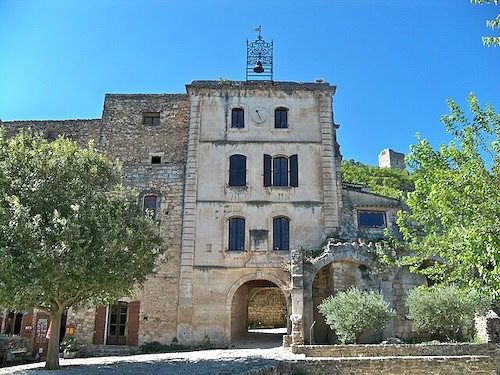
Amid its dilapidated streets, a wave of artists and writers, including Antoine de Saint-Exupéry’s wife, indeed found inspiration and solace, embarking on the arduous task of restoring the ruined houses to their former glory. While many eventually left, drawn to other destinations, a new generation of creatives was captivated by the authentic atmosphere of the old citadel. Over the past few decades, they have tirelessly dedicated themselves to breathing new life into the ancient stones, gradually restoring Oppède-le-Vieux to its past splendour.
While much of the ruined castle remains frozen in time, inaccessible to the public, the village is a fine example of medieval and Renaissance architecture. Cobbled lanes wind between restored and ruined buildings, leading to the village’s highest point. From this vantage point, you can admire the remains of the old ramparts and enjoy breathtaking panoramic views.
Notre-Dame d’Alidon Church
The Collegiate Church of Notre-Dame d’Alidon was built in the 12th century at the foot of the castle, on the second-highest point in the village.
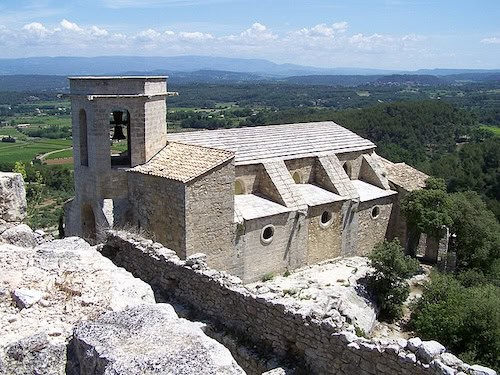
Although partially rebuilt in the 16th century, it has retained all its former charm and is considered a masterpiece of Romanesque architecture. Its most remarkable feature is its hexagonal bell tower, adorned with whimsical gargoyles.
It also boasts a series of frescoes, some of which, though faded by time, remain nonetheless splendid. During the summer, the small collegiate church hosts a series of classical music recitals.
N.B. The streets can be steep and uneven, and some sections have significant drops without barriers, so appropriate footwear is essential!
Department of Vaucluse
Coordinates: Lat 43.828627 – Long 5.161410
Photos via Wikimedia Commons: Photo1 and Header and Photo2 by François de Dijon CC BY-SA 3.0 – Campanile by Véronique PAGNIER Public domain – Notre-Dame d’Alidon by Wolf Meusel Public domain