
The influential Benedictine Lessay Abbey, a gem of Romanesque architecture
Lessay Abbey, officially known as the Abbaye Sainte-Trinité de Lessay – Abbey of the Holy Trinity, overlooks the centre of Lessay, a charming town located 20 kilometres north of Coutances.
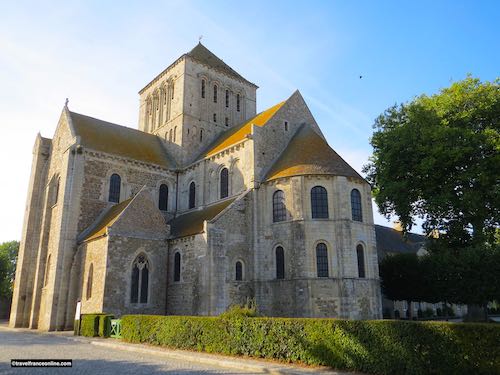
Founded around 1056 by the Barons of La Haye, allies of Duke William of Normandy, the abbey prospered thanks to their generous patronage. It was endowed with numerous valuable assets, including lands, forests, fisheries, mills, and churches.
Construction of the abbey began in 1064 and was completed with the consecration of the abbey church by the Archbishop of Rouen in 1178.
Inspired by the famous Abbaye du Bec in Northern Normandy, the first monks and their abbot imbued the abbey with a profound sense of holiness and vocation.
Renowned for its architectural splendour, the abbey church is a masterpiece of Norman Romanesque architecture, admired for its innovative use of vaults supported by pointed arches, a precursor to the nascent Gothic style. Its imposing proportions, reaching a height of 16 meters and extending over 44 meters in length, elevated it to the status of an iconic religious monument from the moment of its construction.
Lessay Abbey’s heydays

Lessay Abbey reached its zenith in the 12th and 13th centuries under the patronage of French and English monarchs, as well as Roman pontiffs.
The abbey boasted 218 vassals, oversaw nine priories, including one in Sussex, England, and drew income from more than 40 localities, while employing up to 56 monks.
This prosperity prompted the abbot to build the Church of Sainte-Opportune in 1337 to alleviate the monks’ pastoral burden.
However, the abbey suffered partial destruction in 1356 (during the Hundred Years War), before being rebuilt in all its splendour in 1420.
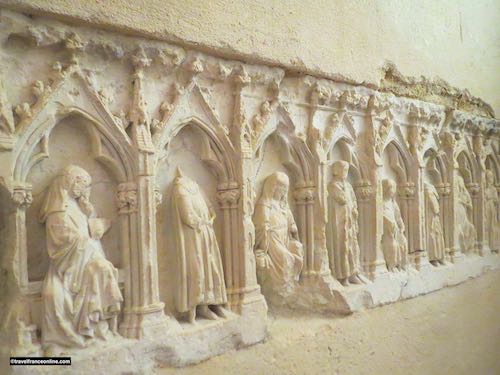
Unfortunately, this renewed wealth ultimately proved detrimental, as the abbey was placed under the commendatory system.
This system, by which ecclesiastical benefices were entrusted to a commendatory abbot, inevitably eroded monastic ethics, with financial gain taking precedence over spiritual well-being.
The prosperous establishments such as Lessay Abbey inevitably attracted the covetous eyes of kings and nobles, who saw them as lucrative prizes to be exploited.
The ravages of the Wars of Religion further hastened the abbey’s decline, as the fleeing monks left the site vulnerable to Protestant pillaging and desecration.

Saved from total destruction during the French Revolution, the abbey church was preserved in 1791 and became the parish church.
The father of Adolphe Thiers (who became President of the French Republic from 1871 to 1873) acquired the monastic buildings and played a decisive role in preserving the abbey and it outbuildings.
He indeed managed to have the abbey classified as a historical monument in 1840.
Lessay Abbey was saved from future deterioration!
Saved at the French Revolution, destroyed during WWII
Sadly, Lessay Abbey suffered serious damage during the Second World War. Indeed, on July 11, 1944, German forces detonated mines during their retreat, significantly damaging the vaults and the north ambulatory.

Thanks to precise plans and documents preserved in the National Archives in Paris, restoration work began immediately after the war, under the direction of the architect of Historic Monuments. The facades and roofs of the monastic buildings were listed as Historic Monuments in 1946, but remain private property and inaccessible to the public.
The abbey church thus regained its former splendour and reopened for religious services in 1958. Today, it is a major cultural centre, hosting the annual musical festival Festival les Heures Musicales de l’abbaye de Lessay.
The church is open free of charge every day from 9 a.m. to 6 p.m., except during religious services. Guided tours, by reservation, offer exclusive access to the cloister and gardens.
Department of Manche – Rue Paul Jeanson – Lessay
Coordinates: Lat 40.220412 – Long -1.532910


