Grasse, City of Art and History and Flowered City
Grasse, located in the Alpes-Maritimes department near Cannes, is world-renowned as the perfume capital and has also received the prestigious “City of Art and History” designation, as well as the “Ville Fleurie” (Flowering City) award.

Strolling through its winding streets, you come across iconic monuments, such as the 11th-century Provençal-Romanesque Notre-Dame du Puy Cathedral, the imposing 30-meter-high medieval Tour Sarrasine (Saracen Tower), and the remains of the 16th-century ramparts.
The medieval arcaded houses and the sumptuous 17th- and 18th-century mansions bear witness to the rise of a new bourgeoisie, whose appeared with the burgeoning perfume industry. The former episcopal palace, now the town hall, is a vestige of this opulent era.
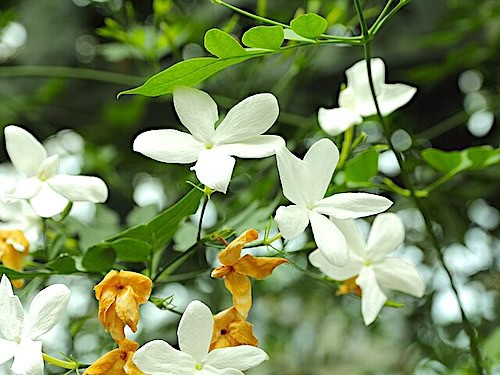
Jasmine, whose fragrance is essential to the perfume industry, is the emblem of the city’s floral heritage. Every year in August, since 1946, Grasse has celebrated La Jasminade, the Jasmine Festival.
Why is Grasse the world capital of perfume?
The perfume industry in Grasse dates back to the 17th century, marking a break from its medieval specialisation in leather tanning. Until then, the town was renowned for its high-quality leather, primarily exported to Genoa and Pisa.

Although Grasse leather was highly valued, the tanning process of yesteryear was, to say the least, unpleasant. Indeed, tanners mainly employed natural substances, such as urine, which is rich in ammonia, and animal and, sometimes, human excrement, resulting in leather of exceptional quality, but, unfortunately, with a characteristic odour.
Grasse also excelled in the manufacture of leather gloves, a trend popularised by the introduction of Italian Renaissance fashion to the French court by Catherine de Medici when she married King Henry II. The French aristocracy, adopted these new accessories, handbags, belts, and gloves. However, despite their elegance, the gloves emitted an unpleasant odour, deterring many enthusiasts.
A solution was therefore needed! A tanner from Grasse, named Galimard, had the ingenuity to find a solution: perfuming the gloves with rosewater to mask their smell.

His innovation was an immediate success when he presented a pair of these perfumed gloves to Catherine de Medici, who adopted them at once. Galimard became the official supplier to the Royal Court, thus marking the birth of the prestigious perfume industry in Grasse.
This pivotal moment not only saw the launch of perfumed glove production but also catalysed the diversification of the perfume offerings of the “Tanners-Perfumers of Grasse.” Alongside rose-scented gloves, they indeed produced models infused with frangipani and other traditional Provençal floral fragrances.
However, the flourishing glove-making industry declined in the following century due to increased taxes on leather. Tanners and perfumers then abandoned leather tanning to specialise exclusively in perfume production.
The Art of Perfume in Grasse

The mild, sunny micro-climate of the region provides an ideal environment for flower cultivation, fostering the growth of Centifolia roses, jasmine, and tuberose, essential flowers in perfumery, around Grasse and in the surrounding villages.
The legendary Grasse perfume houses, Gallimard, Fragonard, and Molinard, were founded in the 19th century, catering to a discerning American clientele seeking authentic French products.
These prestigious houses established trading posts around the world to import raw materials such as saffron, sandalwood, and vanilla, which were then meticulously refined in their workshops in Grasse.
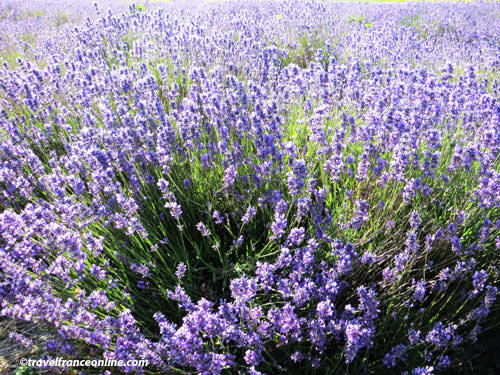
They also cultivated mimosa, myrtle, orange blossom, and, of course, lavender, to offer a wide range of scents.
Over the decades, they developed a unique art of cultivation and harvesting, guaranteeing the quality of their perfumes.
The flowers were delicately hand-picked at dawn, when their fragrance was at its peak, and then immediately processed using cold enfleurage.
The constant evolution of harvesting and processing techniques gave rise to unique fragrances, earning Grasse its unparalleled reputation as the world capital of perfume.
However, since the 1970s, the perfume industry has undergone considerable evolution and diversification.
Grasse perfume industry today
Indeed, with the perfume industry’s shift towards synthetic flavourings, traditional methods gradually disappeared, leading to the acquisition of many family businesses by international conglomerates.
Those that survived adapted to this evolution in production, diversifying into food flavourings to remain competitive. However, small family businesses now face considerable challenges in the face of large corporations. Despite this, the demand for authentic and traditional products is growing. Grasse boasts some sixty perfumeries, which contribute half of France’s perfume and food flavouring production, and nearly 10% of global perfume production.
The perfume museums of Grasse attract two million tourists from around the world each year. Among them is Parfumerie Galimard, founded in 1747 and a former official supplier to the French Court, the third oldest perfumery in Europe. Parfumerie Molinard, established in 1849, is still a family business after five generations, and finally Parfumerie Fragonard, founded in 1782. They all offer free guided tours of their factory-museums. Those wishing to learn more about the world of perfume can explore the International Perfume Museum that was inaugurated in 1989.
Department of Alpes-Maritime
Coordinates: Lat 43.660153 – Long 6.926492
Photos via Wikimedia Commons: Jasmine by C T Johansson CC BY-SA 3.0 – Orange blossom by Zeynel Cebeci CC BY-SA 4.0