The soul of Provence

Lavender is the soul of Provence wrote Jean Giono!
This statement resonates deeply with many of us, as lavender has become inseparable from the Provence region.
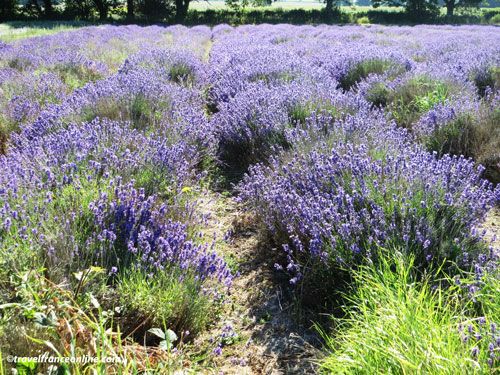
When we think of Provence, it is often the fields of a brilliant purple that stretch as far as the eye can see that come to mind, accompanied by that incomparable fragrance that perfumes the air. This fragrance may evoke the sprigs of flowers our grandmothers used to place in their wardrobes, or take us back to precious moments from our childhood.
Lavender has the gift of awakening our senses and creating in us a sweet nostalgia for the simple joys of life!
A few quick facts
Lavender belongs to the Lamiaceae family, which includes other aromatic plants such as thyme, savoury, sage, and even mint, as surprising as that may seem.
It is believed to have originated in Persia (Iran) or perhaps the Canary Islands and its medicinal properties have been undeniably recognised since antiquity.
The Greeks considered it a “precious plant”, while the Romans called it “lavandula“, derived from the Latin “lavare“, which means “to wash“. They also learned to extract its essential oil for perfumery, which became its main use for many centuries.
However, in the Middle Ages, the faculties of medicine and pharmacology in Marseille and Montpellier began to promote the medicinal applications of their disciplines.
Three species grow wild in Provence: Lavandula vera, Lavandula spica and Lavandula stoechas.
Where to find it in Provence?
Northern Provence, particularly in Drôme Provençale, in Haut-Vaucluse (in the Lubéron) and in Alpes-de-Haute-Provence (on the Valensole plateau) has specialised in the cultivation of lavender. The best time to enjoy the flowers is from late June to early August, during the harvest. At that moment, the air fills with the scent of the essential oil and the landscape is adorned with vibrant purple hues.
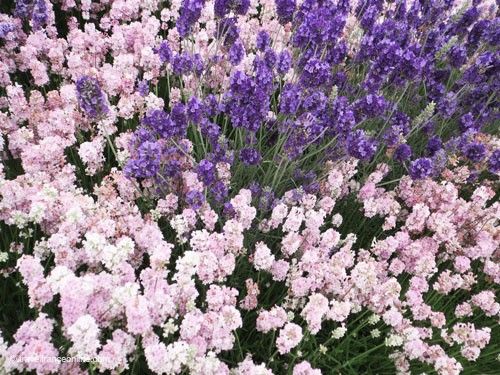
Originally, this agricultural activity was mainly carried out by women, who harvested and sold the flowers to distilleries or intermediaries, while the men managed the farm. Foreign workers were also recruited to lend a hand during this short harvest period. Until 1952, the flowers were indeed picked with a sickle, but technological advances in machinery made this task easier.
Today, lavender is primarily cultivated for its essential oil, used in pharmacology and perfumery. Steam distillation techniques, originating in the Arab world, are still used today. Exploring Provence, you will discover farms cultivating fields of lavender stretching as far as the eye can see. You will also see the on-site distilleries that produce the precious essential oil used in perfumery, soap making and various pharmaceutical products. You can discover everything there is to discover about lavender at the Lavender Museum, created in 1991 in Coustellet, in the heart of the Lubéron Regional Natural Park. You can also attend festivals like the Fête de Sault, celebrated every year on August 15, which offers an authentic glimpse into Provençal culture and traditions.
Lavender’s properties
Lavender essential oil is a must-have in every home for several reasons. Its well-known soothing properties make it a remedy of choice for sore throats, digestive disorders, muscle pain and various skin conditions, but it is also an effective insect repellent. However, one of its most versatile uses is refreshing laundry. Not only does the oil delicately perfume linen and wool, but it also helps to repel moths in your wardrobe!