
Spanbroekmolen Crater – Pool of Peace
The Spanbroekmolen Crater stands atop a hill overgrown with vegetation, nestled along the road connecting Wytschaete to Kemmel.

The location sign is easy to miss, as it only appears at the last moment while driving.
Before the First World War, Spanbroekmolen was known for its windmill (molen means mill in Dutch), which stood at the top of the hill.
However, during the war, Spanbroekmolen gained a sad notoriety for being the site of the largest mine that exploded at the beginning of the Battle of Messines Ridge.
The offensive began with the detonation of 19 mines, strategically placed to annihilate the German lines. Following this cataclysmic event, a brief but intense bombardment ensued, paving the way for a rapid assault by British infantry, supported by cavalry, tanks and aircraft.

The Spanbroekmolen mine was an impressive feat: 41,276 kilograms of ammonal explosive, expertly placed 27 meters underground.
The digging of the underground access gallery began on January 1, 1916 and all the work, including the digging of the mine, was completed on June 26 of the same year.
The attack on the Messines Ridge had been meticulously planned since January 1916. However, it was postponed to June 1917 due to the German offensives at Verdun and on the Somme.
When it exploded, the mine created a 75-meter-wide and more than 12-meter-deep crater, leaving an indelible scar on the landscape.
In 1929, Lord Wakefield acquired the crater to preserve it as a memorial site on the battlefields of the Ypres Salient and donated it to the Talbot House Museum in Poperinge. Since then, the crater has been maintained and renamed the Pool of Peace.
The ruins of a bunker, probably German, can be seen to the northeast of the crater, another reminder of the conflict that ravaged this area.
Lone Tree Cemetery
The Lone Tree cemetery stands opposite the Spanbroekmolen Crater, near a farm and a peaceful pond.
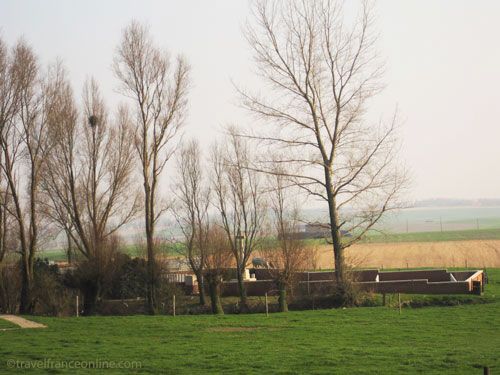
The cemetery’s white tombstones and Cross of Sacrifice are perfectly visible from the road.
This small V-shaped cemetery contains 88 graves, including 6 unidentified ones. Most of the men buried there were members of the Royal Irish Rifles, tragically killed on June 7th.
Some perished in the explosion of the Spanbroekmolen mine, which was triggered 15 seconds later than planned.
Three graves are grouped: one of an unidentified soldier with those of two Royal Field Artillery gunners who died on July 3, 1917. There is also an isolated grave of an RAF pilot shot down on July 11.
Directions: Municipality of Heuvelland near Messines – West Flanders – Belgium


