Quai Branly Museum
The Quai Branly Museum, officially titled the Museum of Arts and Civilizations of Africa, Asia, Oceania, and the Americas, was designed by architect Jean Nouvel and is situated near the Eiffel Tower.
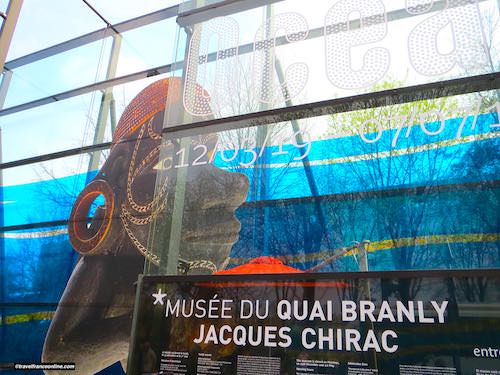
Inaugurated by President Jacques Chirac on June 20, 2006, the museum attracts numerous visitors from both France and abroad, with over 130,000 annual visitors.
Spanning 40,600m2, the museum comprises four buildings, with the main structure being a metal bridge-like building elevated on stilts, housing the public exhibitions.
The remaining three buildings accommodate the museum’s library, workshops, offices, media center, and stored exhibits.
Quai Branly Museum Vertical Garden
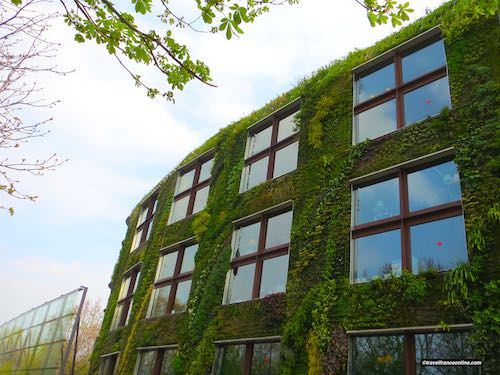
The museum’s administrative offices are housed in the Bâtiment Branly, featuring a distinctive green facade known as the mur végétal, which has become an iconic symbol of the museum.
Overlooking the Quai Branly and the Seine, the Quai Branly Museum Vertical Garden complements the ground-level garden created by Gilles Clement in 2005.
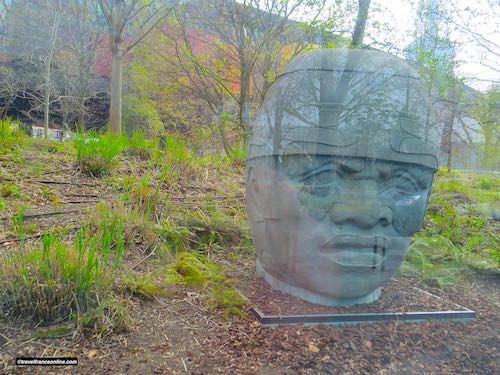
Spanning 18,000m2, this garden features a diverse array of plants, bushes, and trees, intricately landscaped with trails, mini-hills, and water basins.
Designed by botanist and tropical plant expert Patrick Blanc, the 800m2 Quai Branly Museum Vertical Garden seamlessly integrates with Clement’s garden.
This Vertical Garden was meticulously planted throughout the summer of 2004, featuring approximately 15,000 plants of 150 different species sourced from Japan, China, the USA, and Central Europe.
With an average of 20 plants per square meter, this lush tapestry of climbing and crawling vegetation from humid regions thrives without traditional soil.
Instead, these plants anchor their roots in foam rocks, tree trunks, or creek pebbles, drawing essential minerals and nutrients from rainwater.
Conceived by Patrick Blanc, the green wall recreates the natural habitat of these species, allowing them to flourish by absorbing nutrients from their surroundings.
Through photosynthesis, the leaves generate vital nutrients such as sugars and proteins.
This innovative technique of vertical cultivation overcomes weight constraints and is adaptable to walls of any height, provided they are appropriately prepared to mimic the conditions of the plants’ original habitat.
The construction of the vertical garden begins with the placement of two layers of polyamide felt on a waterproof support crafted from 10mm thick expanded PVC plates. This entire structure is then mounted onto a metal frame securely attached to the structural wall.

The space between the supporting wall and this assemblage serves as an air cushion, providing effective insulation.
The polyamide felt’s capillary and water retention properties facilitate root development and anchoring.
To ensure proper hydration, a network of perforated hosepipes runs down from the top of the wall, enabling consistent low watering.
This method maintains optimal moisture levels and delivers a continuous nutrient supply to the plants, promoting their growth and vitality.
The Quai Branly Museum Vertical Garden serves as more than just a striking visual feature—it functions as a vibrant vertical ecosystem.

It indeed serves as a vital refuge for biodiversity and plays a crucial role in urban ecology.
The living wall offers nesting sites and sustenance for birds and insects, while also contributing to the improvement of ambient air quality by creating a mini-climate.
Recognizing its benefits, the City of Paris aims to implement numerous vertical green walls throughout the urban landscape in the years ahead.
This embrace of ‘vegitecture’ signals a promising shift in urban architecture toward more sustainable and environmentally conscious practices.
Directions: 7th district
RER: Pont de l’Alma – Musée du Quai Branly
Coordinates: Lat 48.860889 – Long 2.297894