Plateau du Lévezou, the country of the five lakes

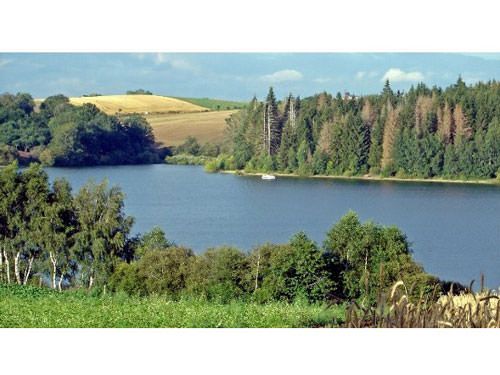
The Plateau du Lévezou plateau is nicknamed the Pays des Cinq Lacs – Land of Five lakes.
This picturesque region, nestled in the heart of the steep foothills of the Auvergne, indeed boasts numerous artificial reservoirs.
Located between the lively towns of Millau and Rodez in the departmentof Aveyron, the Plateau du Lévezou sits at an average altitude of 800 metres, with its highest peak being Mont Seigne at 1,128 metres.
In the 1950s, Électricité de France (EDF) undertook an extensive project to harness the natural power of water by creating five artificial lakes for hydroelectric power generation.
Lacs du Lévezou
The lakes of Villefranche-de-Panat, Pareloup, Pont-de-Salars, La Gourde, and Bages together form the renowned Lévezou Lakes. Spanning an area of 1,800 hectares, they constitute the largest group of lakes in France.
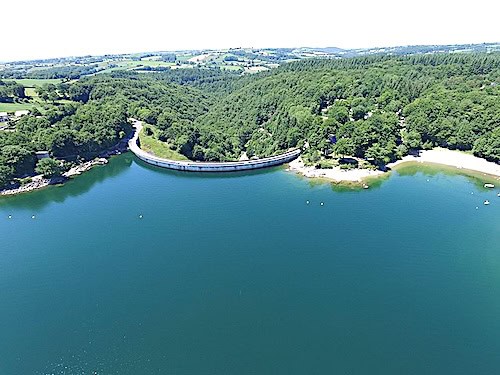
These lakes are ingeniously connected by underground tunnels and regulated by a sophisticated pumping system. The water is conveyed through pipelines to the Pouget hydroelectric power station, where it is converted into electricity before being released into the Tarn River. The development of these lakes necessitated the building of dams, and unfortunately the flooding of several valleys and villages and the displacement of local populations.
But, beyond their role in hydroelectric power generation, these lakes have significantly boosted local tourism and are popular destinations for water sports. The lakes of Villefranche-de-Panat, Pareloup, and Pont-de-Salars are very popular with water sports enthusiasts and anglers, while the lakes of Bages and La Gourde are primarily used for fishing.
Plateau du Lévezou, the land of windmills
The Plateau du Lévezou, where the power of water, and that of wind, is ever-present, is also known as Pays des Moulins – Land of windmills.
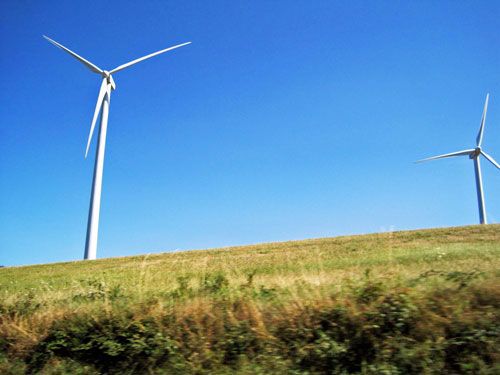
Two prevailing winds indeed sweep across the plateau: the Tramontane, blowing from the northwest, and the Vent d’Autan, a powerful, hot, and dry wind from the southeast.
Thanks to this abundant natural resource, the Occitanie-Midi-Pyrénées region and the Aveyron department have invested heavily in renewable energies, particularly wind power. The former Midi-Pyrénées region already contributes approximately 5% to national energy production, placing wind power third after nuclear and hydroelectric power.
The Aveyron wind farm, with a capacity of approximately 50 MW, is currently the largest in France. Numerous building permits have been issued in Aveyron and neighbouring departments for 400 additional wind turbines. This expanded infrastructure is capable of meeting the energy needs of the department, its coastal regions, and potentially the dynamic city of Toulouse. This remarkable progress places France fourth in the world among clean energy producers, behind Germany, Spain, and Italy.
Wind turbines installation rules
The installation of wind turbines on the Plateau du Lévezou is subject to strict regulations to ensure environmental and social harmony.
Indeed, standing 125 metres tall and weighing 200 tons, wind turbines must be located several hundred metres from the nearest homes. Their installation is prohibited in protected landscapes, such as the Causse du Larzac, a plateau swept by strong winds. They must also be situated in sparsely populated areas and outside flight paths. Despite their imposing presence, the wind turbines generally blend harmoniously into the landscape, even becoming part of the natural environment.
However, some regulations are selectively applied to preserve local ecosystems, as in Salles-Curán, near Lake Pareloup. The construction of new wind turbines has been halted there to avoid disrupting bird migrations. Environmental protection indeed remains paramount and requires constant vigilance and monitoring. Nevertheless, the wind energy industry represents a lucrative opportunity for local communities. The former Midi-Pyrénées region, the Aveyron department, and towns like Salles-Curan benefit from regular income generated by leasing wind turbines. This income is reinvested in local development initiatives, boosting the regional economy and fostering community growth.
Photos via Wikimedia Commons: Lake by Musaraigne Public domain – Dam by Christophe.Finot CC BY-SA 2.5 – Vierge des Lacs by Musaraigne CC BY-SA 3.0 Dam by Le Ruthénois CC BY-SA 4.0