
Paris before the sewers
The Paris Sewers Museum may not be the first attraction that comes to mind for visitors, but it offers a unique and fascinating glimpse into the capital’s underground world.
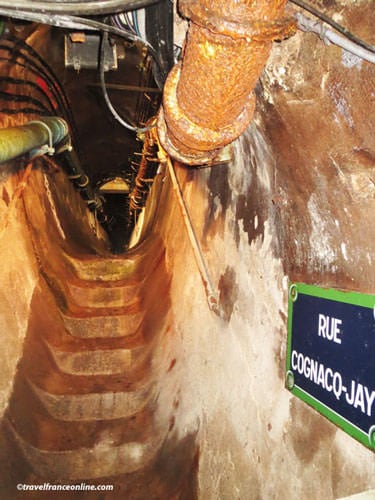
This unique tour indeed traces six centuries of water history in Paris, covering topics such as drinking water, wastewater management, the evolution of sanitation, and water purification techniques.
Surprisingly, Paris’s modern sewer system is relatively recent.
Indeed, for much of the Middle Ages, Parisians obtained their water directly from the Seine and discharged their wastewater into the streets. This wastewater eventually reached the city’s outskirts, where it rejoined the Seine, thus completing a continuous cycle.
At the beginning of the 13th century, King Philip-Augustus initiated the first sewer system in Paris by commissioning the construction of a central gutter during the paving of the streets.
A significant step forward occurred in 1370 when the Provost of Paris (mayor), Hugues Aubriot, oversaw the construction of the first vaulted masonry sewer on Rue Montmartre. But this sewer eventually emptied into the Ménilmontant stream!

Although these developments represented progress compared to previous centuries, they were still far from being environmentally friendly.
It was not until the 18th century that significant progress was made, with the construction of a vast sewer network on the right bank, commissioned by Michel-Etienne Turgot Provost of the Merchants of Paris.
Meanwhile, on the left bank, the small Bièvre river was transformed into an open sewer to serve the district!
The reign of Napoleon I saw the construction of the first complete sewer system in Paris. This initial network extended over 30 kilometres, but it was still far from achieving the efficiency and sophistication of the modern sewers found in Paris today.
The first modern sewer network of Paris
The modernisation of the Paris sewers began during Prefect Haussmann‘s renovation works of Paris, in the 1860s.
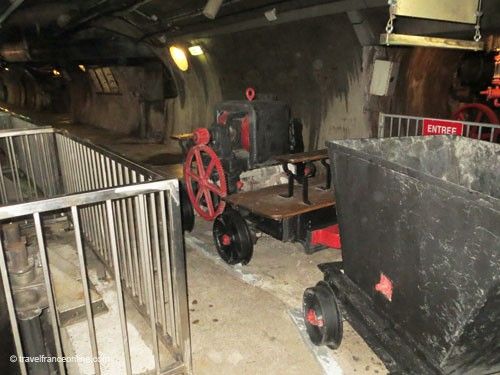
The engineer Belgrand was tasked with creating a dual sewer system: one for the distribution of drinking water and wastewater, and the other for wastewater disposal.
In 1878, this network extended over 600 kilometres of underground galleries.
Instead of being discharged directly into the Seine, the wastewater was transported to treatment plants located several kilometres downstream.
This innovative system also included levelling stations to compensate for the terrain’s natural slope.
In addition to the sewer system, pumping stations were installed to collect wastewater from districts below the city’s level and to regulate the water level.
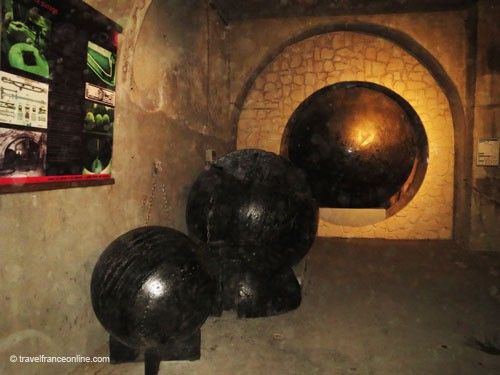
A network of tunnels was also built to facilitate the movement of maintenance teams throughout the underground infrastructure.
Belgrand’s work truly created “Underground Paris“.
Over time, the sewer system has undergone considerable expansion to meet the needs of a growing population.
Today, it extends over 2,400 kilometres of underground galleries, but only a few sections are accessible to the public.
A stroll in the Paris Sewers?
You can, of course, book guided tours of the Paris sewers.
However, the leaflet included with your self-guided tour ticket and the numerous information panels along the tunnels will provide you with plenty of information.
It will indeed shed light on the evolution and history of the Parisian water network and sanitation techniques over the centuries.
But first, you should know that, contrary to popular belief, the underground sewer tunnels, at least those open to visits, are remarkably clean and almost odourless.
Crossing the walkways above the open sewer pipes offers a unique perspective.
Each corridor is named after a statesman or engineer who played a pivotal role in the creation or improvement of Paris sewers.
The exploration begins at the Galerie Hugues Aubriot, named after the Provost of Paris who initiated the construction of the city’s first vaulted sewer system at the end of the 14th century.
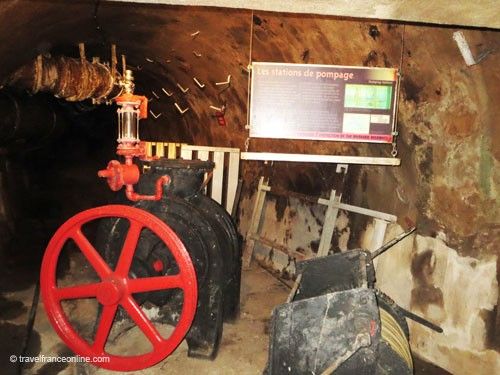
In the Galerie Turgot, you will discover an impressive network of pipes and a sewer wagon used to clean the collectors’ bottom. You can also observe a hand-operated “machine gun,” designed to scrape the bottom of the pipes in short bursts, propelling the wastewater.
Turgot, who is known for his map of Paris (Plan Turgot), spearheaded the construction of the city’s first sewer system in the 18th century.
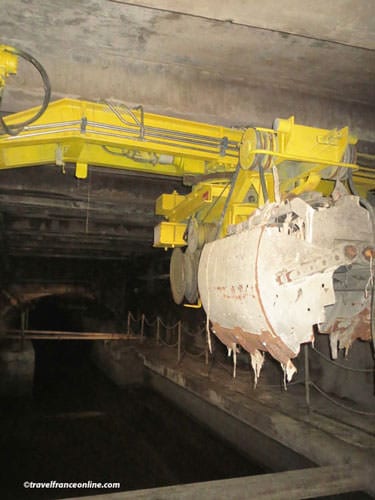
In the Galerie Bruneseau, you will see a sewer boat used to clean the bottom of the large sewers. Above the sewer, a dredge collects solid particles (don’t worry, nothing disgusting!)

In the First Empire, Bruneseau meticulously documented the vaulted sewers of Paris.
While walking through the Galerie Duleau, you will see the wastewater collector on Avenue Bosquet. This passage is named after the engineer who perfected the construction techniques for vaulted sewers in 1823.
The Paris Sewers Museum is located in the vast Galerie Belgrand, situated above an imposing treatment sewer.
There you will learn about water purification methods, the challenges encountered, and the efforts made to preserve the city’s ecological balance.
The Paris sewers system underwent a complete renovation and modernisation over 20 years, beginning in 1991.

This major rehabilitation program enabled the City of Paris’s sanitation department to become the first municipal service to obtain triple certification for Quality, Safety, and Environment.
In the last corridor, the Galerie Adolphe Mille, you will discover a rainwater collector, water pumps, tank cars for transporting waste and a faithful replica of a classic sewer.
Engineer Mille invented the ovoid-shaped sewers featured in the exhibition.
The visit usually lasts less than an hour and ends at the museum’s gift shop, which offers a selection of books and items related to the sewers of Paris (but no waste is sold, of course!)
Recommendations:
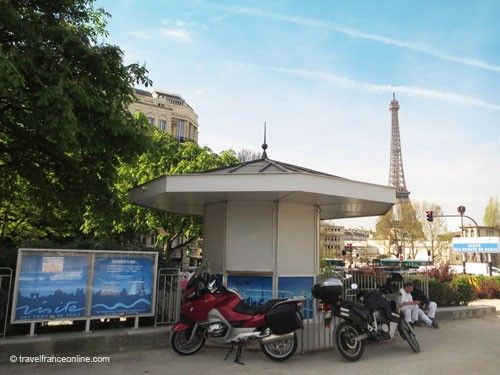
The entrance to the Paris sewers is clearly marked, but it is easy to miss as it is located in a small kiosk.
It is advisable to wear comfortable shoes and have a vest handy, as the proximity of the water can cool the surrounding air.
Children particularly enjoy the visit and often remember it as the highlight of their stay in Paris!
The galleries are perfectly secure: all storage areas and walkways are protected by grilles.
However, people with respiratory problems may be bothered by a slight, imperceptible acrid odour found in the damp underground galleries.
Finally, this is a perfect visit to do on a rainy day!
Opening hours: 1Oct-30Apr – Sat-Wed – 11am-4pm – 1May-30Sept – Sat-Wed – 11am-5pm – Closed on Thursdays and Fridays
Directions: 7th district – Entrance kiosque located opposite No.93 Quai d’Orsay by Pont de l’Alma
Metro: Alma-Marceau on Line 1
RER C station Pont de l’Alma
Bus 80 or 63 station Alma-Marceau
Coordinates: Lat 48.862615 – Long 2.302538


