
Paris 11th District
Paris 11th District is commonly known as Quartier Popincourt.
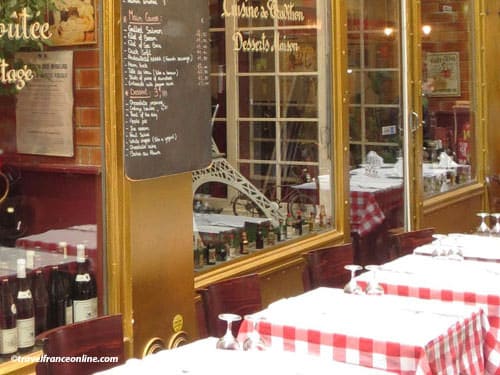
The most populated area in Paris, it includes: Quartier de la Folie-Méricourt, Quartier Saint-Ambroise, Quartier de la Roquette and Quartier Sainte-Marguerite.
Wealthy Parisians once built private mansions, known as “follies”, outside the limits of the polluted city centre, as the fresh air was renowned for its quality. The QUARTIER DE LA FOLIE-MÉRICOURT was thus named after one such property, known as the Folie-Méricourt and built by a Mr Méricourt.
Two hamlets appeared in the 14th and 15th centuries on the estates of Popincourt and La Rochette (which evolved into La Roquette), and religious institutions in the 17th century. Two prisons were built in the QUARTIER DE LA ROQUETTE. La Petite Roquette served as a women’s prison from 1932. It was demolished in 1974, but its entrance gate, at No. 147 Rue de la Roquette, is still visible. La Grande Roquette prison housed those condemned to death until its demolition in 1900.
The QUARTIER SAINT-AMBROISE developed around the church dedicated to Saint Ambrose, Bishop of Milan in the 4th century.
The QUARTIER SAINTE-MARGUERITE developed also around a church founded in 1712, today the district’s oldest.
Rue du Faubourg-Saint-Antoine marks the official boundary between the 11th and 12th districts, which were created on the lands of the influential Saint-Antoine Abbey. The Faubourg-Saint-Antoine thus extends across both districts and has long been associated with the wooden furniture industry and related trades. Thanks to centuries of tax exemptions and freedom to work granted by monarchs and the abbey, skilled cabinetmakers and craftsmen produced some of the finest French furniture in this district. The core of the settlement developed around the abbey, giving rise to the densely populated Faubourg-Saint-Antoine. This district, due to its poor working-class population, was the cradle of the various revolutions that shook the country over the centuries. The Faubourg was also renowned for its many lively inns, cabarets and open-ait cafés that lined the Boulevard of Belleville and Boulevard de Ménilmontant, attracting crowds on Sundays.
Despite the major urban planning works carried out by Haussmann in the mid-19th century, the Paris 11th district has largely retained its maze of narrow streets, cul-de-sacs, courtyards and workshops, tangible witnesses to its artisanal past. It remained semi-rural until 1860, when the outlying villages and hamlets were annexed to the capital.
The eastern part of the 11th arrondissement has thus retained the memory of its bucolic atmosphere in the street names: Chemin-Vert (green path), Rue de la Folie-Méricourt, and Rue des Trois Bornes (boundary markers).
Metro stations serving Paris 11th District
Line 2: Belleville, Couronnes, Ménilmontant, Père-Lachaise, Philippe-Auguste, Avron
Line 3: République, Parmentier, St-Maur, Père-Lachaise
Line 5: République, Oberkampf, Richard lenoir, Bréguet-Sabin, Bastille
Line 8: République, Filles du Calvaire, Sébastien-Froissard, Chemin Vert, Bastille, Ledru-Rollin, Faidherbe-Chaligny
Line 9: République, Oberkampf, St-Ambroise, Voltaire, Charonne, Boulets-Montreuil, Nation
Line 11: République, Goncourt, Belleville


