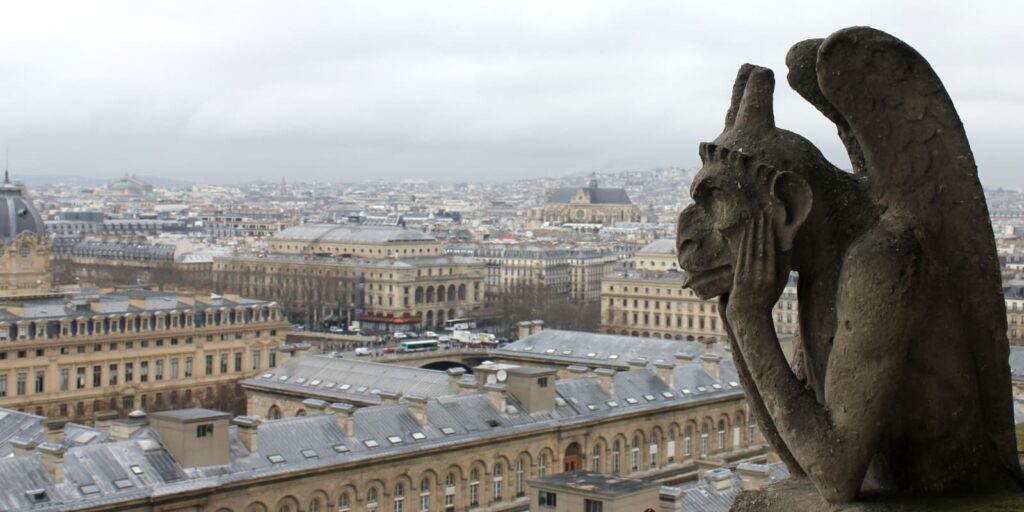
Jardin des Plantes founded by Louis XIII
The Jardin des Plantes opened to the public in 1640.
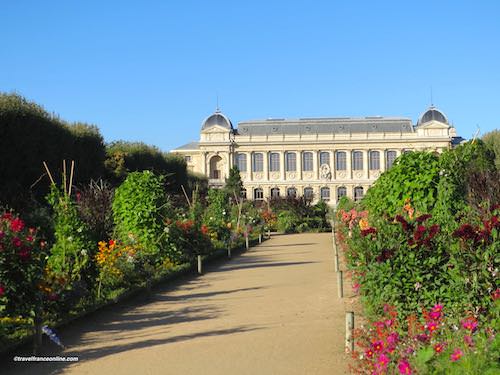
Initially established as a botanical school under the patronage of King Louis XIII, its primary objectives were to educate students and cultivate medicinal plants.
Under the stewardship of the eminent naturalist Buffon, who oversaw the institution from 1739 to 1788, the Jardin des Plantes underwent significant expansion during the 1770s.
Buffon’s visionary leadership indeed transformed the garden into a leading centre for botanical, chemical, and anatomical studies.
The Jardin des Plantes not only survived the upheaval of the French Revolution, but was repurposed to house the prestigious National Museum of Natural History. Today, this renowned museum boasts invaluable collections and hosts a diverse array of permanent and temporary exhibitions.
What does the Jardin des Plantes include?
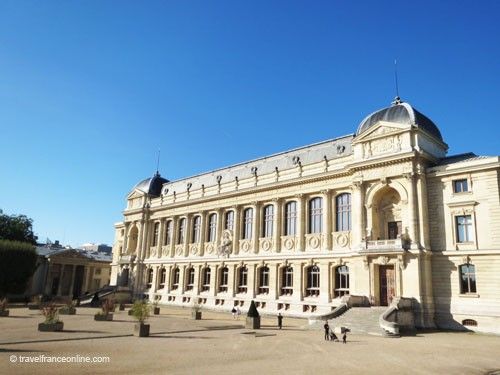
As you enter from Place Valhubert, you come across the formal gardens and the majestic Grande Galerie de l’Evolution.Today, this building includes La Galerie des Enfants, a dedicated space designed for families to explore and enjoy.
The impressive Galerie d’Anatomie Comparée et de Paléontologie, located along Rue Buffon, is unmistakable. Just look for the iconic cast Stegosaurus and elephant guarding its entrance!
You’ll encounter some of Paris’ oldest trees.
The oldest among them, a Robinia (acacia) planted in 1635, stands at the junction of Allée Becquerel and Allée Buffon. While the original tree has long since passed, it has regenerated through numerous new shoots.

The other acacia that grows to the left of the Musée d’Orléans is much younger… it was planted in 1741!
Surrounding the Grande Galerie de l’Evolution, you’ll find the Galerie de Minéralogie et Géologie and the greenhouses, which have been renovated and re-imagined in recent years.
They showcase exceptional collections of plants, including tropical specimens in the Winter Garden and mountain plants in the Alpine Garden.
In total, the Jardin des Plantes cultivates over 1500 classified medicinal and garden plants, many of which are displayed in the formal gardens.
The nearby Grand Amphithéâtre is situated between the Cabinet d’Histoire and the Ménagerie, a zoo established during the Revolution in 1793 and the second oldest in the word.
The Mecca of Natural Sciences
The third oldest tree in Paris is the Corsican pine Turgot grew from a seed in 1774. It grows along the alley leading to the Cabinet d’Histoire.
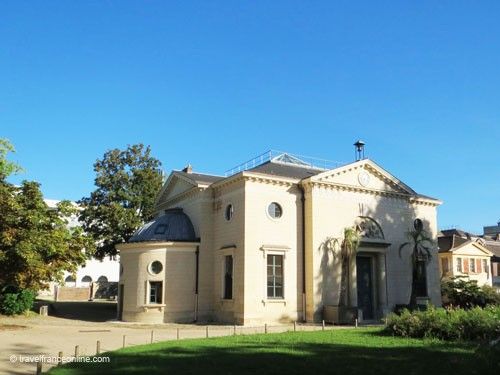
This department, established in 2007, is housed on the ground floor of the historic Hôtel de Magny, which has been part of the Jardin des Plantes since 1787.
You will find the fourth oldest tree in Paris, a Cedar of Lebanon planted by botanist Antoine Laurent de Jussieu in 1734, opposite this elegant mansion.
Jussieu’s contributions to the field of botany were monumental, and he was appointed Director of the National Museum of Natural History following the publication of his influential system of natural classification of plants.
The area around the mansion features a hillock crowned by a kiosk and a maze, both designed by Buffon.
As you walk up the top, you come across a column that marks the grave of Louis D’Aubenton, a renowned naturalist who served as Professor of Mineralogy at the Museum of Natural History from 1793.

The Jardin des Plantes pays a lasting tribute to its long history and the scientists who contributed to its foundation and management. Their busts indeed adorn the external walls of the museums, while statues are scattered throughout the gardens.
You will find Buffon statue in front of the Grande Galerie de l’Évolution.
The Jardin des Plantes also boasts a range of modern amenities, such as restaurants, indoor playgrounds, picnic areas, and benches.
It’s no wonder that the garden is a favourite destination for Parisians, who came to jog, explore the zoo, or attend one of the many exhibitions hosted within its grounds.
Directions: 5th District – No.5 Rue Linné or Place Valhubert
Metro: Jussieu, Gare d’Austerlitz on Lines 5, 10
Coordinates: Lat 48.843962 – Long 2.359600