
Castel Merle, the highest concentration of prehistoric deposits in Europe
The prehistoric site of Castel Merle, near the quaint Templar village of Sergeac, is nestled in the heart of the picturesque Black Périgord and the Vallée de la Vézère, a stone’s throw from the renowned sites of Lascaux and the Abri du Moustier (rock shelter).
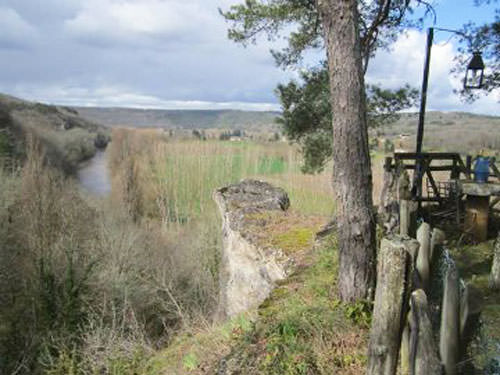
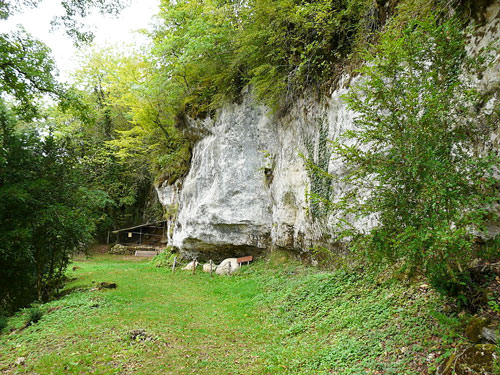
Less well-known to the general public, Castel Merle is an exceptional archaeological site, home to the highest concentration of prehistoric settlements in Europe. Located in a small valley, the Vallon des Roches (Valley of the Rocks), Castel Merle is bordered by two cliffs open by six rock shelters, spread over a length of 400 meters.
These caves were inhabited continuously for millennia, and today offer us a glimpse into the lives of our prehistoric ancestors. The collapse of the ceilings of these rock shelters at the end of the last Ice Age ,preserved the various archaeological deposits and associated artefacts in their original state.
This preservation has made Castel Merle a true treasure for archaeologists and historians, offering a window into a distant past.
Neanderthals first settled in the Castanet and Blanchard rock shelters around 85,000 years ago. Some 50,000 years later, Cro Magnons occupied the Reverdit, Roc d’Acier, Labattut, and Souquette rock shelters on the southern slope of the site.
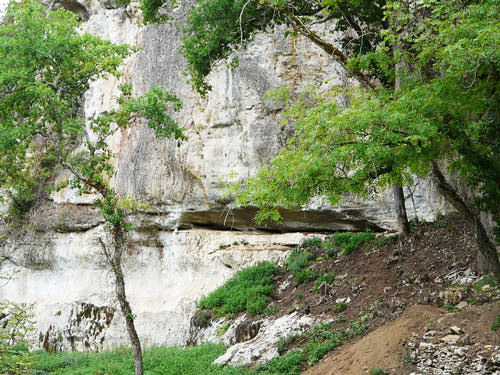
Excavations at these sites began in 1878 and reached their peak between 1910 and 1912, but continued at a slower but steady pace throughout the following decades, with the last excavations taking place in 2007.
These excavations have unearthed a multitude of artefacts, including bone and flint tools, as well as finely decorated stones dating from the Upper Palaeolithic period.
Several rock shelters, which were partially excavated and explored, are now open to the public. Many of them were named after the archaeologists and landowners who participated in their discovery and study.
The rock shelters of Castel Merle
Neanderthals inhabited the Blanchard and Castanet rock shelters, located on the right bank of the valley. The Blanchard shelter is located north of the Castanet shelter on a rocky platform 12 meters above the ground. These shelters have yielded remarkable discoveries, including the oldest known Aurignacian rock paintings, as well as an abundance of mammoth ivory beads, drilled animal teeth, and seashells.
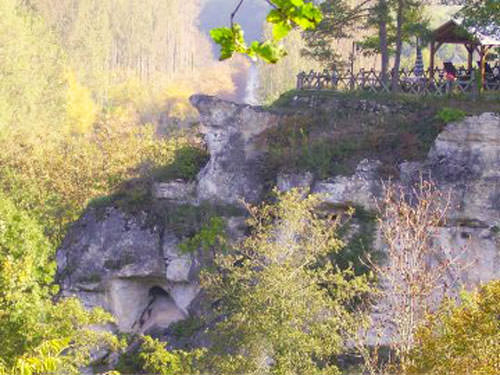
Cro-Magnon people lived in the Reverdit, Roc d’Acier, Labattut, and La Souquette rock shelters, on the left bank of the valley.
The Reverdit shelter boasts a Magdalenian-era bas-relief frieze depicting a horse, two bison, and a bear’s head, and was listed as a historical monument in 1924.
The Roc d’Acier rock shelter takes its name from the nature of its rock. Surveys conducted on this site before the First World War uncovered deposits extending over 100 metres and dating to the Solutrean, Gravettian, and Aurignacian periods. These surveys have provided a better understanding of the diversity of dwelling methods and the cultural evolution of the region’s ancient human societies.
The Labattut rock shelter revealed an impressive collection of worked flints, as well as stones adorned with engravings of horses and paintings depicting deer, mammoths, bison, and even a negative handprint and the skeleton of a child decorated with beads and shells. The Labattut rock shelter was listed as a Historical Monument in 1931.
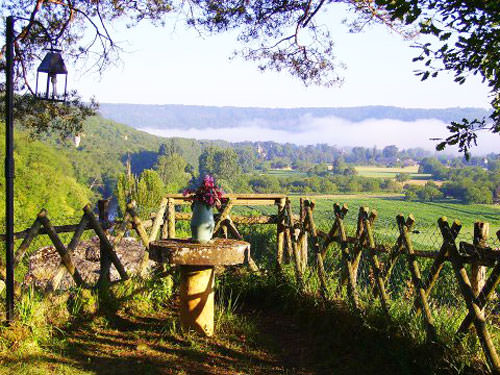
The La Souquette rock shelter served primarily as a workshop for making ornaments. Inside, archaeologists unearthed a rich collection of ornaments in various stages of manufacture, including mammoth ivory and soapstone beads, as well as drilled animal teeth and seashells. This abundance of artefacts provides us with valuable information about the manufacturing techniques and artistic practices of this distant era.
The Abri du Four shelter and Trou du Guetteur (Watchman’s Hole), were occupied during the medieval period, and do not contain significant prehistoric artefacts. However, they do offer a glimpse into more recent historical periods and their respective cultural practices.
Some of these prehistoric shelters remain closed to the public due to ongoing excavations.
A privately owned prehistoric site
The small museum at Castel Merle displays numerous objects unearthed during excavations.
Among these treasures are six necklaces dating from the Aurignacian and Magdalenian periods, some of the oldest necklaces discovered in Europe.
The prehistoric site of Castel Merle is a privately owned site, and the family warmly welcomes visitors and runs guided tours for groups by reservation. In addition to guided tours, visitors can participate in various workshops and interactive activities designed to explore the daily lives of our distant hunter-gatherer ancestors.
Department of Dordogne – Sergeac
Coordinates: Lat 44.999272 – Long 1.101261
Photos via Wikipedia Commons: Abri Blanchard and Abri Reverdit by Père Igor CC BY-SA 3.0 – Other photos ©Auberge decastelmerle


