Capdenac le Haut, from a Gaulish oppidum to a thriving Roman fort
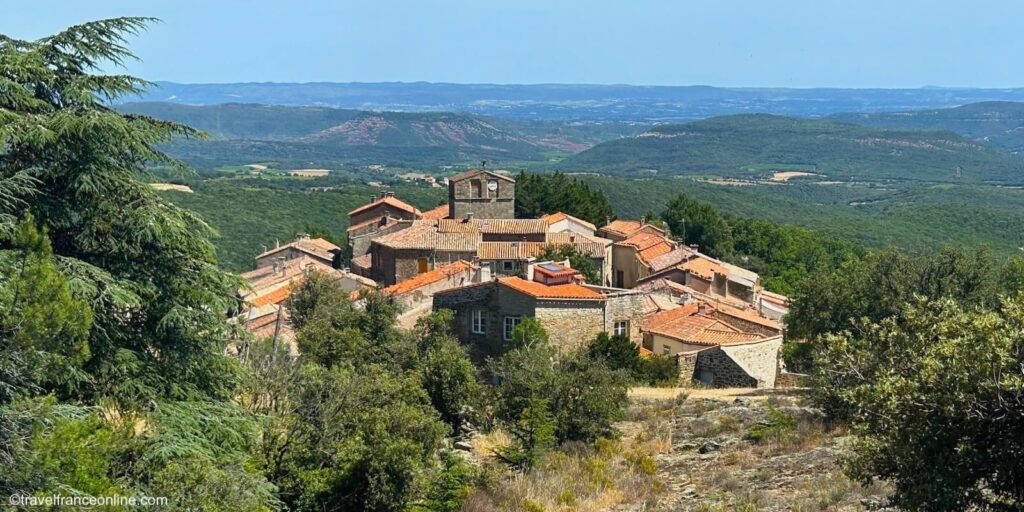
Capdenac le Haut is a medieval village perched on a cliff offering breathtaking views of the U-shaped meander of the Lot river.

Traces of human occupation date back to the Neolithic period, as evidenced by the discovery of a statue of the Mother Goddess from around 3150 BC, now exhibited at the Amédée Lemonti Museum in Pech Merle.
According to local tradition, the Gauls established their oppidum at the top of the cliff. Some suggest that this ancient fort could be Uxellodunum, the last Gallic stronghold, taken by Julius Caesar. The name “Uxellodunum” is thought to come either from the Gaulish God Uxellos, or from the combination of “Uxel“, meaning “height“, and “dunum“, meaning “fortified“.
The Gallic oppidum, whether or not it was Uxellodunum, became an important Roman military outpost. The imposing southern cliff, almost impassable, offered natural protection to Capdenac le Haut. However, the Romans fortified the village’s side, which opened onto the plateau.
The small village prospered and became a flourishing urban centre until the decline of the Roman Empire in the mid-5th century.
Hac denasci Caput, the Visigoth fort
Due to its strategic location, Capdenac le Haut was frequently attacked.

The Roman period had established an era of peace and prosperity, encouraging the inhabitants to neglect the maintenance of their fortifications, which fell into ruin. Taking advantage of this vulnerability, the Visigoths easily seized the dilapidated fortress and occupied it until 530 AD, when the Franks, the new masters of France, drove them out.
During their occupation, the Visigoths gave the fortress the name “Hac denasci Caput”, meaning “dead, fallen citadel“, a name which evolved into “Capdenac“. A few remains of the square defensive tower, erected by the Visigoths on the cliffside, which was only demolished in 1732. Capdenac le Haut was ravaged once again during the Saracen raids of the 7th century.
The castle of Count Gerault of Aurillac
In the 9th century, Gérault, Count of Aurillac and grandson of Emperor Charlemagne, undertook the construction of the Castle of Capdenac. Gérault was one of the few laypeople to be canonised. Legend has it that he performed a miracle in his castle at Capdenac le Haut, but this remains poorly documented.
Knights Templar in Capdenac le Haut

The Knights Templar arrived in Capdenac le Haut in the 14th century and founded a hospital to accommodate pilgrims on their way to Rocamadour, Rome or Santiago de Compostela.
Unfortunately, this hospital was razed in the 15th century, but the Commanderie or Maison des Gardes (House of the Guards), survived and was transformed into housing. Surprisingly, a fragment of a 15th-century fresco has miraculously survived on the ground floor.
The Templars also erected the Tour Maudon (Tower), which today houses the Tourist Office.
This imposing square tower, designed solely for defence, was never inhabited. Indeed, the guardhouses housed a garrison, while the roof terrace allowed surveillance of the fortress and its surroundings.
Today, the Tourist Office houses a small museum retracing the rich history of Capdenac le Haut.
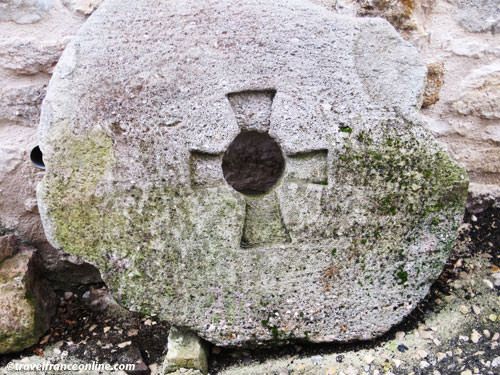
Among the exhibited objects are Gallo-Roman remains unearthed during excavations and a cast of the Neolithic Mother Goddess discovered at the foot of the cliff.
After the dissolution of the Templar order in 1312, their property was entrusted to the Hospitallers of St-John of Jerusalem, who took charge of welcoming pilgrims.
In the 13th century, the administration of the city was entrusted to four consuls chosen from among its inhabitants.
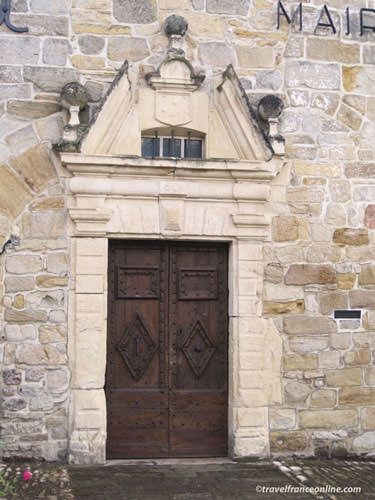
These consuls took turns at the Maison Consulaire (Consular House), now the town hall, Place Lucterius. This building boasts a splendid 17th-century portal savaged from the castle, as well as vestiges of original Gothic windows.
Hundred Years War and Wars of Religion
During the Hundred Years’ War, the fortress of Capdenac le Haut was occupied alternately by the English and the French, who reinforced its defences.
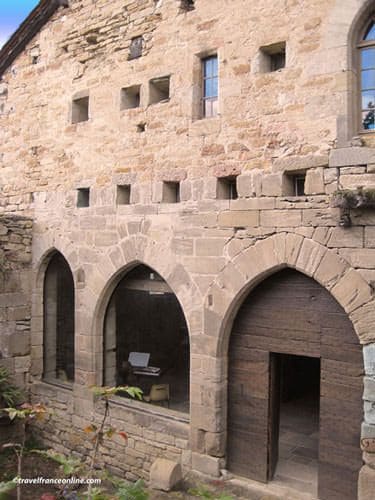
In 1518, Galiot de Genouillac, Grand Master of Artillery to King Francis I, acquired the fortress and undertook its modernisation, and improved its fortifications.
Like her father, Jeanne de Genouillac embraced Protestantism, and with her husband she undertook to lead a Protestant uprising in the region. She reinforced the fortifications of Capdenac le Haut, transforming the village into a formidable Protestant stronghold.
The religious conflict finally subsided with the proclamation of the Edict of Nantes in 1598, marking a truce in the sectarian struggles. After the assassination of King Henry IV in 1610, his minister and trusted advisor, Sully, took refuge in Capdenac le Haut, where he built a residence.
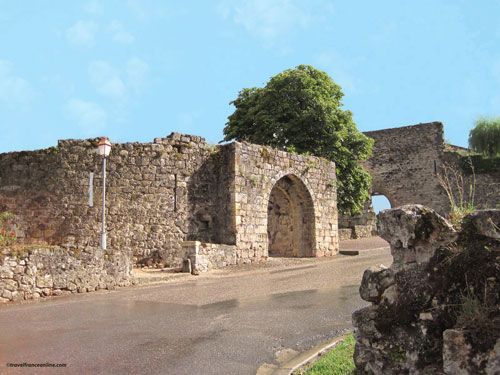
The fortifications were demolished in the 19th century, as they had become obsolete and were falling into ruin. Today, only the Barbican, known as Porte de Gergovie, remains.
Maison de Sully – Château de Capdenac le Haut
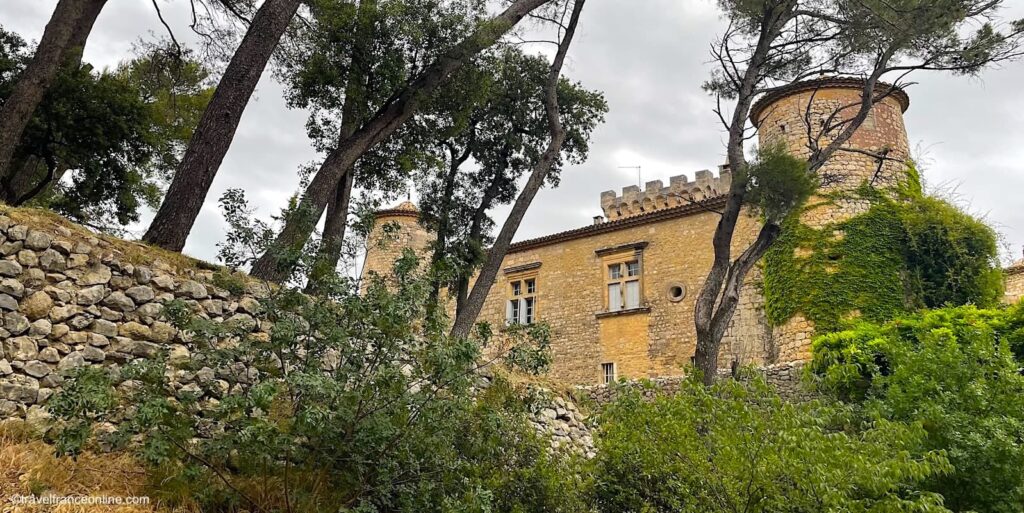
The Maison de Sully was built on the site of the castle of Count Gérault.
It remained the property of the Sully family until 1752, then underwent various transformations and renovations until the French Revolution, when it was declared state property and put up for sale.
Although modernised, the residence retains distinctive original architectural elements.
Thus, this is how part of the castle and the imposing fortifications served as a quarry for building stone in the 19th century.
Vestiges of the old fortress
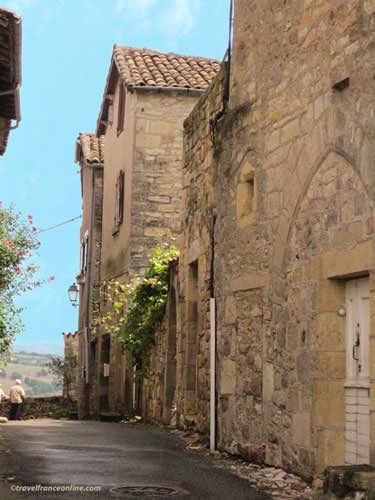
Today, only two vestiges remain of the formidable fortifications of Capdenac le Haut: the Porte de Gergovie and the Porte Narbonnaise.
The Porte de Gergovie was the most impressive of the five fortified gates that once protected the village, as it was protected by a barbican, moats and a drawbridge.
The Rue de la Peyrolerie, along the rampart overlooking the Lot, replaces a section of the Via Decima Tersia Cesaris, the Roman road linking Limoges to Narbonne via Capdenac-le-Haut.
This bustling street saw crowds of merchants, pilgrims and soldiers pass through and was lined with workshops of the peyroliers, artisans renowned for their copper cauldrons.
The Via Decima Tersia Cesaris left Capdenac le Haut on the south side and exited the village through the Porte Narbonnaise.
Fontaine Romaine
The Fontaine Romaine (Roman Fountain) is the only non-military Roman vestige in Capdenac le Haut to have survived!
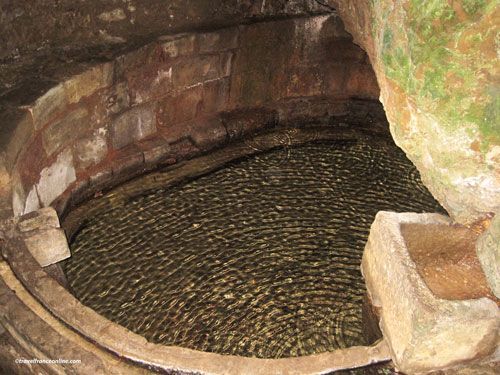
Located lower down on the side of the cliff, it is accessible via the Rue de la Peyrolerie and open to the public. However, you must obtain an electronic code from the Tourist Office to gain access. Two-thousands years ago, Roman soldiers carved 130 steps into the cliff-side to access the natural rock shelter.
The fountain includes two basins: the first, oval-shaped and lined with lead, has a capacity of 9000 litres and was intended for human use, while the second, rectangular, with a capacity of 15000 litres, was used to water animals.
The Roman Fountain is also known as the Fontaine des Anglais (English Fountain). This name has no connection with the Anglish, but evolved from the Occitan Fontaine des Angles (Fountain of the Angles), which referred to the zigzag steps that lead to it.
St-Jean-Baptiste Church
The Church of Saint John the Baptist was remodelled at the beginning of the 18th century, while preserving some original elements.
Among these precious remains is the Chapelle Saint-Gérault, located to the left of the choir; its Renaissance altar, surmounted by a superb 17th-century painting, and its triangular pediment, topped with a statue of Saint John the Baptist.
Gallic well
Before leaving Capdenac le Haut, take the time to stroll along the road to the first bend. You will find a well-marked path leading to the Gallic well unearthed by the Champollion brothers in 1816.It was rediscovered and carefully restored in 2002.
Finally, you won’t be surprised to learn that this exceptional medieval village is listed among the Les Plus Beaux Villages de France – Most Beautiful Villages of France.
Department of Lot
Coordinates: Lat 44.581179 – Long 2.069595