
Vézère Valley – A UNESCO World Heritage Site
The Vézère Valley boasts an exceptional archaeological heritage: 147 prehistoric sites, including 25 caves adorned with paintings or engravings that date back to the Palaeolithic period.
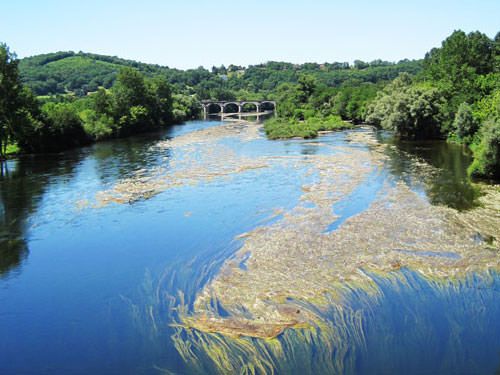
UNESCO inscribed the Vézère Valley on the World Heritage List in 1979 and listed 15 of these caves as prehistoric sites and decorated caves of the Vézère Valley.
The valley’s appeal to early humans is easily explained by its exceptional geographical location and favourable environment. The river indeed offered a natural defence, while the rock shelters carved out by millennia of flowing water provided safe havens from predators and the elements.
The abundance of fish and seemingly limitless water sources, the rich alluvial plains teeming with game, and the forests providing abundant timber resources offered everything necessary for subsistence and survival, making the Vézère Valley an ideal habitat for the first human populations.
Rise of the Magdalenian Culture in the Vezere Valley
The traces of habitation discovered at the La Micoque site attest to a human presence dating back approximately 400,000 years.
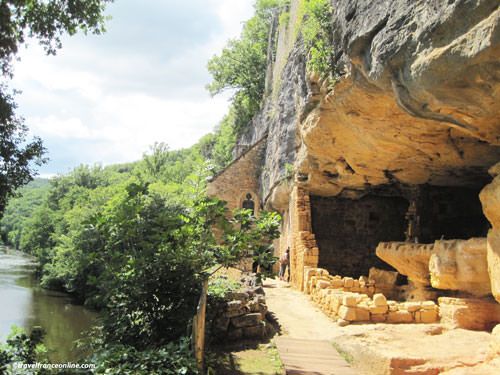
Neanderthals, known for their distinct cultural practices, arrived in the region around 150,000 years ago, leaving numerous traces of their way of life at sites such as Le Moustier and Le Régourdou.
Around 40,000 years ago, Cro-Magnon humans, Homo Sapiens, anatomically close to modern humans, settled in the Vézère Valley. Archaeologists named this new group after the Cro-Magnon rock shelter where they discovered their remains at Les Eyzies de Tayac.
However, the disappearance of the Neanderthal culture remains a mystery to this day. Some theories suggest interbreeding with the newcomers, while others propose simple eradication.
The Last Ice Age, a period of climatic upheaval that occurred approximately 20,000 years ago, altered vegetation and forced mammoths to migrate north. Cro-Magnon man then had to adapt his hunting techniques and develop new tools and weapons.
This period saw the emergence of a new culture, as evidenced by the wealth of tools and weapons discovered in the La Madeleine rock shelter. Archaeologists named this phase of the Paleolithic period after this shelter, designating it as the Magdalenian Culture.
The sophistication of these populations is evident in their artefacts, attesting to their occupation of the Vézère Valley from around 17,000 BC until the end of the last ice age, approximately 7,000 years ago.
Rock shelters along the Vezere Valley
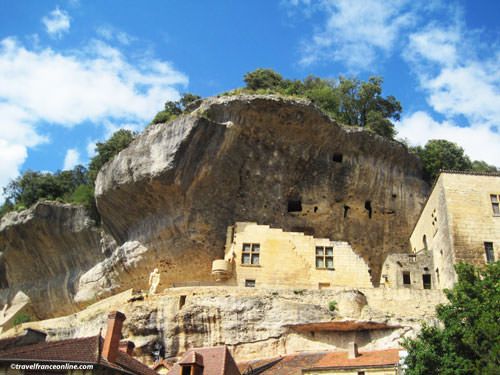
Four million years ago, a vast sea covered the south-west of France (Aquitaine basin). Its gradual retreat gave way to extensive limestone plateaus and a vast network of rivers. Limestone, a soft sedimentary rock composed primarily of calcium carbonate, was formed by the accumulation of the remains of marine organisms. Over millennia, rivers, such as the Vézère, sculpted these limestone plateaus, creating valleys, meanders, galleries, and rock shelters in the cliffs, places where early humans found refuge.
The Vézère River rises on the Plateau de Millevaches, at an altitude of 977 meters, in the Limousin region, and flows into the Dordogne River at Limeuil. The study of the numerous rock shelters, caves, and deposits in the Vézère Valley has significantly enriched our understanding of prehistoric populations, thus revolutionising archaeology. Several Palaeolithic phases have been named after the rock shelters in the Vézère Valley:
- La Madeleine: Magdalenian culture.
- Tayac: Tayacian or Cro-Magnon culture.
- La Micoque: Micoquean culture.
- Le Moustier: Mousterian culture.
Magdalenian Culture – Age of the Reindeer
Magdalenian artists were not only masters of rock painting and engraving, but also excelled in crafting tools, weapons, and jewellery from ivory, horn, and bone, often intricately carved or decorated.
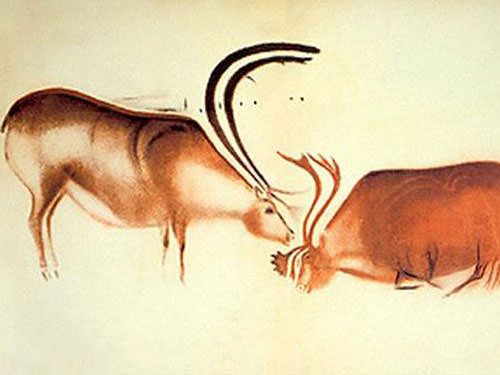
They hunted red deer, horses, cattle, and much larger mammals. The frequency of reindeer depictions in their works has led archaeologists to name the Magdalenian period the “Age of the Reindeer.” The distinctive character of Magdalenian art and the sophistication of their techniques testify to great skill and a profound understanding of their environment.
Magdalenian artists indeed depicted dozens of animal species with striking realism, capturing intricate details and remarkable accuracy in both colour and form. They skillfully used the natural contours and irregularities of the cave walls, incorporating them into their compositions. Animals were always depicted in profile, at rest, walking, or running. The depictions of mammoths were crucial for archaeologists in dating the caves.
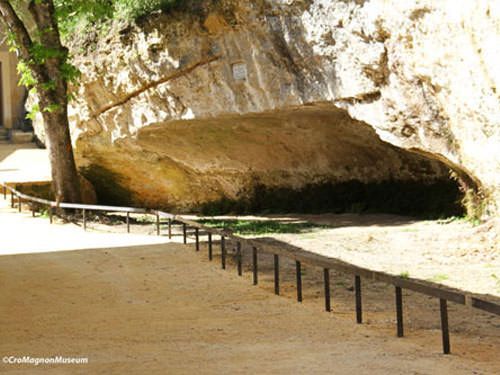
Cro-Magnon people also practised elaborate burial rites. They adorned the bodies of their dead with ochre pigments, a tradition whose traces can be found on skeletal remains. They also placed the bodies in a flexed position, facing west.
Around 8000 BC, Cro-Magnon communities abandoned the decoration and occupation of caves. They adopted a nomadic lifestyle, likely following game, living in tents and establishing communal camps, and eventually settling down to create villages.
This change coincided with their mastery of agriculture and animal husbandry, marking a significant advance in their social development. Faced with environmental challenges and species extinction, Cro-Magnon not only survived but thrived, demonstrating a remarkable capacity for adaptation.
Dordogne department


