
Reims, a vibrant city
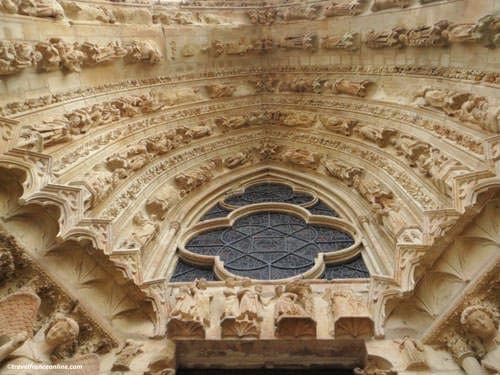
Reims, a dynamic city nestled in the heart of the prestigious Champagne region in northeastern France, boasts a rich historical and modern heritage.
The twelfth largest city in France, it is located just 45 minutes from Paris by TGV, making it a prime destination for Parisian companies looking to relocate and optimise their operations.
However, Reims’ importance extends beyond its contemporary appeal.
For centuries, it was the city where the kings of France were crowned. This prestigious past, intimately linked to its rich cultural and architectural heritage, has earned Reims the coveted title of “City of Art and History.”
The City of the Remes
Durocortorum, the ancient oppidum built by the Gallic tribe of the Remes at the beginning of the 1st century AD, evolved over the centuries into the city of Reims.
The Remes allied themselves with the Roman Empire during the Gallic Wars. In gratitude for their allegiance, the Romans elevated Durocortorum to the status of a federated city, granting it autonomy while preserving its laws, religion, and government.
The Romans also made Reims the capital of Gallia Belgica – Belgic Gaul, one of the three provinces they established in Gaul after their conquest of the region.
To protect itself against barbarian invasions at the end of the 3rd century, Reims surrounded itself with an imposing stone wall, which unfortunately proved insufficient against the assaults of the Huns who razed Reims to the ground during their raids in the following century.
Despite this tragic setback, the city rose from the ashes to become one of the most influential of the kingdom.
The City of Saint-Rémi
This influence began in the 4th century with the construction of its first cathedral, slightly north of the current building.
The end of the 5th century was marked by an event that forever changed the destiny of Gaul and Reims.
Clovis‘, King of the Franks, conquered northern France and founded the Frankish kingdom, which would become the Kingdom of France, and converted to Christianity after his marriage to Princess Clotilde of Burgundy.
Legend recounts that on December 25, 496, Saint Remigius (Saint-Rémi), Bishop of Reims, baptized Clovis with a miraculous oil, known as Saint Chremen, brought by an angel in the form of a dove and contained in a sacred vial, the Holy Ampulla.
Thus, the baptism of King Clovis into Christianity, by Saint Remigius in this first cathedral, propelled Reims into the annals of French history.
Reims, the capital of Austrasia
After Clovis’s death, the kingdom of France was divided among his four sons, triggering a period of regional sovereignty. Thus, in 511 AD, Theuderic (Thierry) inherited the kingdom of Austrasia, which encompassed northeastern France, and made Reims its capital. Austrasia’s influence remained within the Carolingian Empire until 751, when it became an integral part of the kingdom of France, a status it retained until 987. It was during this period that Reims acquired a central role in the coronation ceremonies of French monarchs. This tradition had indeed begun in 816, when Louis the Pious, son of Charlemagne, was crowned king in the cathedral of Reims. For the next ten centuries, until 1825, the kings of France were crowned in the cathedral of Reims, except for Henry IV, who was crowned on February 27, 1594, in the cathedral of Chartres.
Reims from the Middle-Ages to the Revolution
The founding of the University of Reims in 1548, attached to the city’s diocese, marked the beginning of a period of prosperity and growth for the city, turning it into a respected centre of learning and commerce.
However, the Wars of Religion, which broke out barely two decades later, plunged Reims into chaos and interrupted its rise.
Once the religious conflicts had passed, Reims reinvented itself once again, becoming a prosperous city fueled by the popularity of its four prestigious fairs, which attracted crowds from afar.
The flourishing hemp, linen, and wool weaving industry contributed to the prosperity of many of its inhabitants.
Unfortunately, the city did not escape the destruction of the French Revolution at the end of the 18th century. The cathedral narrowly escaped destruction by serving for a time as a hay barn, but the revolutionaries burned the Holy Ampulla and the relics of Saint Remi in the public square.
The city of aviation
At the beginning of the 20th century, Reims established itself as a major centre of innovation and aeronautical activity thanks to Henry Framann’s historic flight in 1908, in which he flew a distance of 27 kilometres between Reims and Bouy. Building on this achievement, the city hosted several significant events in the aviation world. Thus, in 1909, it hosted the first international air show, followed in 1910 by the prestigious Grande Semaine d’Aviation de Champagne (Champagne Aviation Week), events that showcased cutting-edge aircraft and daring aviators. The city also organised military aircraft competitions in 1911 and the Gordon Bennett International Speed Cup in 1913. Finally, Reims’ strategic geographical location made it a vital military centre during the 20th century when it served as a major garrison town.
Cathedrale Notre-Dame de Reims
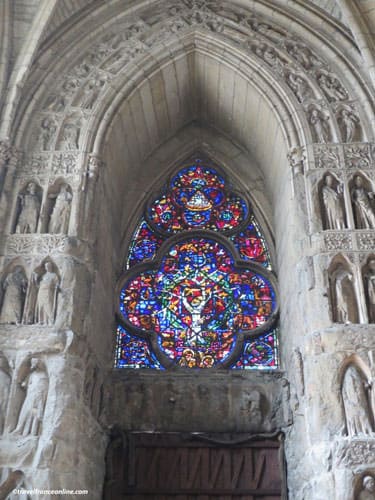
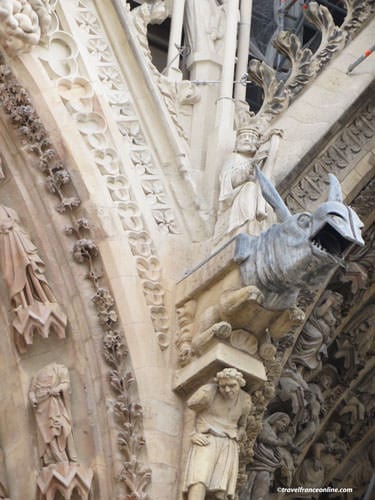
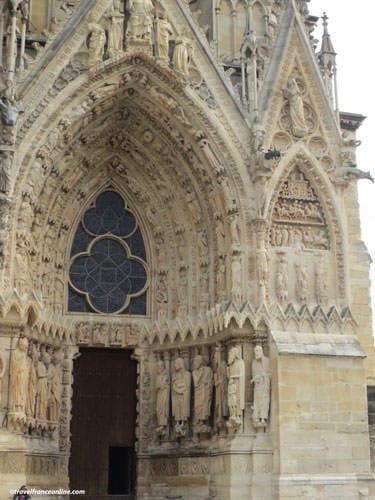
Notre-Dame Cathedral in Reims, a jewel of Gothic architecture, was rightfully designated a UNESCO World Heritage Site in 1991. It is renowned for its exceptional statuary, which includes an impressive collection of 2,303 sculptures.

And of course, although the current cathedral is not the one where Saint-Rémi baptised Clovis, it was built near the original cathedral, which replaced a small ancient oratory. This first cathedral was commissioned by King Louis the Pious at the beginning of the 9th century and required the partial demolition of the city walls.
Construction of the current cathedral began on May 6, 1211; however, the building was altered over the centuries, primarily during the Gothic period.
In the 19th century, the architect Viollet-le-Duc restored the cathedral, repairing the damage caused during the French Revolution.
After the First World War, the cathedral became a symbol of resilience for the people of Reims, having withstood 28 bombings while 85% of the city lay in ruins. André Deneux, a native of Reims and Director General of Historic Monuments, oversaw the meticulous restoration of the cathedral in the early 1920s.
Amazingly, despite the ravages of time and conflict, some of the original 13th-century stained-glass windows miraculously survived, while renowned artists Marc Chagall and Imi Knoebel created new works to replace those that had been destroyed.
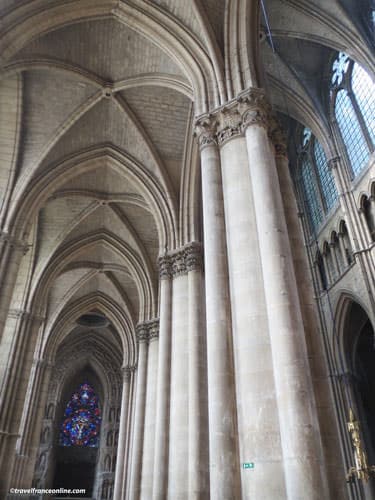
The arduous restoration process, made possible by generous private donations, notably from the Rockefeller family, spanned several decades and allowed for the use of modern, lightweight, and fire-resistant materials.
Today, the cathedral’s two remaining bells, Marie and Charlotte, ring only on important occasions to protect the building’s structural integrity from potential vibrations. They did, of course, ring out during the cathedral’s 800th anniversary celebrations!
Unfortunately, the famous Labyrith of Notre-Dame de Reims, once engraved on the nave floor, disappeared in 1779 on the orders of the Chapter. But did you know that its graphic representation now serves as the official logo for the French National Monuments?
The cathedral also holds a central place in modern history: it was there that Charles de Gaulle and Konrad Adenauer met in July 1962 to seal the official reconciliation between France and Germany, a historic event symbolising a new era of friendship and cooperation between the two nations.
The Church of Saint-Rémi
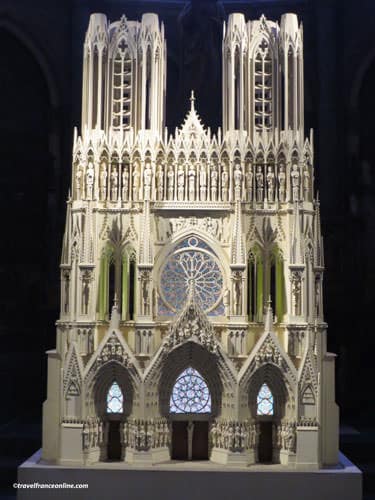
The Basilica of Saint-Remi (not the cathedral!) holds a prominent place in Reims, being the second most renowned church after the cathedral, as it is where Saint Remi was buried.
Over time, his tomb became a place of pilgrimage, and a Benedictine abbey was built around it.
However, historical documents suggest that Archbishop Hincmar embellished the legend of Clovis’s baptism to promote pilgrimage.
Hincmar indeed claimed that the basilica was the custodian of the Holy Ampulla, the vial containing the Holy Chremen, which was also used during the coronation of Louis the Pious.
This fabrication not only enhanced the church’s prestige but also attracted crowds of faithful who came to witness royal ceremonies.
The Basilica of Saint-Remi was rebuilt in the 11th century and was considered a masterpiece of Romanesque architecture.
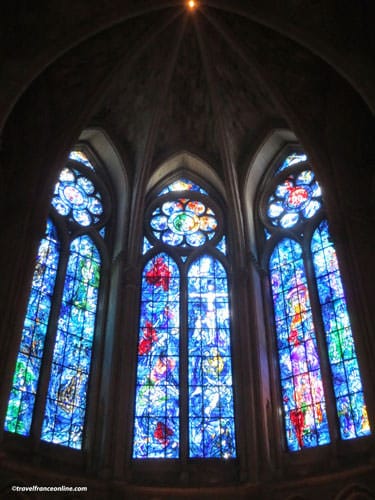
Louis XIII, a devout Catholic monarch, established a tradition that lasted until the French Revolution and maintained the basilica’s prestige.
After their coronation in the cathedral, the kings of France would process to the Church of Saint-Remi, thus reaffirming their commitment to defending the Church and their divine mandate to reign.
The abbey was rebuilt in the 18th century but closed during the Revolution.
It was restored and reopened in 1896, on the occasion of the 14th centenary of Clovis’s baptism, and the monastic buildings were converted into a hospital.
The Basilica of Saint-Remi was damaged but withstood the bombings of the First World War and was restored in the 1950s, and was converted into a historical museum in the late 1970s.
Department of Marne
Coordinates: Lat 49.258329 – Long 4.031696


