
Loire Valley vineyard – Facts
The Loire Valley vineyard, one of France’s 13 wine regions and the largest of its 16 major appellations, is divided into five distinct areas: Anjou-Saumur, Auvergne, Centre-Loire, Pays Nantais, and Touraine.
It stretches over 800 kilometres from west to east, covering 70,000 hectares, of which 52,000 have an AOC designation.

From Nantes on the Atlantic coast to Saint-Pourcain in the Auvergne region, it spread across several departments: Loire-Atlantique, Vendée, Maine-et-Loire, Deux-Sèvres, Vienne, Sarthe, Indre, Indre-et-Loire, Loir-et-Cher, Cher, Nièvre, Allier, Puy-de-Dôme, and Loire. The Loire Valley vineyard thus benefits from a wide diversity of soils: sand, limestone, chalk (tuffeau-tufa), clay, silt, granite, and gravel.
Thanks to its considerable size, the Loire Valley benefits from the influence of oceanic air currents flowing up the river. These currents raise the temperature by several degrees, providing optimal climatic conditions for viticulture. Thus, in the 15th century, King Henry IV affectionately referred to the valley as Douce France – Mild France. However, as one travels further inland, the oceanic climate is influenced by temperate, continental, and even mountainous factors.
Development of the Loire Valley vineyard
The Romans established the Loire Valley vineyard around 2,000 years ago when they planted the first vines on the south-facing slopes along the Loire River. A stone wine press dating from the year 100 was discovered in Cheillé, near Azay-le-Rideau.
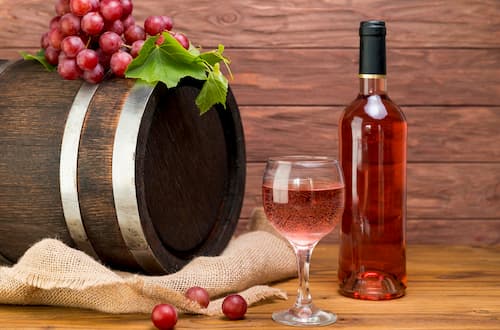
At that time, Loire wines were already highly prized, with Pliny the Elder praising their qualities.
In the 5th century, religious communities developed wine-making, which experienced considerable growth in the 10th century thanks to the development of river transport. The wines of the Angers, Saumur and Orléans regions acquired increasing renown.
Their reputation took to new heights in 1532 when King Francis I authorised the trade of wine with foreign countries via the Breton States and established tolls for navigation at Ingrandes. This taxation encouraged winegrowers to produce better-quality wines to mitigate this tax.
Decline and revival of the vineyard
Pays Nantais Wines – 7 AOC
The Pays Nantais Vineyard, the westernmost wine-growing region of the Loire Valley, extends south of Nantes across the departments of Loire-Atlantique, Maine-et-Loire, and Vendée. Benefiting from a temperate oceanic climate, the vines thrive in ideal conditions. This wine region encompasses seven AOCs (Appellations d’Origine Contrôlée), each contributing to the diversity of wines produced in the area:
Côteaux d’Ancenis, Fiefs Vendéens, Gros Plant du Pays Nantais, Muscadet Blanc, Muscadet de Sèvre-et-Maine, Muscadet des Côtes de Grandlieu, Muscadet des Côteaux de Loire
Anjou-Saumur Wines – 18 AOC
Spanning 20,000 hectares, the Anjou-Saumur Vineyard is bordered by the communes of Angers, Chalonnes, Bourgueil, and Saumur. This vast vineyard produces a diverse range of wines: 31% red, 35% rosé, 18% white, and 16% sparkling. Recognized for its quality, the Anjou-Saumur wine region was granted AOC status in 1936 and now boasts 18 Appellations d’Origine Contrôlée (AOCs):
Anjou, Anjou Villages, Anjou Villages Brissac, Anjou Côteaux de la Loire, Bonnezeaux, Cabernet d’Anjou, Cabernet de Saumur, Côteaux de l’Aubance, Côteaux de Saumur, Côteaux du Layon, Crémant de Loire, Haut Poitou, Quarts de Chaume, Rosé d’Anjou, Rosé de Loire, Saumur, Savennières and Saumur Champigny
Touraine Wines – 15 AOC
Spreading over 5,500 hectares, the Touraine vineyard lies along the banks of the Loire and Cher rivers, from Saumur to Orléans. Comprising 70 communes spread across the departments of Indre, Indre-et-Loire, Loir-et-Cher, Loiret, Sarthe, and Vienne, this wine region boasts 15 Appellations d’Origine Contrôlée (AOCs):
Touraine, Touraine Noble-Joué, Bourgueil, Cheverny, Cour-Cheverny, Chinon, Côteaux du Loir, Côteaux du Vendômois, Crémant de la Loire, Haut Poitou, Jasnières, Montlouis-sur-Loire, Rosé de Loire, St-Nicolas de Bourgueil and Vouvray
Centre-Loire wines – 11 AOC
Spanning the departments of Cher, Indre, Loir-et-Cher, Loiret, and Vienne, the Centre-Loire Vineyard benefits from an oceanic climate, sometimes influenced by continental factors. Primarily renowned for its exceptional white wines, notably the famous Sancerre and Pouilly-Fumé grape varieties, this wine region also produces red and rosé wines. The Centre-Loire wine region boasts a total of 11 wines with an AOC designation:
Châteaumeillant, Côteaux du Giennois, Menetou-Salon, Orléans, Orléans-Cléry, Pouilly-Fumé, Pouilly-sur-Loire, Quincy, Reuilly, Sancerre and Valençay
Auvergne Vineyard – 4 AOC
Located upstream from the Loire Valley, the Auvergne Vineyard is one of the oldest wine regions in France, boasting a reputation that dates back to the Middle Ages and has endured through the centuries. Today, Auvergne encompasses the departments of Allier, Puy-de-Dôme, and Loire, and produces four wines with AOC status:
Côte Roannaise, Côtes d’Auvergne, Côtes du Forez and Saint-Pourcain
Please remember to drink responsibly www.drinkaware.co.uk – L’abus d’alcool est dangereux pour la santé, à consommer avec modération – Resource Vin-Vigne – Photo via Wikimedia Commons: Vineyard map by DalGobboM CC BY-SA 4.0 — Photo2 by Freepik – Header by Freepik


