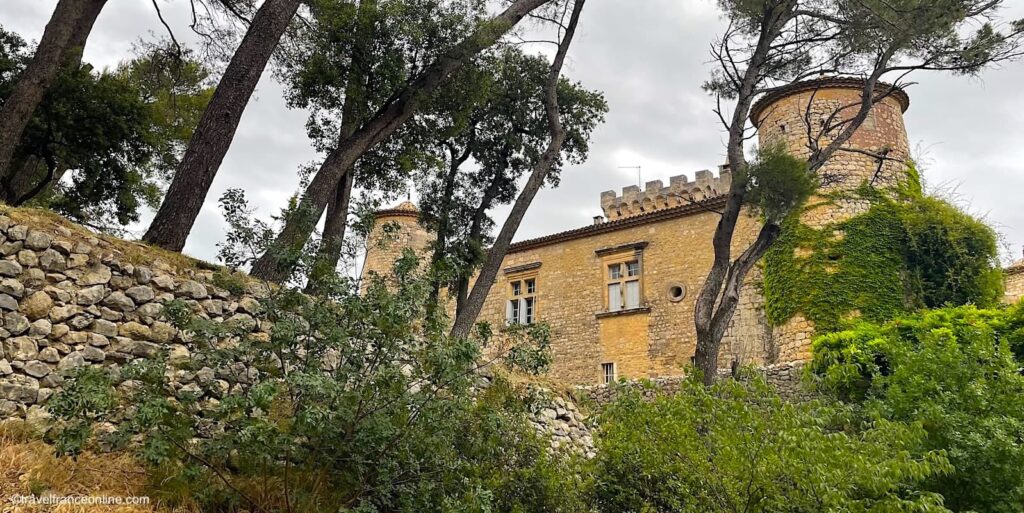
La Gaufresenque, the Gallo-Roman village of potters
La Gaufresenque is an ancient Gallo-Roman pottery village established in the 1st century AD. This archaeological site and open-air museum is located on the eastern outskirts of Millau.
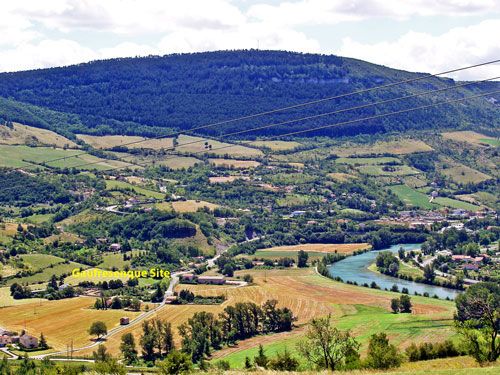
Contadomagus, “The Market Where the Two Rivers Meet,” as it was aptly named at the time, flourished on fertile land at the confluence of the Tarn and Dourbie rivers.
Roman potters recognised the strategic value of this location. The region indeed provided abundant clay deposits, the surrounding hills were covered with vast oak forests whose wood fueled the kilns, and the site had unrestricted access to the waters of the Tarn and Dourbie rivers.
A Roman road connected La Gaufresenque to Rodez, the main town in the region, and farther on to the major Roman road leading to Spain, thus facilitating trade with the rest of the world. The prosperous city of Contadomagus specialised in terra sigillata pottery, a technique imported from ancient Greece by the Romans.
La Gaufresenque potters, the pioneers of sigillated pottery
Terra sigillata pottery possesses several unique characteristics, considered innovative at the time.

First, it is made of red clay decorated with relief patterns, then covered with lacquer. Next, each piece is systematically stamped with a seal bearing the emblem of the pottery workshop, hence its name “terra sigillata” (derived from the Latin “sigilla,” meaning seal).
The potters of La Gaufresenque developed a semi-industrial production process that allowed them to create an impressive variety of styles, shapes, and decorations. They meticulously engraved their moulds with complex patterns, thus enabling the precise and consistent reproduction of a series of models.
To meet this large-scale production, they used communal kilns capable of firing up to 40,000 pots per batch.
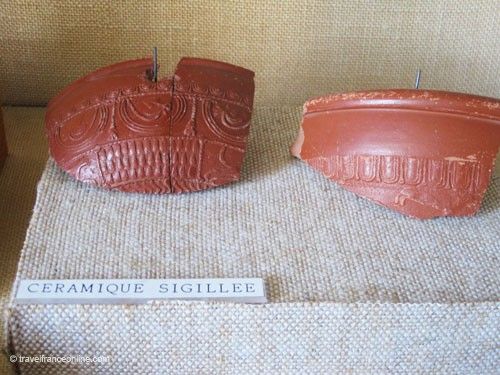
Thanks to techniques such as moulding, drying, glazing, and mass firing, they were able to produce ceramics on a massive scale, primarily for export. Their decorations depicted a wide variety of subjects, including gladiatorial combats, mythological scenes, scenes of daily life, domestic animals, and flora and fauna.
Despite its mass production, the earthenware from La Gaufresenque maintained exceptional quality. These ceramics were not only found in ordinary homes but also in palaces, and were even used as offerings in tombs.
Remarkably, pottery bearing the marks of 600 different local potters has been discovered throughout the vast territory of the Roman Empire, from Africa to England. This widespread distribution unequivocally confirms that La Gaufresenque was the Gallo-Roman capital of ceramics. For four centuries, the city prospered as a centre for pottery production, until its decline after the fall of the Roman Empire.
La Gaufresenque, an open-air museum in situ
La Gaufresenque, once a flourishing town, fell into oblivion, and its pottery industry never revived.
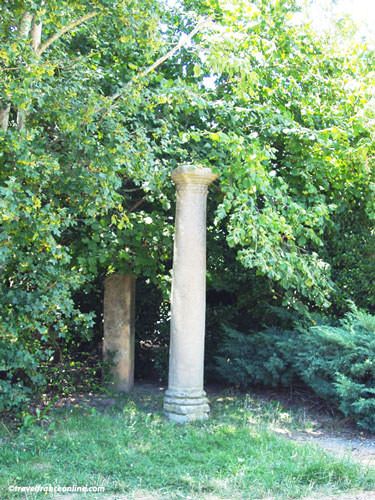
Today, only the foundations of numerous shops, houses, workshops (some still containing clay deposits), latrines, and drying sheds remain, along with countless fragments of discarded pottery scattered in refuse pits, temple columns, and a hypocaust.
Among these ruins, you will also find the vestiges of a vast communal kiln capable of firing approximately 40,000 pieces per batch.
La Gaufresenque site covers 10 hectares, but only 2,500 m² have been excavated to date. The ongoing excavations will thus certainly uncover other exceptional finds!
Nestled amidst cultivated fields and meadows, this open-air museum may seem underwhelming at first glance. However, it is well worth a visit. If you wish to discover more about the history and remains of La Gaufresenque, a visit to the Millau Museum is recommended. The museum displays an impressive collection of ceramics unearthed on the site and provides a glimpse into the once-flourishing Gallo-Roman village of La Gaufresenque.