
Cimetière des Chiens, the only animal necropolis in the world
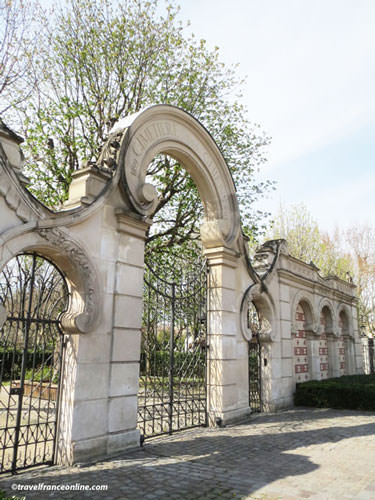
The Cimetière des Chiens is the only animal necropolis in the world!
However, reaching this unique and unmissable site requires a slight detour, as it is located in the town of Asnières-sur-Seine, on the western outskirts of Paris. You will then need to walk for 15 minutes and cross the Seine to get there. But the effort is well worth it!
If you choose to start from the Mairie de Clichy Metro station (as we did), you will cross the Pont de Clichy, a bridge boasting a breathtaking view of the cemetery entrance, a true Art Nouveau masterpiece.
However, before delving into the remarkable history of the Cimetière des Chiens, it is important to understand the historical relationship between Parisians and their pets.
Until the end of the 19th century, there were no official regulations for the burial of domestic animals in the city.
A significant change occurred, however, with the adoption on June 21, 1898, of a law authorising the burial of cats, dogs, and other domestic animals, provided they were kept at a minimum distance of 100 metres from inhabited areas.
This legislative step paved the way for the creation of a cemetery primarily dedicated to animals.
Thus, on May 2, 1899, Marguerite Durand, an actress, journalist, and feminist activist, founded with Georges Harmois the Société Française Anonyme du Cimetière des Chiens et Chats et autres Animaux Domestiques (French Anonymous Society of the Cemetery for Dogs, Cats, and Other Domestic Animals).
On June 15 of the same year, they acquired half of the Île des Ravageurs in Asnières, a small island, nestled at the foot of the Clichy Bridge.
In 1900, Asnières had retained bucolic charm despite the growing expansion of Paris. It attracted Parisians seeking respite from the city’s hustle and bustle, providing them an oasis of tranquillity for their traditional Dimanche au bord de l’eau (Sunday by the river).
Impressionist and Post-Impressionist painters immortalised these idyllic scenes, depicting Parisians relaxing under the willows, picnicking along the Seine, or boating on its waters.
Away from the crowds yet easily accessible, the location was thus ideal for creating the cemetery.
The Cimetière des Chiens opened its doors at the end of the summer of 1899.
It comprised four sections: one for dogs, another for cats, a third for birds, and a fourth for other pets.
The architect Eugène Petit designed a majestic Art Nouveau gateway to the cemetery.
From its inception, the Cimetière des Chiens won the hearts of animal lovers and maintained its popularity for decades. However, it eventually faced serious maintenance and financial difficulties, it was on the verge of closing in 1987, much to the dismay of residents and pet owners.
On February 1, 1997, the cemetery was officially placed under the exclusive management of the Asnières Town Hall. Thanks to the committee’s efforts, the Art Nouveau gate was classified as a historical monument, ensuring ongoing protection and renovation of the entire cemetery.
A cemetery for all animals
The Cimetière des Chiens is not just a resting place for traditional pets; it also houses the graves of some unexpected companions.
Marguerite Durand’s horse was among the first to be buried there in 1900.
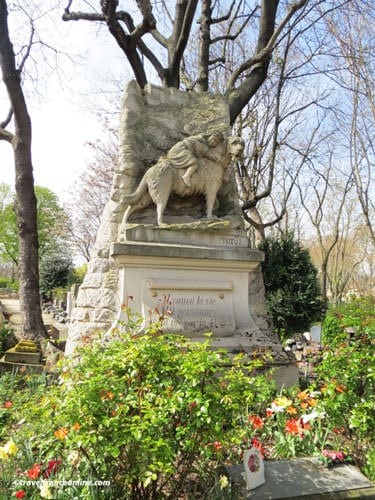
His grave is by the entrance, next to the memorial dedicated to the legendary rescue dog Barry, who saved the lives of 40 people during his service at the Great St. Bernard Hospice in the Alps.
Although Barry’s is honoured with this monument, he was not buried in the Cimetière des Chiens.
He was stuffed (a rather unusual choice!) and is on display at the Swiss Museum of Natural History in Bern.
The cemetery also contains the graves of two other racehorses, Masserau and Troy Town, who died in 1898, as well as those of beloved ponies Ilette, Julie, and Agatha.
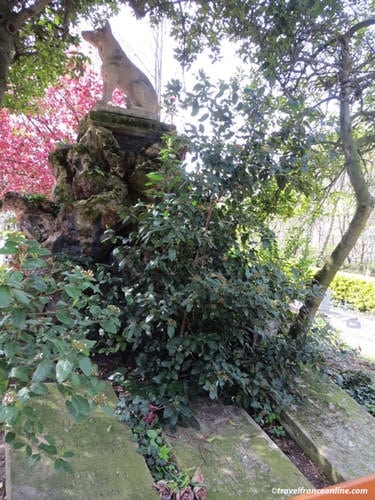
The Cimetière des Chiens, a sits name implies, contains the graves of many dogs, including Moustache, the mascot of Napoleon’s Great Army from 1799 to 1811.
Moustache was so popular and famous that he even had the opportunity to meet Napoleon I. It is said that the veterans taught him a military salute, which he performed for the emperor by raising his leg to ear level!
The monument to Moustache stands next to Barry’s, near the cemetery entrance. Inaugurated in 2006, it remains the most recent official monument in the Cimetière des Chiens.
Further into the cemetery, a memorial pays tribute to the first German Shepherds who served as police dogs.
This monument, inaugurated in 1912, testifies to the invaluable service rendered by animals to the French police force shortly after their integration into law enforcement.
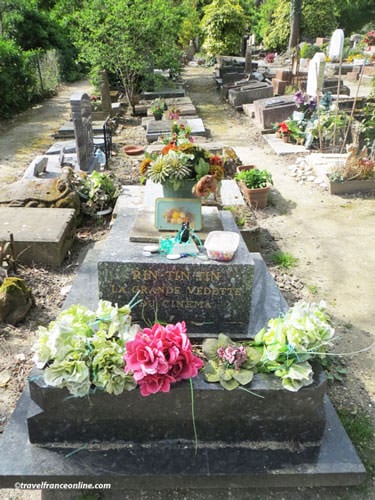
It commemorates Dora and Papillon, two loyal police dogs who served at the Asnières police station until their old age. Tragically, Top and Léo died in the line of duty.
In addition to these courageous police dogs, the cemetery also contains the graves of Dick, Drapeau, and Mémère, other beloved mascots who brought comfort and companionship to soldiers in the trenches during the First World War.
A touching sculpture captures the essence of this deep bond, depicting a small dog extending its paw toward a helmeted soldier. Born in 1914, Mémère remained the beloved mascot of the Chasseurs à Pied infantry regiment for fifteen years.
This cemetery is a veritable pantheon for many remarkable dogs: war dogs, police dogs, rescue dogs, and even those who achieved fame.
Among them rests Rintintin, the iconic German Shepherd from the eponymous television series.
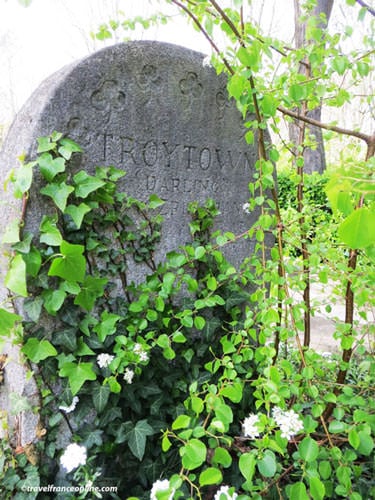
Poilu, the canine actor who shone on the stage in numerous theatrical productions, also rests here.
You will also discover the grave of the Prince of Wales, another talented canine actor who captivated audiences during more than 400 performances at the Théâtre du Gymnase on the Grands Boulevards in Paris.
And then there is the deeply moving story of the stray dog who came to die at the cemetery gates, becoming the 40,000th animal buried here on May 15, 1958. His memorial stands at the entrance.
This cemetery also houses the pets of Saint-Saëns, the famous composer of Carnival of the Animals. Saint-Saëns is buried in Montparnasse Cemetery, another cemetery well worth a visit!
Each tomb and monument in the Cimetière des Chiens bears moving witness to the unwavering love, loyalty, and devotion that animals show their human companions.
The Animals’ Pantheon
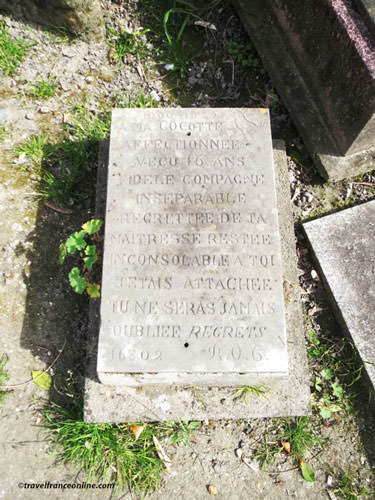
That said, the Cimetière des Chiens is not only the final resting place of famous animals and beloved companions of celebrities, but also of countless anonymous pets cherished by their devoted owners.
Wandering among their graves, you will discover tender tributes left by grieving owners, heartfelt expressions of love and loss.
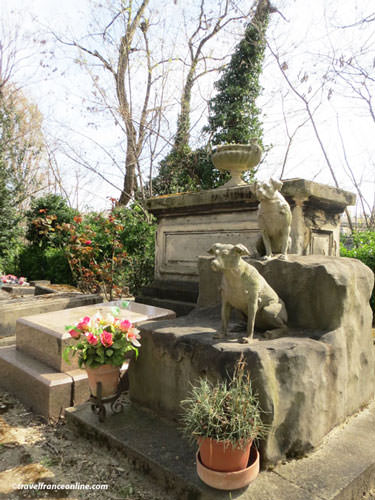
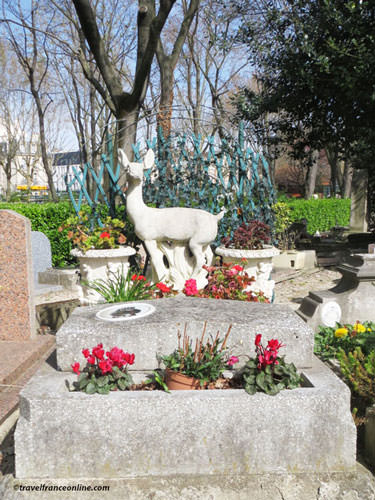
From simple headstones to elaborate mausoleums, their graves all bear witness to the deep bond between humans and their animal companions.
Some bear dedications, moving messages, or poems, while others are adorned with statues or the favourite toys of the departed animals.
Fresh flowers grace Pupuce‘s grave, while nearby lies Sultan, commemorated by a touching photograph.
The birth and death dates of beloved pets like Minouchette, Ulysse, and Ruby are engraved in the stone.
Besides the beloved cats and dogs, the cemetery is also home to a wide variety of more unusual pets.
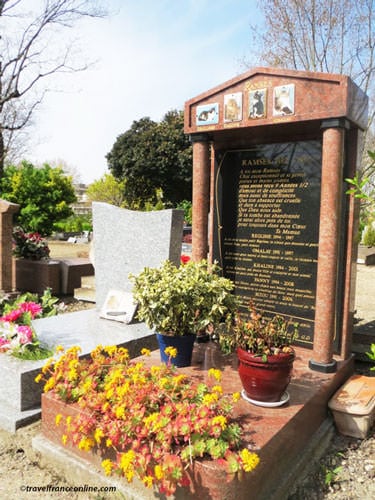
You will thus find the graves of Faust the sheep, Cocotte the hen, and even Kiki the monkey. There are also birds, rabbits, hamsters, fish, and even Tigre (Tiger), Marguerite Durand’s lion!
The Cimetière des Chiens is also the realm of the neighbourhood’s stray cats.
They indeed roam gracefully in this animal sanctuary, and you will often find them basking in the sun among flowers, photos, and dedications on tombstones, or in the planters. They have become the guardians of this unique animal pantheon!
To ensure their well-being, a group of dedicated residents and volunteers built the Maison des Chats (Cat House), a shelter where they feed and look after them daily.
Although the Cimetière des Chiens is one of Paris’s best-kept secrets, it’s also a perfect destination for families. Children will enjoy exploring this historic site and discovering the stories of the beloved animals who rest there.
Opening hours: Open daily except Monday
16March-15Oct: – 10am-6pm
16Oct-15March: – 10am-4.30pm
Closed on Public Holidays except on 1st November
Directions: Asnières-sur-Seine – no4 Pont de Clichy
Metro: Mairie de Clichy or Gabriel Péri on Line 13 or RATP Bus 540 or 54
Coordinates: Lat 48.910272 – Long 2.298020


