Apremont, a ruined but still impressive castle
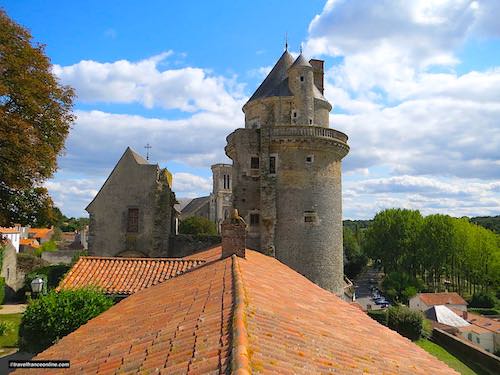
The first Apremont castle was built in the 11th century on a promontory overlooking the Vie River and its valley.
This old fortress was demolished in the 16th century and replaced by a three-storey central building that connected two imposing towers. Demolished in 1733, this structure was replaced by the current, more modest, single-storey building.
While much of the Château d’Apremont is now in ruins, several imposing structures remain intact, such as the two towers, each 40 meters high, one of which has an impressive ramp for horsemen; the western ramparts; the fortified gatehouse; the postern gate leading to Rue Basse; the chapel; and the underground cellar (an outdoor pantry used for storing food in ice). However, only a few vestiges of the drawbridge remain.
The Renaissance castle
In the mid-16th century, Philippe Chabot de Brion, Admiral of France and childhood friend of King Francis I, undertook the ambitious project of rebuilding his ancestors’ fortress.

The Château d’Apremont was thus the first Early-Renaissance castle in the Vendée region. Its surviving buildings feature a blend of Gothic and Renaissance features, reflecting the transition between architectural styles.
While the impressive thickness of the walls (between 2 and 3 meters) and the presence of arrow slits evoke medieval fortifications, the windows adorned with stone corbels, decorative friezes, and elegant columns with finely sculpted capitals indeed clearly foreshadow the Renaissance aesthetic.
One of the most remarkable features of the Château d’Apremont is its ramp for horsemen. Carved directly into the rock, it served as the main entrance, allowing riders direct access to the castle walls.
This rare architectural feat is found only in the Tour des Minimes, also known as the Tour des Cavaliers, of the Château d’Amboise, and nowhere else in Europe.
Rouleau d’Apremont, a flagship exhibit in Apremont Castle Chapel
The chapel was built during the 16th century within the castle walls. Its single nave is a perfect illustration of the religious architecture of the period.
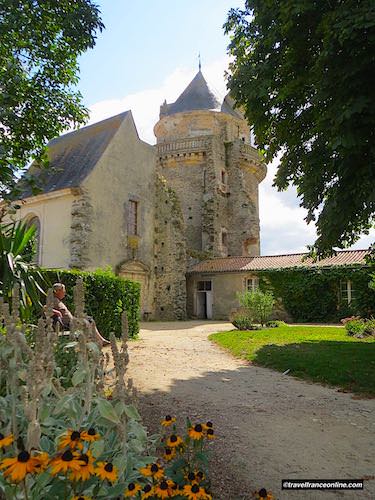
Today, this chapel has been turned into a museum that recounts the rich historical and architectural heritage of the castle through a vast collection of photographs, documents, and artefacts.
It also hosts a series of temporary exhibitions during the summer, and offers access to interactive experiences, such as an optical theatre and film screenings.
However, the museum’s centre-piece is the reproduction of the Rouleau d’Apremont (Apremont Scroll), a document of major historical importance that is on display year-round. This parchment indeed depicts a detailed plan for the Vie River canal project, a project that Philippe de Chabot entrusted to the engineer Jehan Florentin.
Although the project never materialised, it envisioned a waterway that would have allowed barges to travel directly from the coastal port of Saint-Gilles to Apremont.
The Apremont Roll is also renowned for its exceptional accuracy and is the only visual representation of the Renaissance castle, making it an invaluable document for historians and enthusiasts of history and architecture.

Finally, every July, the castle also hosts a Fête de la Renaissance – Renaissance Festival within its grounds. This event provides an opportunity for visitors and participants to don period costumes and immerse themselves in the atmosphere of Renaissance festivities. Quite a fun experience!
The town of Apremont acquired the Château d’Apremont in the 1960s and established its town hall in the single-storey building, which is flanked by the two towers.
You can explore the chapel, the east tower with its impressive ramp for horseback riders, and the picturesque park, all open to the public.
Listed as a historical monument in 1975, the Château d’Apremont is undoubtedly a must-see destination in the Vendée region.
Department of Vendée
Coordinates: Lat 46.749376 – Long -1.741108