
Foundation of the Ile Chauvet Abbey
The land where Ile Chauvet Abbey was built in the 12th century was then one of the many islets in the Baie de Bourgneuf, a vast expanse of shallow waters.
This bay, also known as the Bay of Brittany, today stretches from Pointe Saint-Gildas (south of the Loire estuary) to Beauvoir-sur-Mer.
The silting up of the bay’s bottom and the creation of polders and salt marshes reduced the its surface area.
Today, the Ile Chauvet is located a few kilometres inland, within the village of Bois-de-Céné.
So back in 1130, the Benedictine monks of the nearby abbey of Absie-en-Gastine recognised the strategic potential of the islet, then located in the middle of the shallow waters of the bay. This is where they established their abbey under the patronage of the lord of Garnache.
The monks undertook significant land reclamation work. They indeed drained the surrounding marshes and built dikes to isolate their land, transforming it into fertile meadows and productive salt marshes, which became their main source of income throughout the Middle Ages.
Decline of the abbey
Despite its isolation, the abbey faced recurring threats throughout the centuries.
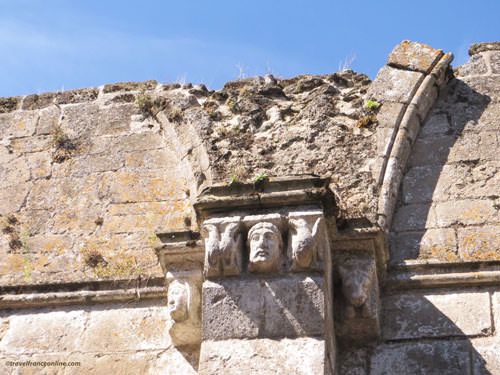
In 1381, during the Hundred Years War, the English sacked it, and two centuries later, in 1558, during the tumultuous Wars of Religions, Protestants burned the monastery, further devastating its buildings.
The monks were eventually forced to abandon their ruined abbey.
However, a century later, monks of the Camaldolse rule returned and rebuilt the abbey, which was completed in 1680.
Under the less strict rule, monastic life was finally able to resume in the peaceful setting of the Île Chauvet Abbey until the French Revolution.The abbey was thus seized and became state property in 1791.
Ile Chauvet Abbey, a listed Historical Monument
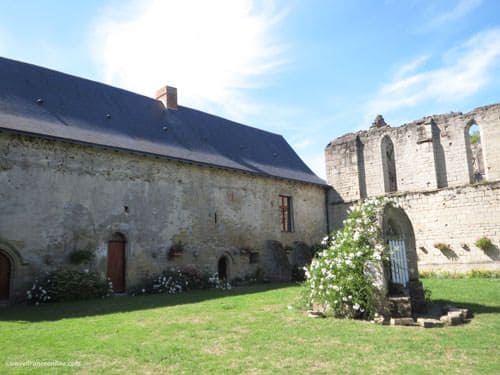
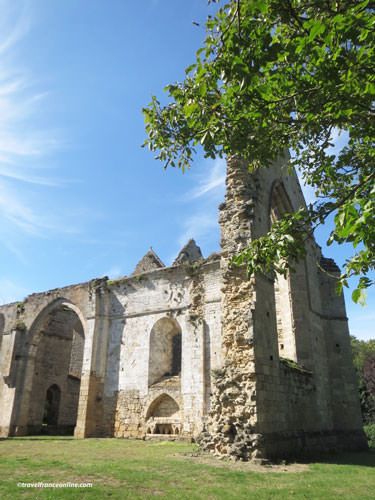
Today, only vestiges of the original structures remain, such as the Romanesque abbey church, albeit quite eroded by time, the magnificent Gothic well, which stood in the centre of the long gone cloister, the pilgrims’ hospice, and the monks’ dormitory.
The abbey ruins, along with the church, the well, the hospice, the dormitory, and various architectural elements, were listed as historical monuments in 1992.
Currently privately owned, the abbey is nevertheless open to the public.
The hospice has thus been transformed into a museum, retracing the history of the abbey, while the dormitory hosts temporary art exhibitions.
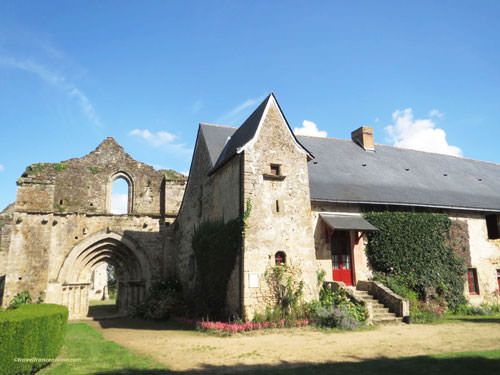
That said, reaching the abbey is an adventure in itself.
You must take a rustic path dotted with uneven steps that winds through a small wood before emerging at the owners’ residence and the abbey ruins.
Thus, I would say that the Ile Chauvet Abbey is an ideal excursion choice if you’re looking for an off-the-beaten-path experience!
Department of Vendée
Coordinates: Lat 46.933264 – Long -1.908933


